Modern Bakery Anchors Egypt’s Household Staple
Updated 10/11/2026 9:00:00 AM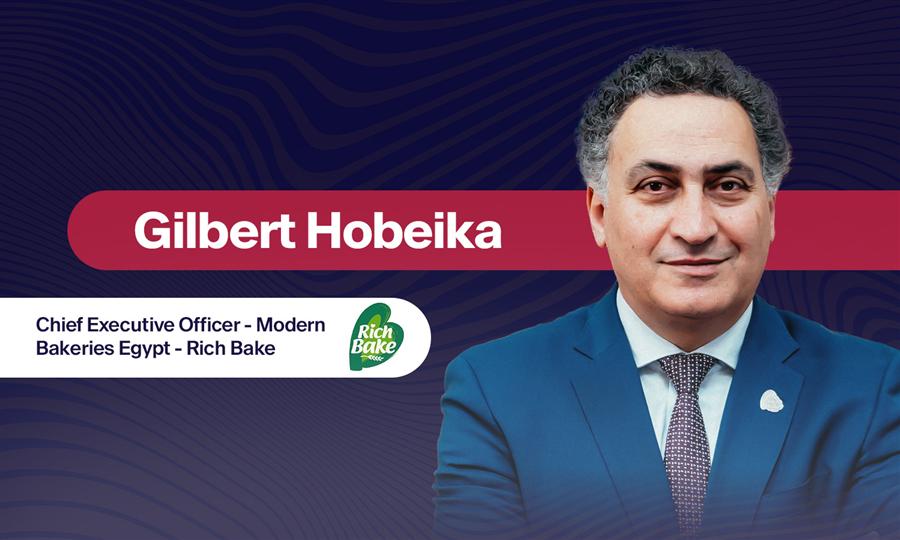
Arab Finance: Bread and bakery products are woven into Egypt’s daily life, present in every household and central to the country’s food culture. The bakery industry itself is a major economic driver, valued at $573 million in 2025 and projected to reach nearly $699 million by 2034, according to Deep Market Insights.
So, in this interview, Gilbert Hobeika, Chief Executive Officer of Modern Bakeries Egypt - Rich Bake, discusses how the company is leveraging its flagship brand Rich Bake, expanding into new categories like biscuits and rice cakes, and investing in automation and sustainability to capture opportunities in both domestic and export markets. His insights highlight how Modern Bakeries is redefining what it means to be a leading industrial bakery in Egypt today.
1-Modern Bakeries has been around since 1997. How do you describe the company’s role in the market today, and what does “leading industrial bakery” actually mean on the ground?
Since 1997, Modern Bakeries has been part of the evolution of Egypt’s industrial bakery sector. Through Rich Bake, we pioneered the packaged bread category in Egypt, helping establish a new standard for quality, food safety, and convenience at scale.
Today, our ambition goes far beyond being a bakery manufacturer. We are continuously investing in our capabilities, strengthening our operations, and expanding our portfolio to respond to the way consumers and the market are changing. We see significant opportunities in healthier products, convenient bakery and snacking solutions, and innovations that address new consumption occasions.
For me, being a leading industrial bakery has a very practical meaning. It is about having the manufacturing capabilities, operational discipline, and distribution strength to consistently deliver high-quality products at scale. It is also about being a reliable partner to our customers across retail, hotel, restaurant, and café (HORECA), and food service, while building products and capabilities that can compete in international markets and support our export ambitions.
So, when we talk about Modern Bakeries, we are not simply talking about our market share or nearly three decades of experience. We are talking about our ability to build on that experience, continue investing for the future, and strengthen our innovation capability by launching new healthy items that address customer needs and help us stay on top of market trends and needs; it is not about where we have been, but about our ability to keep evolving and creating the next growth opportunities.
2-You joined Modern Bakeries in early 2023. What convinced you to take on this business at that particular moment, and what was your diagnosis of the company when you first walked in?
I joined Modern Bakeries, and I saw a business with significant untapped potential.
Having already worked in the bakery industry, I understood the dynamics of the sector and the pressures the business was facing. What attracted me to Modern Bakeries was its strong foundation: a company with a strong heritage, recognized brands, experienced people, and an established position in the Egyptian market. The fundamentals were there, but the business needed a clear direction to cope with changes and undergo a comprehensive turnaround.
When I joined in early 2023, the operating environment was particularly difficult. Global supply disruptions, especially in wheat and agricultural commodities, currency devaluation, and significant cost inflation were putting considerable pressure on the business. But I believed that simply managing the crisis was not enough.
My priority was to drive the organization around a clear strategy. We focused on strengthening operational efficiency, managing cost elements, rebuilding confidence across the business, and creating a stronger culture of performance, ownership, and accountability.
The objective was to take Modern Bakeries to regional and international levels, building a stronger, more agile, and future-ready company, one that is positioned to grow sustainably in Egypt and compete increasingly beyond our home market.
I was certain that the Egyptian market was looking for innovation and varieties of bread products that were missing from the shelves, so we focused from day one on making available a healthy range (high protein, high fiber, low carb, and no sugar), flatbread used for wrapping sandwiches (like tortilla and tannour), and even a better version of our traditional Egyptian bread.
3-The last few years have been challenging for bakeries everywhere—wheat prices, currency swings, energy costs. How did you restructure operations or the product mix to get through it?
The pressure was significant because we were dealing with several challenges at the same time. Raw-material costs, particularly wheat, increased sharply; the currency went through significant movements; energy and operating costs rose; and access to foreign currency became increasingly challenging. In a high-volume business like ours, you cannot simply absorb all of those increases, nor can you pass them entirely on to the consumer.
Our priority was operational efficiency and discipline. We looked closely at every part of the value chain. The objective was not simply to reduce costs, but to become smarter and more disciplined in how we used our resources, while maintaining the quality and food-safety standards that are fundamental to our business.
We chose not to rely solely on cost cutting but also invested in automation and technology to drive productivity. Greater efficiency and lower unit costs eased immediate pressures while strengthening Modern Bakeries’ long-term competitiveness.
The other important part of the transformation was our portfolio. Consumer expectations were changing, and we saw an opportunity to accelerate innovation and expand beyond our traditional categories. We introduced new formats, developed products that responded to the growing demand for healthier, more convenient choices.
In 2025 alone, we launched 25 innovations across different categories. So far in 2026, we launched more than 26 innovations across categories including biscuits, rice cakes, croissants, tannour bread, baladi sourdough bread, savory packaged croissants, panini bread, Vienna bread, and more.
This diversification was strategically important to open new horizons and address different consumer needs, occasions, and price points, while creating additional platforms for future growth.
We learned that volatility requires both defense and forward vision. Protecting the business while investing through our team’s passion made us more efficient and disciplined, yet still innovative. That balance drove profitability and ushered in a new phase of growth.
4-Rich Bake is your flagship brand, but you also run Brunch and Razz Cake. How do you think about the portfolio now: which brand is the growth engine, and where are you still experimenting?
Rich Bake remains our flagship brand and our strongest platform for future growth. It has built significant consumer recognition over the years, but our ambition is to take the brand beyond its traditional association with bread.
At the same time, each brand within our portfolio has a clear role. Brunch gives us a strong presence in croissants, pâtés, and convenient bakery products, while Razz Cake allows us to address another important segment of the bakery market.
Our strategy, however, is not about growing the portfolio simply by adding more products. Health and wellness are a priority, alongside convenience and on-the-go consumption. We also explore opportunities beyond bakery, as shown by our entry into biscuits—leveraging our strengths to build new growth platforms.
Rich Bake will therefore remain at the core of our growth strategy, but innovation will continue across the entire portfolio. Our approach is to enter the right categories, understand the consumer response, learn quickly, and then scale where we see strong and sustainable potential.
5-Egypt’s bakery scene is still very fragmented, with a huge informal segment and strong local players. Do you see the market consolidating around a few industrial names, or will the traditional Baladi-bakery model keep dominating for the foreseeable future?
I do not see the future of Egypt’s bakery market as a choice between industrial and traditional bakeries. Egypt is a large and highly diverse market, and traditional Baladi bread has a unique economic, social, and cultural role that will continue to be an important part of everyday consumption.
Where I see significant potential is in the continued development of the organized and industrial segment of the market.
Consumer lifestyles are evolving. Convenience, food safety, consistency, and accessibility are becoming increasingly important, particularly as modern retail develops and consumption habits change. This creates more opportunities for packaged bakery products and for categories that go beyond traditional bread.
Industrial players also have an important role in driving this evolution because we have the ability to invest at scale in R&D, automation, food safety, quality systems, and product innovation. This allows us not only to improve existing products, but also to develop entirely new categories and consumption occasions.
So, I believe the two segments will continue to evolve in parallel. Traditional bakeries will remain deeply rooted in the Egyptian market, while industrial bakeries will increasingly expand the areas where branded and packaged products can provide additional value to consumers.
Consolidation may emerge in the organized segment, as today’s demands in technology, safety, distribution, and brand building favor scale. Yet the real opportunity lies in expanding the market itself. By innovating for new occasions and evolving consumer needs, we can grow the bakery category rather than just compete within it.
Beyond bread, we see strong potential in biscuits, rice cakes, and other long-shelf-life items suited for export—positioning Egypt as a production base for Africa and Europe. This is where the next phase of growth will come.
6-On the consumer side, are you seeing a real shift toward packaged, branded products, or is price still the only thing that matters for most households?
Price will always be an important factor in the Egyptian market, particularly in a category like bakery and baked products where many products are part of everyday consumption. Affordability matters, and as a business, we have to remain very conscious of the purchasing power of consumers.
But price is only one part of the equation that we do our best to control. Consumers are increasingly looking at the overall value they receive from a product—taste, freshness, consistency, convenience, nutritional value, food safety, and, ultimately, the trust they have in the brand.
For me, consistency is particularly important. When a consumer chooses Rich Bake today, next week, or next month, they should have the confidence that they will receive the same quality, taste, and experience every time.
Food safety and hygiene are non-negotiable, forming the core of our manufacturing. The challenge is delivering healthier, safer, and more convenient products at the right price. By leveraging scale, capabilities, and innovation, we aim to make better choices accessible to all Egyptian consumers. Success will come to brands that balance affordability, quality, and innovation—continuously giving consumers a compelling reason to trust and choose them.
7-You operate three automated plants with combined capacity well over 200 tons a day. What does the next phase of capacity expansion look like—new lines, new sites, or more focus on utilization and efficiency?
The next phase of our growth is not simply about adding capacity. It is about building the right capacity while maximizing the productivity and efficiency of the assets we already have.
We have already started that journey. Our agreement with AMF Bakery Systems includes the addition of a new high-tech, fully automated production line for toast and buns, which is expected to increase our production capacity by approximately 20% in its first phase.
Furthermore, we are about to start the construction of the 4th and much bigger Bakery. Our investments are supported by a clear market opportunity, whether that comes from growing domestic demand, entering new product categories, expanding our food-service business, or accelerating our exports.
Automation is central to our strategy—boosting output while enhancing consistency, productivity, resource use, and food safety. Technology is about producing better, not just more.
Looking ahead, we have announced up to $80 million in investments through 2030 to expand capacity, add the right lines, improve asset utilization, and increase automation. We believe Egypt’s economy will flourish in the next five years, and we aim to stay ahead of that growth. At the same time, we are focused on efficiency and sustainability—optimizing energy and water use, reducing waste, improving raw material utilization, and advancing eco-friendly packaging and manufacturing.
8-Looking at the wider industry, where do you see the biggest opportunity in the next three to five years: private label, foodservice, new categories (like healthier or functional bakery), or something else entirely?
The growth in the bakery industry will come from different areas. Let us split them:
The first is health and nutrition. Consumers are becoming much more conscious of what they eat, but they are not willing to compromise on convenience or affordability. This creates significant opportunities for products with clear nutritional benefits. The challenge for manufacturers is to make these products relevant and accessible to the broader consumer market, rather than positioning them as niche offerings.
The second is convenience. Consumer lifestyles are changing rapidly, and eating occasions are changing with them. People increasingly want products that are easy to consume, easy to carry, and relevant to their everyday routines. This creates opportunities well beyond traditional bread.
The third is foodservice and B2B, which I believe have significant growth potential. Today, our partners are looking for much more than a supplier. They need consistency, customization, food safety, innovation, and the ability to deliver reliably at scale. As the development arm for our B2B customers, we follow the standards and are verified under YUM-QSM, MCD-SQMS, RBI, and more.
The fourth is exports. I strongly believe Egypt has the potential to become a competitive manufacturing base for bakery products serving regional and international markets. Our experience with Egyptian Baladi Bread has reinforced that belief. Products that are deeply rooted in our local food culture can have international appeal when we combine authenticity with the right quality standards, shelf-life technology, packaging, and distribution capabilities. We have been exporting to more than 16 countries, including Palestine, Morocco, Cuba, Jordan, Mauritania, Iraq, Tunisia, Ethiopia, Djibouti, and markets across Europe, Africa, and the Middle East.
Private label will certainly have high demand, as we prepare new items, but strategically, our priority is to focus on areas where we can create differentiation and sustainable value rather than simply add volume.
Ultimately, I believe the biggest opportunity lies at the intersection of innovation, manufacturing scaling, and expanding reach across consumer segments. If we can identify genuine consumer needs, develop the right products around them, manufacture those products competitively in Egypt, and build the capabilities to take them to consumers both locally and internationally. That is where I see the strongest potential for sustainable growth over the coming years.
Related News