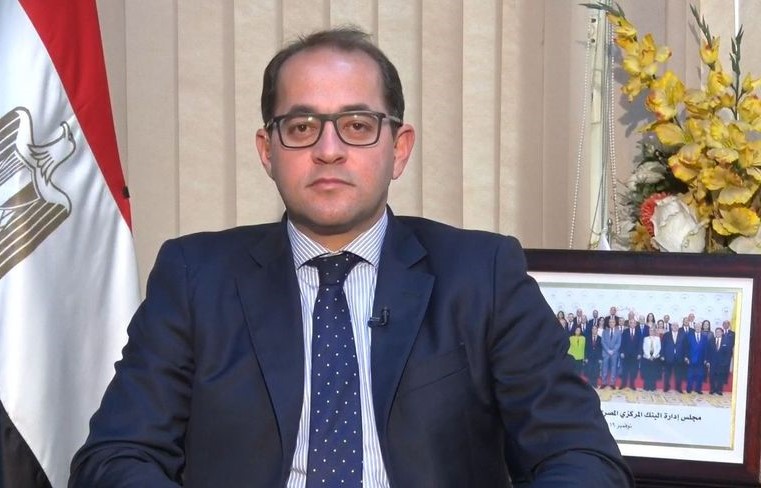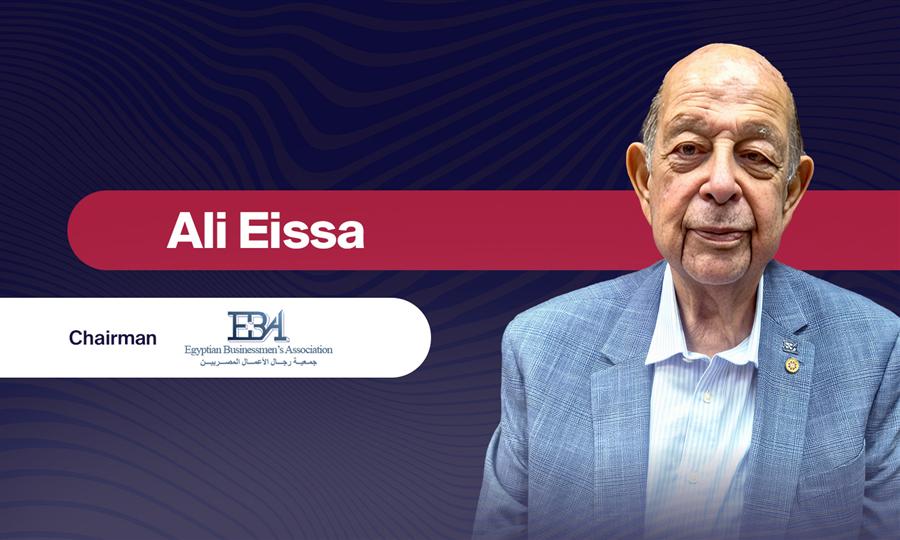
Arab Finance: In an exclusive interview with Arab Finance, Ali Eissa, Chairman of the Egyptian Businessmen Association (EBA), offers a candid assessment of Egypt’s evolving economic landscape, the empowerment of the private sector, and the imperatives for industrial growth.
While acknowledging progress in the national investment climate, Eissa stresses the urgent need to accelerate structural reforms and draw inspiration from the transformative growth models of the Asian Tigers. From tackling the hesitant pace of technology localization and addressing energy price pressures to capitalizing on strategic trade agreements across Africa and Europe, he outlines actionable priorities to shift Egypt’s trajectory from assembly-based manufacturing toward the generation of high-value exports.
1-First, how do you evaluate the current investment climate in Egypt?
Egypt’s investment climate is undeniably progressing, accompanied by tangible strides in empowering the private sector. I believe this progress could, and should, be faster and more substantial than what we are currently witnessing.
We certainly do not need to reinvent the wheel. Several economies, most notably the Asian Tigers, have already demonstrated how nations can achieve remarkable economic leaps, and Egypt can leverage their experience. Countries that once shared Egypt’s economic baseline in the 1960s and 1970s have since transformed into major global players.
By studying their blueprints, analyzing their models, and adapting them to Egypt’s unique market dynamics, we can accelerate our own trajectory. Malaysia, Vietnam, and South Korea stand out as notable examples of this successful transformation.
2- These nations anchored their development in industrialization. How do you view Egypt’s manufacturing sector and the challenges it faces?
To date, Egypt’s industrial policy remains somewhat "hesitant." Until recently, much of the manufacturing activity was limited to assembly operations for equipment and appliance components. However, I consider the localization of manufacturing of these core components essential for Egypt.
Just as the government adopted an initiative to localize traditional and electric vehicle manufacturing in Egypt, it should similarly champion localizing components for engineering goods. Of course, certain global companies and foreign nations maintain clear comparative and technological advantages in specific goods, as no single country manufactures 100% of its engineering components. Still, I believe we can make significant headway in this critical sector. While there is visible momentum in the manufacturing landscape today, it requires a much faster pace of execution than what we are seeing.
3-How do you view the progress in Egypt’s agricultural sector?
Egypt’s agricultural sector has recently experienced a significant boom, particularly across newly reclaimed lands. For decades, cultivation relied heavily on the traditional Delta region. Yet, widespread encroachments and the fragmentation of land ownership in those areas prompted the state to pivot toward large-scale desert reclamation, opening new horizons for sustainable growth.
Egypt used to cultivate cotton in the Delta and was among the world’s largest producers of long-staple cotton, though our output has declined recently. That said, I must emphasize that significant progress and rapid momentum have been achieved in land reclamation. The private sector has played a pivotal role in reclaiming vast agricultural areas across Egypt, which is why it should be continuously incentivized and supported in this vital, strategic domain.
Private entities have modernized agricultural mechanization and adopted cutting-edge farming technological methods. I strongly urge agricultural officials in Egypt to make suitable reclaimable lands available to the private sector so it can continue fulfilling its role in this effort.
4-Agriculture and industry are closely interconnected. How can we link agricultural and industrial production to boost added value?
I hold a somewhat different perspective here. I believe Egypt often derives far greater benefit and lower cost structures from exporting certain agricultural products in their raw, fresh form rather than processing them.
Egypt exports fresh produce to European and other international markets during specific seasonal windows when it enjoys a distinct comparative advantage—precisely when these crops are out of season in the European Union (EU). Consequently, we are able to command highly lucrative prices that nearly match those of processed goods.
We export crops like potatoes, oranges, and strawberries at specific times and at high value simply because the product is readily available in Egypt while being scarce in Europe during those peak windows.
5-How do you view the challenges posed by the EU’s new environmental regulations on imported goods: the Carbon Border Adjustment Mechanism (CBAM)?
A large number of agricultural and industrial companies are actively modernizing and upgrading their operations to reduce carbon emissions in compliance with the EU's new requirements, as well as to minimize pesticide residues in agricultural produce.
The entire world is shifting toward eco-friendly products, pollution reduction, and compliance with carbon footprint standards. Quite simply, any player that fails to comply with these new international market conditions will find itself pushed out of the market and unable to compete globally.
6-How does the Egyptian Businessmen Association (EBA) support startups and the entrepreneurship ecosystem?
We have specialized committees within the Association dedicated to supporting startups by facilitating communication and coordination with government officials.
Since its inception in the 1970s as the first business association established in Egypt and the entire region, the EBA has consistently engaged in dialogue and consultation with the government to advance the interests of the Egyptian economy and the local business community.
7-What is your view on the new tax incentives package and its impact on the business environment in Egypt?
The new tax incentives represent one of the best government policy initiatives implemented in recent years. Ahmed Kouchouk, Minister of Finance, and Rasha Abdel Aal, Head of the Egyptian Tax Authority, have made commendable efforts in this arena, backed by an ambitious tax strategy.
They introduced tax incentives that yielded very strong results, as evidenced by the expansion of both the tax base and tax revenues, along with the broadening of the tax community—all achieved without imposing new tax burdens on taxpayers and investors in Egypt.
Furthermore, these measures helped integrate a significant portion of the informal and shadow economy into the formal tax system. This sector previously undermined market competition and the wider Egyptian economy. Continuing along this path is unequivocally in the best interest of the national economy.
8-Do you face government bureaucracy when implementing tax policies?
Naturally, some friction is inevitable; the rollout of any new policy faces challenges, and satisfying all stakeholders is rarely possible. Broadly, however, Egypt must modernize its administrative systems and tools.
Most critically, the mindset of government employees must be transformed—so that public service is no longer reduced to routine bureaucracy that stifles innovation, but instead becomes a driver of progress and reform.
9-How do you assess the progress made in implementing Egypt’s State Ownership Policy Document, particularly in advancing private sector empowerment?
The State Ownership Policy Document represents a cornerstone of Egypt’s ongoing structural reform. Yet, its implementation has not advanced with the momentum or urgency required for Egypt to achieve a decisive economic leap and position itself among the world’s leading economic tigers.
10-Why isn't Egypt localizing technology rather than relying on imports?
Localizing technology demands a dedicated focus on scientific research as well as on applied, technical, and technological schools and universities—a sector that is currently not operating at full capacity.
We hope to see greater progress on this front, as technology localization would position Egypt as a major magnet for foreign direct investment (FDI) and incentivize investors to channel capital into high-tech activities across the country.
11-How do you view the impact of high interest rates on corporate expansion?
High interest rates pose a major challenge for many companies in Egypt. Interest rates are inherently linked to inflation and the value of the local currency relative to foreign currencies.
At the same time, we must not overlook the fact that the vast majority of savings in Egypt are in the form of household deposits—savings aimed at generating suitable returns to help families manage their living expenses. This presents a complex dilemma: combating inflation while simultaneously ensuring that household savings remain within the banking system. We hope that as inflation subsides, household savings will remain resilient.
In this regard, the Central Bank of Egypt (CBE) continues to adopt prudent monetary policies to tackle inflation.
12-The FRA reports that consumer finance in Egypt is leaning more toward commercial uses than productive investment. What is your perspective on this shift?
The surge in consumer finance rates is primarily driven by consumers attempting to offset weakened purchasing power caused by elevated inflation and currency depreciation.
In my view, prioritizing productive investments will inherently help curb inflation, which, in turn, will naturally cool down the heavy reliance on commercial consumer finance.
13-How do high electricity, energy, and operational costs impact the competitiveness of local exports in international markets?
High electricity, energy, and operational costs inevitably weigh on the competitiveness of Egypt’s exports in international markets. Domestically, energy prices have become increasingly burdensome.
Yet, when benchmarked against global price levels, Egypt remains within a relatively safe zone that sustains its competitiveness abroad. It is important to note that energy costs have surged worldwide, driven by regional geopolitical headwinds, developments in the Gulf, tensions surrounding the US–Iran conflict, and broader regional volatility, all of which continue to shape global energy markets.
14-How can Egypt achieve its $100 billion annual export target, and which sectors should be prioritized for export growth?
I believe the engineering industries sector should be a main priority for our export strategy. It is the sector best equipped to keep pace with modern manufacturing advancements, particularly if we take the necessary steps to localize production of both finished goods and their intermediate components—a crucial pathway toward expanding Egyptian exports and hitting that target.
While the agricultural sector accounts for a significant share of Egyptian exports, global demand remains far higher for industrial goods, especially engineering products. Egypt also holds a distinct competitive edge in the textiles and ready-made garments industry, which deserves greater strategic focus to drive overseas sales. Egypt possesses immense potential in this space; state-owned factories in El Mahalla El Kubra, alongside private-sector players, can drive significant progress toward this goal.
15-What is your vision for strengthening Egypt’s presence in African and Arab markets?
Egypt has signed trade agreements with most of the world. If these agreements were fully activated, Egypt would become one of the world's largest export economies. We have key agreements with African nations, such as the Common Market for Eastern and Southern Africa (COMESA), alongside the Arab Free Trade Area agreement to facilitate and develop trade among Arab nations. We also hold partnership agreements with EU countries.
If fully leveraged, all of these agreements would significantly boost Egyptian exports. However, this effort requires substantial drive, and our current momentum remains lagging. We face fierce competition across Africa—particularly in West Africa, where nations like Morocco are actively competing with Egypt. We must accelerate our efforts on this front by supporting domestic producers and streamlining all necessary export procedures.
16-Finally, how can Egypt leverage Chinese technology, particularly in light of the Chinese President's recent visit to Egypt?
There is immense global interest in the Chinese President's visit to Egypt, as evidenced by extensive coverage by international news agencies. Egypt and China are strategic partners. Therefore, we hope this visit yields tangible results in transferring and localizing Chinese technology across various industries in Egypt, with manufacturing operations shifting to Egyptian soil rather than keeping them in China.
This move would allow both nations to capitalize on Egypt’s prime geographic location, which bridges Africa, Europe, and Asia, as well as leverage Egypt's extensive network of international trade agreements. I fully expect this strategic pivot to materialize.