Synapse Analytics: Unique Approach to Risk Management and Lending
Updated 5/23/2023 8:00:00 AM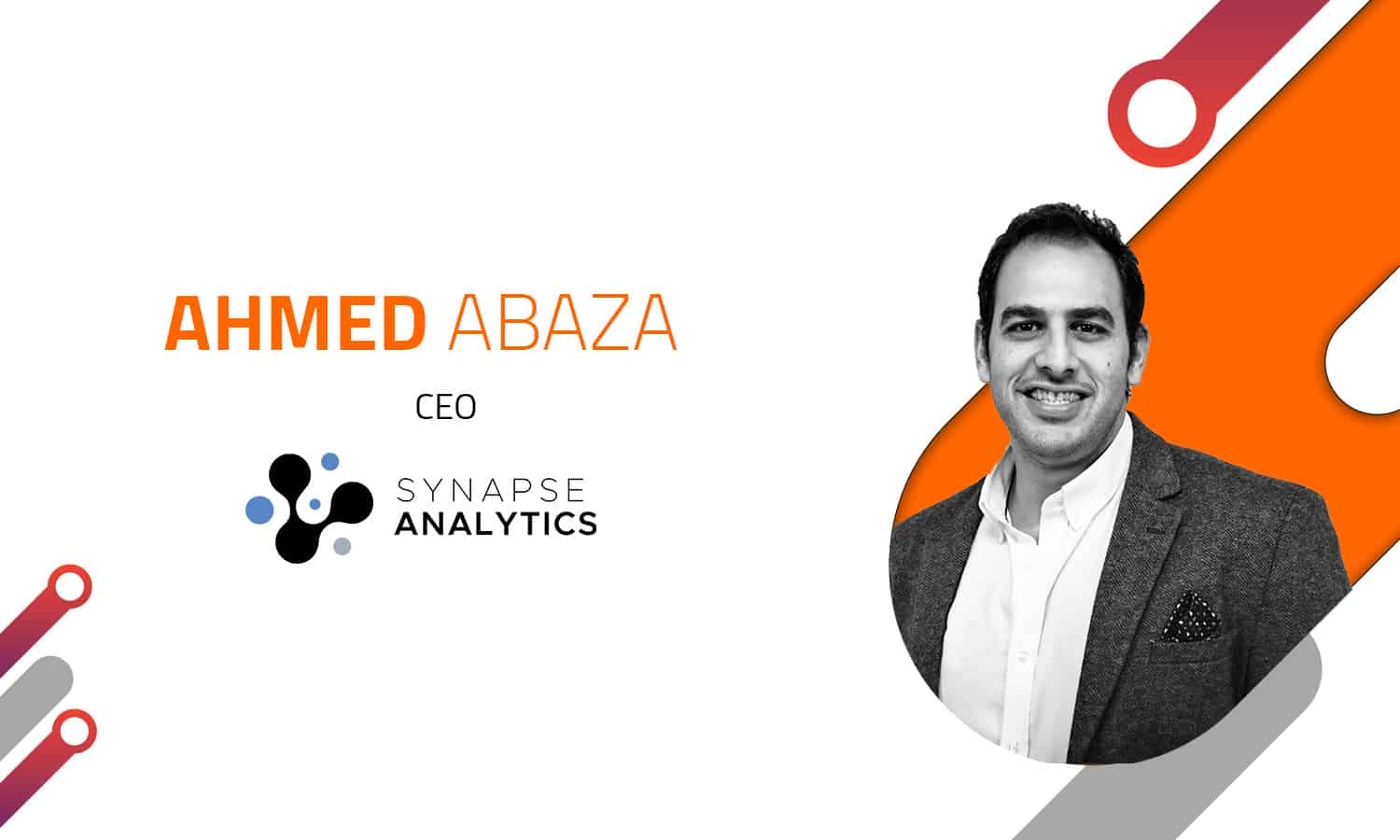
Arab Finance: With the rise of digitalization in various industries, AI has become an essential tool for financial institutions and businesses to remain competitive in today’s market. Egypt ranked second in Africa with a score of 49.2 in the AI Readiness Index in 2022, according to Ministry of Communication and Information Technology.
So, Arab Finance interviewed Ahmed Abaza, CEO of Synapse Analytics, an AI company that is revolutionizing financial solutions. He discussed what motivated them to start the company, what differentiates their services, and the challenges they faced.
1-What motivated you to start a company that uses AI to offer consumer lending, SME lending, microfinancing, and AI credit scoring?
We began as an AI startup to develop a solution that provides all solutions. We were early AI believers, dreaming of the day when our AIs could tackle climate change, create new policies, make society safer, expand businesses, and help us learn more about the universe. We decided that the first problem to solve with AI would be access to money; because resolving this issue will allow economies like ours to accelerate and create a healthy business environment. The majority of the world's population is excluded from the formal financial system, and we want to change that.
Also, we discovered that financial institutions were the most eager to implement AI in their operations, owing to the need for faster and more consistent decisions and the constant demand in the world's emerging economies. Furthermore, the massive absence of data in the field, which means that most financial institutions are unable to make decisions on people and enterprises who are not banked, poses an exciting problem to be tackled using AI.
Furthermore, we believe that the way risk is being handled in our markets is not optimal. With all the financial inclusion efforts, even if every person joined the financial system, there would still be problems. Credit scores are very static in the way they are calculated with fixed ratios that are turned into credit scores; the higher the score, the easier it is to access financing at a high rate, and the lower the rate, the higher the interest, if one can ever access it. Also, risk management, as it is done now, is data-hungry and takes forever to reach a decision. We believe we can do it faster, more efficiently, with less risk, and with more accessibility to funds all over Africa and the emerging markets.
We believe that Egypt and Africa are economies waiting to happen, and we can help enable the new Egyptian and African economies with our solution.
2-How do you differentiate your company's lending and credit-scoring services from those of traditional banks and financial institutions?
First of all, we are a native AI company. The Konan Decisioning platform, responsible for credit scoring, is the result of more than 5 years of deploying, integrating, and scaling AI across 5 markets and more than 45 clients. So, when it comes to making AI useable, this is our specialty. Despite the Gartner statistic that more than 87% of AI projects fail, our platform ensures that using AI to extend financial facilities will be a reality using Konan.
AI creates incredible agility when it comes to approving or rejecting a certain application. The applicant can provide only an ID, and Konan gives them a credit score. They can provide no ID and fill out an application, and we can give them a score. A business can apply for a loan with limited data, which traditional institutions will not finance. Our AI is capable of providing insight into why this business can succeed and be approved for a financial facility using alternative data and language models.
Furthermore, we know that AI is 70% to 80% of any decision, and how the AI integrates into the day-to-day workflow of a risk officer is a crucial part of our design. To that end, Konan offers a very easy drag-and-drop interface for risk officers to just apply their credit policy along with AI, controlling all the thresholds they need to ensure compliance and lower the risk of defaults. Konan abstracts all the technicalities to give full autonomy of the technology to the risk officer. The risk officer can go to market with their new credit policy without needing any technical or engineering teams to code the policy into their app, which expedites the launching of new programs to an afternoon as opposed to an average of 9 months.
Konan also provides all the live and historical monitoring for financial institutions to better analyze, generate, and amend their credit policies. Not to mention that institutions can create the whole pipeline of risk assessments from onboarding to profiling to decision-making from Konan.
3-What was the market void that promoted the creation of Synapse Analytics?
The lack of expertise and talent when it came to building, deploying, and scaling AI. Through our 5-year lifetime, we have created a very strong body of knowledge when it comes to artificial intelligence, and our team is more than capable of handling mission-critical deployments of AI.
4-How do you stay up-to-date with the latest trends and technologies, and how do you incorporate these into your services?
The AI market is moving at lightning speed, and I do my best to try almost every new tool that comes out, trying to understand and test everything about it. The day ChatGPT launched, although we had worked with large language models before, I lost sleep for almost two weeks, learning everything about it. I listen to podcasts, such as the All-in podcast and Lex Friedman; I am subscribed to newsletters, but honestly, I do not read most of them; and I use aggregators, such as Feedly, to try to filter the signals from the noise.
5-As we like to talk numbers, can you shed light on the company’s financial performance?
I cannot really expose a lot of our financials, but we always grew year after year, even during COVID and the war. We became profitable last quarter and are moving fast to expand our product in the region.
6-How do you measure the success of your services, and what metrics do you use to track progress?
We mainly look at how many facilities were granted through our platform, and currently, we have surpassed the $120 million-mark, further processing more than 2 million credit applications. Further, we monitor the performance of the facilities granted, and we have witnessed a more than 40% reduction in NPLs using our AIs. Not to mention how our customers grow their businesses using our decisioning platform, and we have seen 3x to 5x growth in our customers' deployment of their facilities due to using Konan.
7-What unique value propositions do your company offer to customers, and how do you communicate these to potential clients?
It is really more approvals with less risk. Coming to the correct decision fast in the context of financial facilities creates incredible business momentum. If you can approve applicants who have the willingness and capability to pay back their dues, even if they do not have the data or fit into the traditional credit applicant profile, everybody wins. Consumers and businesses would access the financing they need, and the institution could grow its business with less risk and save costs in the process.
We are ushering in a new finance world; everything is changing fast, and while an institution can take months or even years to access the power of AI in their operations, with Konan, they can access it in an afternoon, with all the controls and levers they need to ensure a smooth transition to the age of AI.
8-What are some of the challenges you have faced in building a company that leverages AI and enterprise software?
At first, working in AI and enterprise software was very challenging due to the nature of the consumer-based economies that we live in. The region is more known for technology and software consumption than for software creation. When your main innovation is in software, coming out of Egypt, no one believes you because you do not have the Harvard, Stanford, and ex-Google and ex-Facebook talent that is usually highly available for AI companies in the Western markets. At some point, there was a joke that goes by the valuation of your AI company is based on how many PhDs you have on your team.
However, we were lucky enough to find visionary funders who funded us despite all odds, a team who believed in our vision, attracted some of the top talent in the market, and insightful customers who have bold visions to change their markets and worked with us in building some incredible success stories.
9-How do you see the lending and credit scoring landscape evolving in the next 5–10 years, and what steps are your company taking to remain competitive?
Great question. I think cross-border lending would be way more accessible and enabled, fractionalized lending will become a reality, and social and peer lending will evolve rapidly. In addition, the relationship between non-banking financial companies (NBFIs), aggregators, and banks will be way more intimate; creating a new and unique hierarchy of the financial system. Balance sheets will become uberized, where accessibility trumps ownership, and there will be more dependence on alternative data rather than traditional scoring bureaus.
Furthermore, SME lending will boom and become expedited purely by alternative data, such as online presence, social followers, online conversions, and app user bases and your phone becomes your credit score and main financing method. Payment gateways, retailers, startups, and many traditional businesses will embrace embedded lending.
Moreover, the value of data is degrading fast; it will no longer be the new oil, and the value of intelligence and specialized models will grow. Disintermediation will be further expanded on, and the best experience wins. Revolving debt becomes more widespread, and there is more innovation in that respect. Human vs AI checks will become more frequent and sophisticated.
Besides, Google, Amazon, Apple, Metas, and Twitter will become the biggest NBFIs, and they will soon see a bigger opportunity for their financial products in emerging markets. Social credit would affect financial accessibility; for example, if a business receives great reviews on LinkedIn or a person is always praised for their discipline on social media, they might be included in the final social score.
10-What advice would you give to entrepreneurs who are interested in using AI to disrupt traditional industries, such as financial services?
Focus is key! With technology like AI, it becomes very attractive to solve every problem in the world but remember, the devil is in the details. Frame the problem you are solving very well and articulate it very clearly. Identifying the right issue is 90% of any successful solution. Get excited; we have moved into a new world that is hungry for builders and will reward them. Be part of it and build. Believe in the butterfly effect: change one small thing, and bigger things move with time. Artificial Intelligence is here to stay and is changing the world; if you have not learned anything about it, learn now! The best time to have planted a tree was 20 years ago. The second-best time is now.
Related News