Egypt’s Banking Sector Defies Global Instabilities
Updated 9/9/2023 9:00:00 AM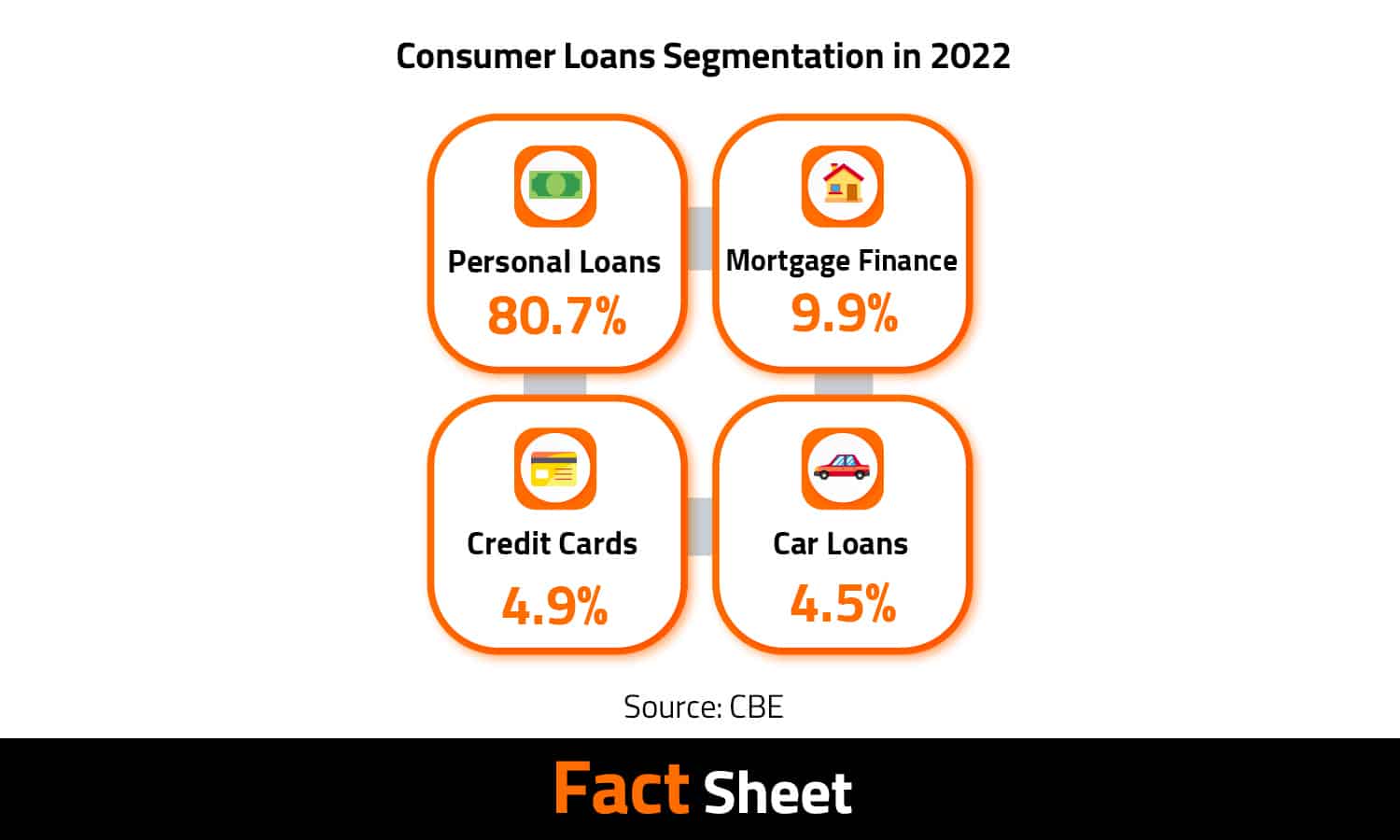
The banking sector, the main component of the Egyptian financial system, was able to maintain a strong and resilient performance during the past few years that were characterized by local and global economic instabilities.
In 2022, the banking sector achieved healthy financial performance indicators, while maintaining high levels of liquidity that exceeded the minimum requirements. The sector continued to support the Egyptian economy through attracting more deposits and financing different economic sectors and various client segments.
In this Factsheet, we will review the performance of the banking sector in terms of assets, revenues, expenditures, offered loans, and attracted deposits.
- In 2022, the banking sector assets increased by 32.7% year-on-year (YoY) to reach EGP 11.2 trillion. These assets represented 91% of the Egyptian financial system’s total assets and 130% of the system’s nominal gross domestic product (GDP).
- The banks’ assets are categorized into four main segments: financial investments and treasury bills (T-bills), with a share of 39.4% of total assets, followed by 35% as loans and credit facilities, 14.3% as banking balances, and 6.4% as liquidity at the CBE.
- The baking sector’s revenues highly depend on returns on loans, which represent 91.8% of total revenues, while commissions and other revenues represent the remaining 8.2%.
- The Egyptian banks’ main expenditures are the cost of deposits, which represent 67.6% of total expenditures. Income tax represents around 15% of total expenditures.
- In December 2022, total deposits reached EGP 8.6 trillion, which increased the financial position of the banking sector by 76%.
- Deposits in local currency dominated the scene, with a share of 82.5%, while foreign currency deposits were pushed by the increase in both business and family deposits and represented 17.7% in 2022, compared to 12.4% in 2021.
- The banking sector’s net profit increased by 29% at the end of fiscal year (FY) 2021/22. This hike was reflected in the return on equity, which increased by 17.7%, and the return on assets, which rose by 1.2% YoY.
- To finance local economy clients, the loan portfolio in the banking sector jumped by 31.1% YoY, recording EGP 4.1 trillion in FY 2021/22, compared to EGP 3.1 trillion in FY 2020/21.
- The share of long-term loans fell from 65.1% in 2021 to 57.1% in 2022, indicating a more stable financial position. On the other hand, short-term loans represented 42.9% of total provided loans.
- 6% of the banking sector’s loans were in local currency, while 24.4% were in foreign currencies.
- Loans provided to institutions had the lion’s share in the total provided loans with 71.2%; consumer loans came second with a share of5%, while loans offered to micro, small, and medium enterprises (MSMEs) accounted for 11.3%.
- Around 81% of consumer loans were personal loans, while 9.9% were mortgage finance, 4.5% were car loans, and 4.9% were in the form of credit card payments.
By: Amina Hussein
Related News
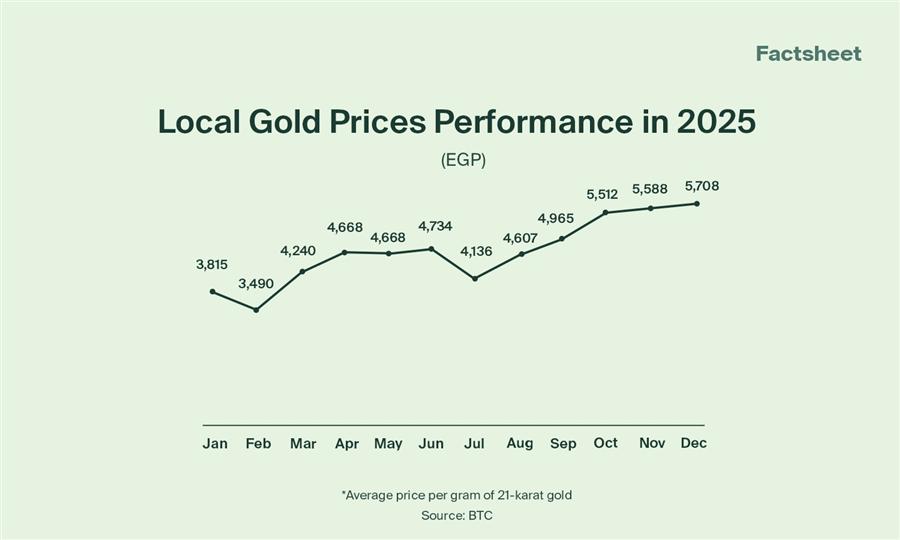
Gold Prices Surge in a Time of Uncertainty
Updated 12/27/2025 9:00:00 AM
CBE slashes key interest rates by 100 basis points in final 2025 meeting
Updated 12/25/2025 8:08:00 PM
Madbouly says no new burdens on citizens until IMF program ends
Updated 12/25/2025 8:13:00 AM
FRA-regulated financing tops EGP 1T for 1st time
Updated 12/24/2025 3:07:00 PM

IMF reaches staff-level agreement on Egypt’s 5th, 6th reviews under EFF
Updated 12/23/2025 8:22:00 AM