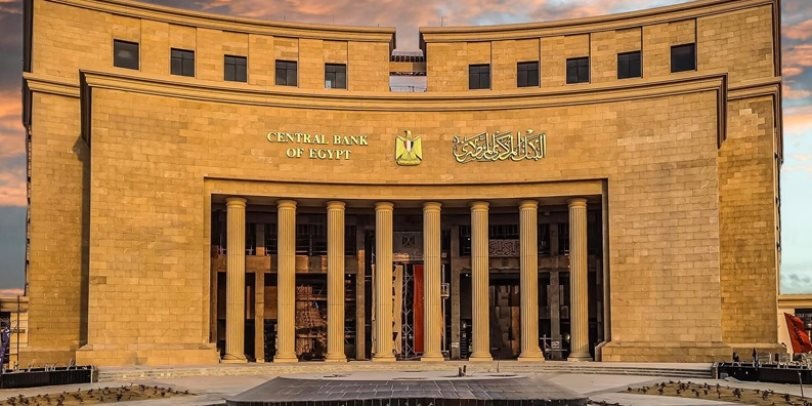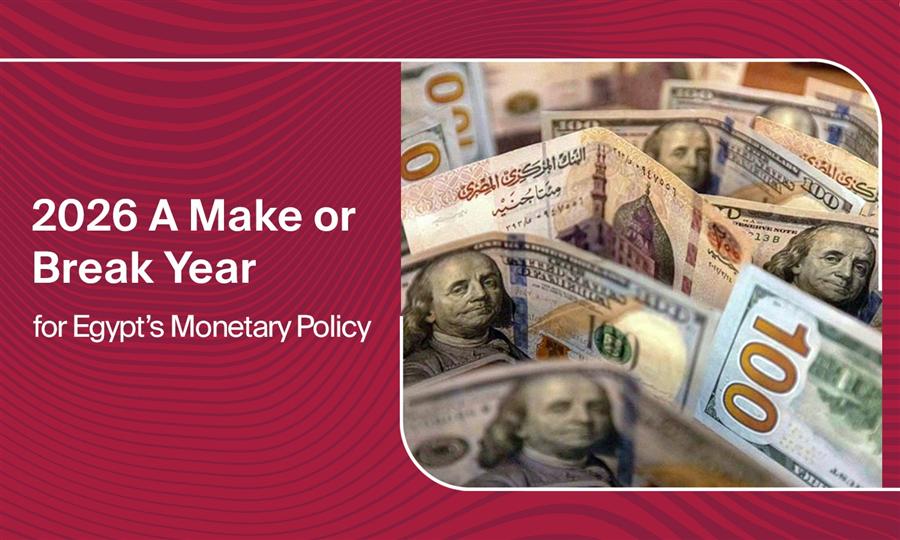
As Egypt approaches 2026, the trajectory of its monetary policy stands at a decisive crossroads. The Central Bank of Egypt (CBE) faces mounting pressure to recalibrate its framework in ways that strengthen transparency, flexibility, and credibility.
At the heart of this anticipated pivot lies a dual commitment: advancing a disciplined inflation-targeting regime and embracing a genuinely flexible exchange rate. These measures go beyond technical adjustments, representing a broader effort to restore investor confidence, stabilize domestic markets, and address the structural vulnerabilities that have long constrained Egypt’s economic resilience.
CBE Direction
As Egypt enters 2026, the CBE is laying the groundwork for a more transparent and rule-based monetary policy regime. The central bank has projected a significant decline in annual headline inflation, forecasting an average of 10.5% in 2026, from 14% in 2025 and 28.3% in 2024. This disinflationary trend is expected to bring inflation closer to the CBE’s medium-term target of 7% ±2 percentage points by the fourth quarter (Q4) of 2026, according to the CBE.
The CBE has reiterated its intention to maintain a genuinely flexible exchange rate, a move aimed at enhancing Egypt’s external competitiveness and buffering against external shocks. At its sixth meeting in 2025, the CBE cut deposits and lending rates for the fourth time this year, lowering them by 100 basis points to 21% and 22%, respectively.
Talking to Arab Finance, Dina Samir ElWakkad, an economics instructor and economist, says: “From my perspective, the current stance of the CBE reflects a careful, data-driven approach. Holding rates steady can help anchor inflation expectations, especially given the ongoing uncertainty in core inflation components. The key is that the CBE maintains clear communication about its targets and policy intentions, which is just as important as the rate itself.”
Global Monetary Cycles and External Shocks
Egypt’s monetary policy in 2026 will be tested by persistent domestic challenges. Sherine Ghaly, an associate professor of economics at the Institute of National Planning, highlights the inflation-targeting challenges facing the CBE. She notes that the Monetary Policy Committee (MPC) adopted a “wait-and-see” stance in November 2025, keeping policy rates unchanged to anchor expectations and maintain the disinflationary path.
Yet, she warns that “the inflation outlook remains vulnerable to both global and internal upside risks, such as rising geopolitical tensions, persistent services inflation, and a greater-than-expected pass-through from changes in regulated prices.” This underscores the fragility of Egypt’s disinflation trajectory, even as headline inflation is projected to decline steadily in the second half of 2026 toward the CBE’s target of 7% ±2 percentage points.
Fiscal pressures compound these challenges. Ghaly points out that interest payments on government debt are now the main source of risk to public finances, with Egypt’s foreign debt service projected to reach $29.18 billion in 2026, up from $27.87 billion previously. External funding needs are also expected to rise to $30.4 billion in fiscal year (FY) 2026/2027. Such burdens risk creating a situation of fiscal dominance, in which fiscal concerns override monetary goals, reducing the efficacy of CBE policy.
On the other hand, Egypt’s monetary policy cannot be separated from global dynamics. The US and EU monetary cycles, commodity price volatility, and the International Monetary Fund (IMF) program benchmarks all shape the external environment in which the CBE operates.
ElWakkad stresses that Egypt remains “moderately exposed” to global monetary tightening, as capital flows, exchange rates, and inflation pressures are influenced by global conditions.
She notes, “The CBE’s focus on domestic inflation and financial stability, along with more moderate global interest-rate volatility recently, has helped mitigate direct impacts.” Still, external shocks—whether shifts in investor sentiment or geopolitical risks—remain relevant and could quickly destabilize Egypt’s fragile equilibrium.
2026 Outlook
The outlook for Egypt’s monetary policy in 2026 remains contested, with experts offering divergent scenarios. “For me, a successful year would mean inflation gradually converging toward the medium-term target; well-anchored expectations among businesses and households; and a balanced approach that supports sustainable economic growth while maintaining macroeconomic stability,” ElWakkad explains.
“Overall, success would be achieving price stability and growth simultaneously, with policy credibility reinforcing confidence both domestically and internationally,” she adds.
Meanwhile, Ghaly notes that Egypt's monetary policy would be successful in 2026 if the CBE showed more progress in macroeconomic stability. “Importantly, real foreign currency inflows, from sources such as foreign direct investment (FDI) and the government's asset sale program, would be necessary to establish exchange rate stability.”
“A consistent drop in headline and core inflation toward the CBE's target, which signals that monetary policy is successfully permeating the economy, would be a clear indicator of success. Rebuilding foreign reserves to strong levels would help this and act as a support against external shocks,” Ghaly adds.
Egypt’s monetary policy in 2026 is poised for a credibility-driven pivot, anchored in inflation targeting and exchange-rate flexibility. However, its success will depend on the CBE’s ability to navigate domestic inflationary persistence, fiscal constraints, and external shocks.
As experts underscore, a truly successful year would mean inflation converging toward targets, expectations firmly anchored, foreign reserves rebuilt, and investor confidence restored.
Whether Egypt can strike this balance will determine if 2026 marks a turning point toward sustainable stability or another year of fragile progress overshadowed by structural vulnerabilities.
By Sarah Samir