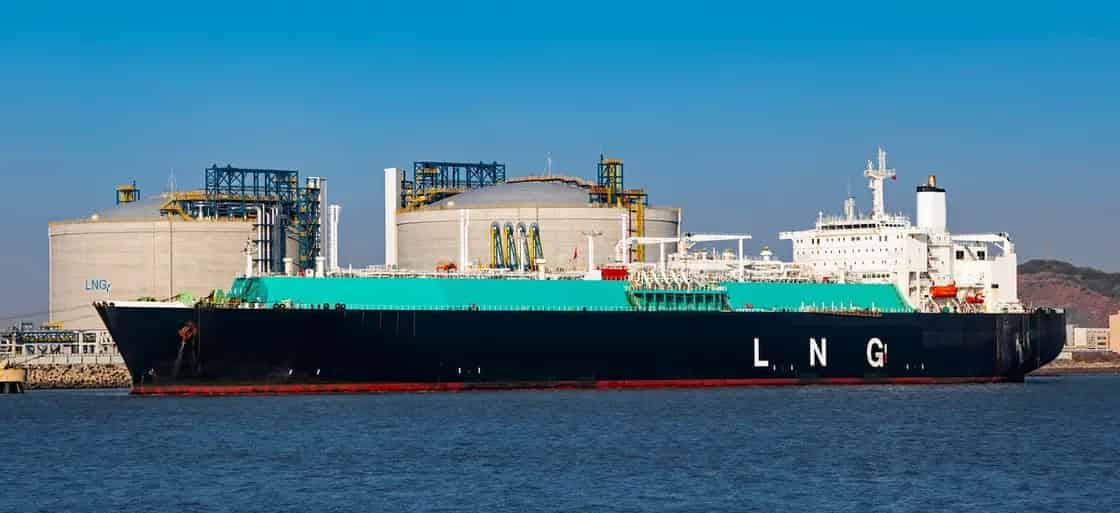
The US-Iran war has triggered a global helium crisis that extends far beyond the Gulf, disrupting supply chains, inflating costs, and exposing vulnerabilities in countries heavily reliant on imports. Qatar’s production shutdown, caused by strikes on its liquefied natural gas (LNG) and helium facilities, has removed nearly one-third of global supply, destabilizing industries, from healthcare to semiconductors.
For Egypt, which lacks domestic helium resources, the shock magnifies existing economic strains, threatening its medical infrastructure, industrial competitiveness, and foreign-currency reserves. This crisis is not merely a temporary shortage but a structural stress test, underscoring Egypt’s urgent need for strategic adaptation through technology upgrades, diversified supply contracts, and more efficient foreign exchange (FX) allocation.
The Spark Behind Helium Shortage 5.0
Qatar traditionally supplies about one-third of the world’s helium. Iranian strikes in February 2026 halted production, triggering what experts now call “Helium Shortage 5.0.” According to Abdullah Omar, a senior medical imaging specialist, the crisis has been intensified by logistical blockades in the Strait of Hormuz, a chokepoint for LNG-linked helium shipments. Egypt, heavily reliant on Qatari helium imports, is now exposed to both supply shortage and extreme price volatility.
Global coverage echoes this assessment, with the US-Iran war threatening the world’s supply of helium and Qatar’s shutdown destabilizing semiconductor, medical, and industrial supply chains worldwide.
Egypt’s MRI Fleet Dependence on Helium
Egypt operates roughly 1,000 closed MRI machines, about 95% of which rely on liquid helium for cooling, according to MRI-certified engineer Ahmed Hussein. “This makes helium essential, whether for regular operation or for repairing malfunctions,” he explains.
“Over the past two years, a small share of new machines using dry, helium-free magnets has entered the market,” Hussein adds. “Unlike traditional systems that require vessels holding up to 1,000 liters of helium, these newer models use only about 700 milliliters in a closed cycle that does not lose helium. As a result, they are unaffected by the helium crisis. However, such technology does not exceed 5% of Egypt’s MRI fleet, meaning the helium shortage will still have a significant impact.”
Meanwhile, Omar notes that Egypt’s public hospitals rely on 1.5T and 3T superconducting magnets, each requiring 1,500–2,000 liters of liquid helium to maintain temperatures near -269°C. Any supply interruption risks a quench, which can permanently damage the magnet. “If a machine quenches because it ran out of coolant, the cost to 'refill and ramp' the magnet can exceed $30,000–$50,000, assuming helium is even available at that time,” he says. “In a public health system already under fiscal pressure, this is a devastating blow to the budget.”
Consequently, helium prices have surged 50–70% since March 2026, Omar adds, forcing hospitals to choose between maintaining MRI services or reallocating scarce FX to other essential supplies.
Additionally, Hussein warns: “The shortage of helium drives prices upward, which in turn raises the cost of maintenance contracts and ultimately the price of MRI services for patients.” If helium becomes unavailable altogether, machines could risk irreversible damage, pushing entire radiology departments offline.
Industrial and High-Tech Exposure
Beyond healthcare, helium is indispensable for semiconductor manufacturing, fiber-optic production, and precision welding. International reporting confirms that helium is essential for cooling wafers and photolithography processes, and disruptions in Gulf supply threaten global chip production.
Supporting this, economic expert Abdelrahman Sherif explains: “The most affected areas include the manufacture of electronics, fiber optics, precision welding, and some chemistry and research-related applications. Helium is also critical to advanced research and development (R&D) and laboratory operations.”
“Egypt has no commercially viable helium sources and is completely reliant on importing helium, which makes the country structurally susceptible to global supply disruptions,” Sherif points out.
Similarly, fiber optic engineer Omar Abdella clarifies: “Helium is not directly used within fiber-optic cables themselves. However, it plays an important role during the manufacturing process of optical fibers, where it is used as an inert gas to help maintain controlled conditions and ensure high-quality fiber production.”
“Therefore, any shortage in helium would not directly impact the operation or maintenance of existing telecom networks. Instead, the effect would be indirect—potentially influencing manufacturing efficiency, increasing production costs, and causing delays in the supply of fiber-optic cables. This could, in turn, affect the pace of network expansion projects rather than compromise the reliability of current telecom services,” Abdella points out.
From a financial perspective, economic analyst Nada Haytham describes helium as a “silent drain” on Egypt’s FX reserves: “demand for helium in medical and high-tech sectors is inelastic, meaning we cannot simply stop buying it when the price rises. Hence, Egypt is forced to settle invoices that have doubled or even tripled during recent global shortages.”
Even though helium represents a small share of total imports, sudden price spikes create a localized bleeding point in FX management, especially during periods of tight dollar liquidity.
Echoing this concern, Sherif reinforces that “an increase in the price of helium would put more pressure on the limited FX reserves of Egypt. While helium is economically important due to its critical role, it accounts for only a small share of the country’s total import bill for energy and food commodities.”
“The increase in helium prices would increase FX outflow for the same import volumes. More importantly, higher helium prices would have a significant economic impact through a number of indirect effects,” Sherif notes.
From Physical Reserves to Strategic Contracts
Given these challenges, Sherif is unequivocal: “Prioritizing helium as a medical-grade input in the FX allocation is a policy must. For MRI systems, liquid helium is needed to keep superconducting magnets at cryogenic temperatures. Supply chain disruptions lead to a direct impairment in diagnostics, delaying care and increasing risk to public health.”
“Medical-grade helium should be viewed as a strategic and irreplaceable input, akin to other first-line pharmaceuticals and critical medical supplies. Restrictive access is detrimental to the health care system's resilience,” he adds.
However, Haytham notes that physical stockpiling is nearly impossible: “Helium is the smallest molecule in the universe and is incredibly difficult to contain; it eventually leaks out of almost any vessel. Furthermore, keeping it in liquid form requires constant cryogenic storage at -269°C, which is energy-intensive and technologically demanding. Rather than a physical stockpile, Egypt’s strategic reserve is more likely to take the form of strategic contracts, diversifying import sources to include producers to mitigate the risks associated with regional supply disruptions in the Gulf.”
To address these issues, Sherif recommends selective subsidies for medical and research applications, targeted FX allocation to clear essential imports, and regional supply cooperation to stabilize prices. In terms of MRI. Both Hussein and Omar emphasize that Egypt must transition to sealed-helium or helium-free MRI systems.
“Manufacturers such as Canon, Philips, Siemens, and others should expand production of helium-free MRI machines. With mass production, costs will decrease and market adoption will rise. On the buyers’ side, hospital decision-makers should prioritize purchasing helium-free machines to avoid disruptions, especially since helium shortages occur roughly every five years due to its rarity and limited production,” Hussein says.
Omar agrees, stating that “helium-free technology is no longer just a luxury; it is a strategic necessity.”
On the industrial front, especially in the line of fiberoptics and electronics, Haytham explains that "the focus has turned to circular recovery. Suppliers are now encouraging, and in some cases requiring, large-scale users to invest in on-site recovery systems. These systems capture the boil-off gas that would otherwise escape into the atmosphere, reliquefying it for reuse.”
“While the initial investment in this technology is high, the extreme volatility of 2026 has made the return on investment (ROI) much faster for Egyptian manufacturers looking to shield themselves from global price shocks,” according to Haytham.
Ultimately, Egypt’s helium shock is not a temporary supply issue but a full-scale stress test of the country’s economic resilience. The crisis exposes deep structural vulnerabilities, from FX pressures to healthcare continuity and industrial competitiveness, and threatens to intensify inflation and import costs across critical sectors.
Egypt must now choose between remaining reactive or adopting a strategic, forward-looking approach built on technology upgrades, diversified supply contracts, and smarter FX prioritization. The stakes span patient care, industrial performance, and macroeconomic stability.
By Sarah Samir