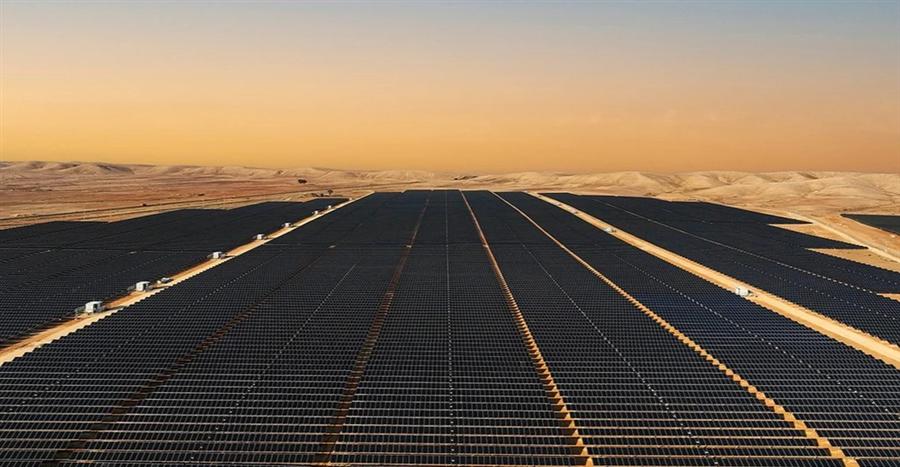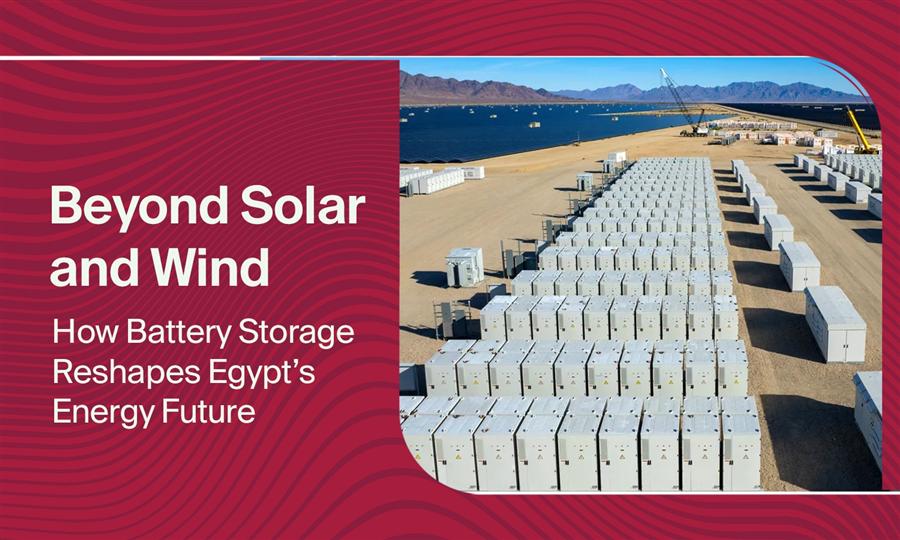
Egypt is at an energy tipping point. Landmark projects like the Benban solar park – one of the largest solar parks worldwide – and vast wind farms in Zafarana have rapidly expanded the country’s renewable energy generation capacity. Yet the prospect of clean energy is tempered by a profound challenge: solar and wind power are not available at all times in every location.
There is no renewable power on demand without the ability to store it. Without adequate storage, even moderate energy scenarios require off-grid generation and reliance on fossil fuels. This is where battery energy storage systems (BESS) emerge as a strategic asset.
By stabilizing the grid, smoothing supply-demand imbalances, and enabling higher penetration of renewables, BESS technology is the linchpin of Egypt’s green energy ambitions.
The Strategic Imperative for Battery Manufacturing
In 2023, electricity generated from renewable sources accounted for 12% of Egypt’s total energy generation, according to the International Renewable Energy Agency (IRENA)’s country profile on Egypt. Looking ahead, Egypt has adjusted its 2030 renewable energy goal to 29.7%, as outlined in the International Monetary Fund’s (IMF) July 2025 report on the country’s $8 billion financing program.
While renewable energy is environmentally friendly and increasingly cost-effective, its inherent intermittency remains a significant hurdle. Solar, wind, and hydropower are subject to diurnal and seasonal fluctuations, while biomass is often constrained by logistical challenges. Consequently, grid-scale energy storage, particularly battery systems, is vital for maintaining reliability.
Hammam Elmekawy, Director of the Electricity and Projects Sector and board member at an Egyptian Electromechanical Company, tells Arab Finance: “Energy storage technologies, such as BESS, are crucial for improving the stability of electrical grids and reducing harmonics in transmission and distribution lines.”
“The value of BESS lies in its ability to stabilize the grid by storing excess energy and discharging it during peak loads. By leveraging advanced battery arrays to store power, these systems mitigate the impact of load volatility and provide a resilient response to grid fluctuations,” he adds.
Localizing Battery Cell Production
Egypt’s commitment to renewable energy integration has taken a major leap forward through a series of high-impact BESS Initiatives. In June 2025, the International Finance Corporation (IFC) and AMEA Power announced the launch of Egypt’s first utility-scale BESS.
The 300-MWh system is being integrated into AMEA Power’s 500-MW solar photovoltaic plant in Kom Ombo, Aswan Governorate. The project is backed by a $72 million debt package from IFC.
In July 2025, the 300 MWh solar-powered facility successfully achieved its commercial operation date (COD) ahead of the projected deadline. This milestone underscores Egypt’s progress in energy transition and demonstrates the viability of large-scale storage solutions.
In February 2025, AMEA Power signed capacity purchase agreements with the Egyptian government to develop the country’s first standalone battery storage stations. These include a 500-MWh facility in Zafarana and a 1,000-MWh installation in Benban. These projects are designed to enhance grid stability and enable deeper integration of renewables, particularly from Egypt’s growing solar and wind assets.
Earlier in January, Egyptian company Kemet and Chinese group Krenex signed an agreement to localize the production of energy-storage battery cells and establish an integrated battery manufacturing plant, utilizing local raw materials and industrial components.
The $200 million project aims to localize energy storage technology through a new factory with an annual production capacity of 5,000 MWh. By leveraging local raw materials and processing industries, the agreement ensures full transfer of manufacturing expertise to create a domestic battery cell supply chain.
Economic Rationale for Local Battery Manufacturing
By utilizing BESS technologies, Egypt can reduce its annual natural gas import bill. Ahmed Fawzy Hussein, a PhD holder and an assistant professor of economics, says to Arab finance: “In my opinion, a realistic range for 2026–2028 is roughly $0.1–0.4 billion per year, with upside potential of $0.6–1.5 billion a year if Egypt materially scales storage beyond the currently signed pipeline and pairs it with fast renewable buildout.”
He explains that “BESS does not replace gas on its own, but it reduces the most expensive components of the gas system: peak balancing, emergency liquified natural gas (LNG) cargos, and inefficient dispatch, such as running less-efficient peaking units during evening demand spikes.”
“As Egypt adds storage in the multi-GWh range, the system can shift a meaningful amount of electricity from solar-rich hours to evening peaks and reduce curtailment—directly displacing incremental gas-fired generation at the margin,“ Hussein notes.
Additionally, Hussein explains that "global benchmarks suggest battery factories create roughly 80 direct jobs per GWh of annual capacity, on average, with variation depending on automation levels and position in the value chain.”
“As a sense-check, a 5-GWh-per-year domestic manufacturing footprint can support 400 direct manufacturing jobs, in addition to roles in quality control, logistics, and supervision, as well as multiple indirect ones in supplying, services, and construction. A 10–20 GWh-per-year ecosystem, over time, can generate thousands of total jobs when upstream materials and components, engineering, procurement, and construction (EPC), logistics, and services are included," he adds.
Hussein further highlights that “the real diversification win lies in pulling Egypt into higher-complexity tradable services and light manufacturing, including grid and market analytics, dispatch optimization, forecasting, and digital twins, involving testing and certification. This also involves safety engineering, standards compliance (IEC/UL), including power-electronics engineering and industrial automation, in addition to after-sales operations and maintenance (O&M), performance guarantees, and warranty analytics. This supports private-sector diversification because storage is not just hardware; it is a recurring service market.”
On the export front, Hussein notes that supplying the Common Market for Eastern and Southern Africa (COMESA) and Arab Markets is “viable — but it will be won through systems and integration rather than commodity cells. Egypt’s strongest export proposition lies in containerized BESS solutions and components, including modules and packs, power conversion systems (PCS) and inverters, energy management system (EMS) software, integration engineering, and operation and maintenance (O&M) services.”
This comes due to the country’s geographic location, in addition to "grid interconnection momentum in the region that supports cross-border trade and flexibility needs, and a growing domestic pipeline capable of creating bankable reference projects, something buyers and lenders require,” he explains.
Accordingly, “if Egypt builds a bankable domestic track record and a supplier base around Suez Canal Economic Zone (SCZone) during 2026–2028, it can credibly export BESS solutions across COMESA and Arab markets—especially where grid reliability and peak fuel costs pose strategic constraints,” Hussein points out.
Egypt’s energy transition is no longer a distant aspiration—it is unfolding in real time. However, the intermittency of renewable resources is a critical reality. Without robust energy storage, renewables cannot fully displace fossil fuels. BESS projects are therefore not optional—they are indispensable to Egypt’s green energy future.
By Sarah Samir