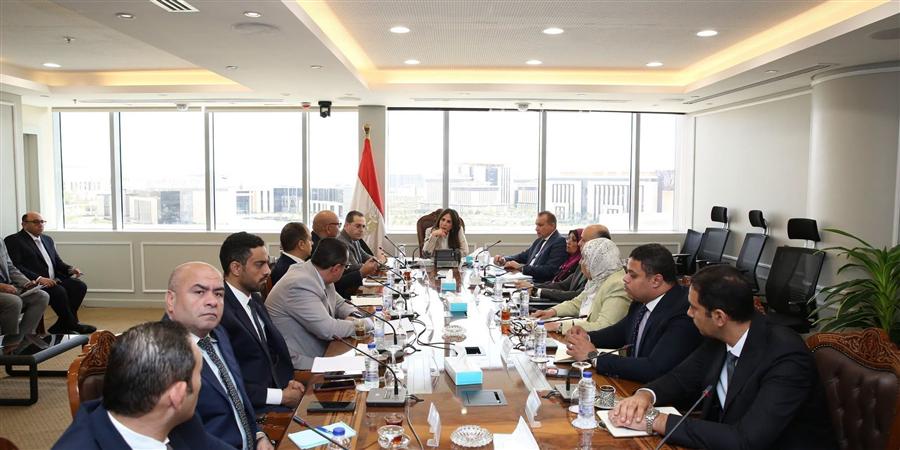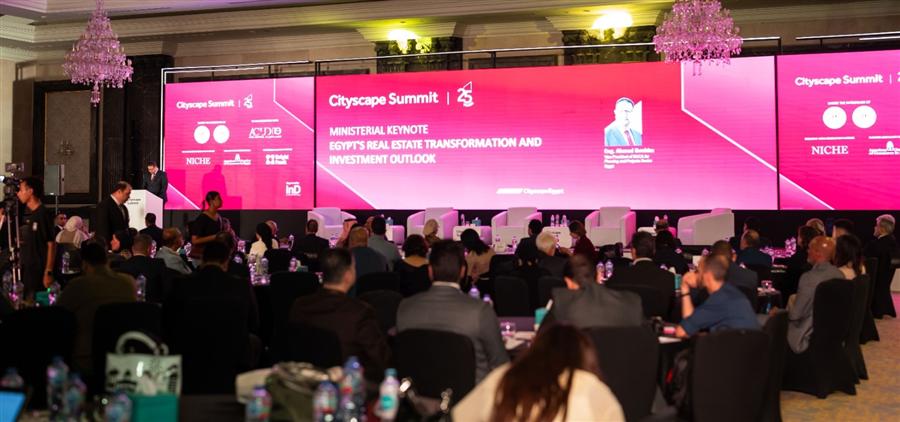
Arab Finance: The Cityscape 2026 Summit opened at The St. Regis Cairo in the New Capital, convening government officials, investors, developers, and industry experts to examine the forces shaping Egypt’s real estate market and its investment prospects, as per a press release.
Held under the patronage of Prime Minister Mostafa Madbouly and the Ministry of Housing, Utilities and Urban Communities, the summit is taking place in cooperation with the Administrative Capital for Urban Development (ACUD). Informa, an international exhibitions and events company, is organizing the event.
The agenda covers global capital flows and opportunities to attract more Gulf and European investment into Egyptian real estate. It also addresses the future of the New Capital, developments in Ras El Hekma, and the financing tools available to investors.
Other sessions are examining the effects of changing trade patterns, regional realignments, and capital movements on Egypt’s investment environment. The discussions extend to emerging opportunities in artificial intelligence (AI) and data centers, as well as the factors supporting property demand, the constraints affecting projects, and the sectors currently drawing investor interest.
The summit comes as Egypt moves forward with its urban development plans and the construction of new cities and communities, with the New Capital representing a central part of that direction. Against this backdrop, participants are exchanging views on the requirements of the sector’s next phase.
Fathallah Fawzy, Vice Chairman of the Egyptian Businessmen’s Association and Chairman of its Real Estate Development and Contracting Committee, said the market must adapt to geopolitical and economic changes while facing greater international competition for investment.
“We meet today at a pivotal moment for the real estate sector, as the world around us is being reshaped amid geopolitical and economic shifts and growing competition among cities and countries to attract investment. Amid these changes, Egypt presents a genuine opportunity, with its large market, strong underlying demand, exceptional geographic location, and infrastructure that has undergone significant development. However, opportunity alone is not enough. To transform these strengths into sustainable investments, we must move the Egyptian market into a new phase centered on value creation, diversified financing models, and regional and international thinking that brings together opportunities and expertise with capital,” he said.
The market’s development will also depend on how companies and regulators respond to changing customer expectations and investor requirements, he added.
“Today’s customer is more informed and increasingly focused on quality of life and sustainability. As a result, the market will not reward the largest players, but rather those that demonstrate the greatest efficiency and credibility. Investors are always looking for clarity of vision, clear regulations, and confidence in the future, which requires an integrated role from the state to enhance transparency and regulate the market. One of Cityscape’s key strengths is its ability to bring the government, developers, investors, and experts around one table, because the future of the real estate sector cannot be shaped by one party alone; it must be built through the integration of all stakeholders and mutual trust.”
Ahmed Ibrahim, Vice President of the New Urban Communities Authority (NUCA) for the Planning and Projects Sector at the Ministry of Housing, Utilities and Urban Communities, used his opening remarks to address the impact of economic pressures and supply-chain disruptions on the industry.
“We meet today at an exceptional moment in the history of Egypt’s real estate market, where significant challenges converge with a promising market. The sector’s recent experience of rapid economic changes, rising investment costs, and disruptions to supply chains, and their subsequent impact on project execution, has been more than a test of the market’s resilience. It has also served as a catalyst for redefining working mechanisms, reprioritizing objectives, and adopting more efficient and sustainable business models,” Ibrahim commented.
Ibrahim also outlined the ministry’s role as the relationship between the government and private developers continues to evolve.
“At the heart of these transformations, the Ministry of Housing, Utilities and Urban Communities represents the national driving force behind this sector, with the role of the state evolving into that of a strategic partner and catalyst for growth. Egyptian developers are no longer simply builders of concrete structures; they have become community builders and drivers of innovation. This requires greater flexibility and prudent operational management, alongside a strong focus on sustainability, innovative financing solutions, and a firm commitment to the interests of customers who have placed their trust in this vital sector.”
Mahmoud Mohieldin, a global economist, United Nations Special Envoy on Financing Sustainable Development, Professor of Economics and Finance at Cairo University, and former Executive Director of the International Monetary Fund, placed the industry’s challenges within the wider economic environment.
“The current edition of Cityscape Summit comes at an exceptional economic juncture that requires a careful assessment of global and regional developments, as well as a cautious and professional approach to rapidly changing growth rates and inflation levels. The real estate sector, which has long served as a cornerstone of economic growth and a safe haven for investment, is now facing a genuine test to reorganize its priorities and explore new pathways that can ensure its resilience and sustainability in the face of current competitive and financing challenges.”
He then set out the measures he sees as necessary to protect investment value and maintain the sector’s role in the economy.
“To ensure that the sector continues to fulfill its vital role, it is essential to focus on strengthening sustainability and avoiding the overvaluation of assets, while implementing realistic and transparent pricing and risk management standards. The future of real estate investment will depend primarily on building strategic partnerships and delivering innovative solutions that keep pace with structural changes in the market, thereby preserving the long-term value of investments and creating an attractive environment for both local and international investors.”
Robier Daniel, Cityscape Egypt Exhibition Director, said the program was designed around both the changes affecting the property industry and the opportunities emerging across related sectors.
“This year’s Cityscape Summit agenda reflects the transformations taking place across the real estate sector and the diverse investment opportunities emerging alongside them. Our discussions focus on the issues that will have the greatest impact on the sector in the next phase, from stimulating investment and strengthening investor confidence to regional cooperation and cross-border investment. We are also highlighting growth opportunities across hospitality, tourism, retail and mixed-use developments, alongside data centers and digital infrastructure, opening new avenues for investment and supporting the competitiveness of the Egyptian market.”