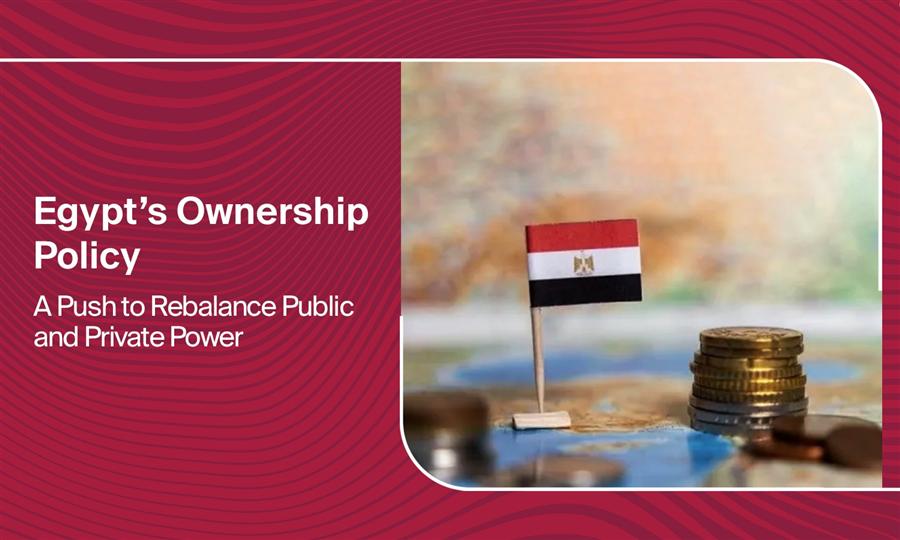
For decades, Egypt’s economy has been shaped by the state’s pervasive presence across key sectors, creating structural constraints on growth. This dominance limited competition, stifled entrepreneurial development, and weakened innovation capacity in critical industries.
Recognizing these challenges, the government has launched an explicit exit strategy through its State Ownership Policy Document, aiming to rebalance public and private roles in the economy. The strategy seeks to reduce state involvement across industries that account for the bulk of national output, while opening space for private investment, efficiency gains, and global competitiveness.
Yet, the transition is fraught with risks. Opaque regulatory frameworks, politically driven divestments, and slow implementation could undermine investor confidence. Ultimately, the credibility, speed, and transparency of reforms will determine whether Egypt’s privatization drive delivers sustained transformation or falls into another cycle of half-measures and unmet promises.
State Ownership Policy Overview
The Egyptian government's exit strategy reflects a structural recognition that decades of state economic dominance have impacted economic growth. To reverse this trajectory, the government has developed the State Ownership Policy Document.
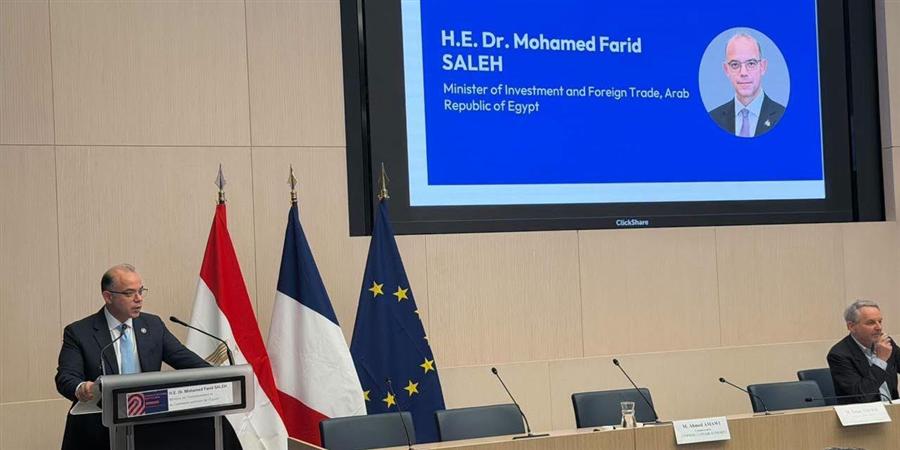
The policy aims to catalyze economic growth by attracting local, regional, and international private investors. By outlining a clear roadmap for the government’s exit from industries that account for roughly 85% of gross domestic product (GDP), the policy marks a significant shift toward a private-sector-led economy, Hossam Heiba, CEO of the General Authority for Investment and Free Zones (GAFI), stated in November 2025 at the Egypt-Gulf Trade and Investment Forum.
Based on an inventory of government-owned companies conducted at the end of August 2025, 45 government agencies own 561 companies. Data from the third report on the implementation of the State Ownership Policy Document show a 21% decrease in the number of state-owned companies, from 709 in August 2024 to 561 companies, while the number of owners has increased to 45 entities from 33.
Commenting on the strategy, economist Kholoud Wael tells Arab Finance: “Egypt’s state ownership reduction has progressed gradually but has sent a positive signal to investors. While implementation remains cautious, sectors such as logistics, transportation, non-strategic manufacturing, and services are likely to benefit most from reduced state involvement through improved efficiency and competition.”
Meanwhile, Mohamed Riad, a senior economist, explains, “Egypt’s government exit strategy represents a pivotal shift in economic policymaking, aimed at redefining the role of the state while unlocking the private sector’s potential as the primary engine of growth.”
“Successfully managing this transition requires a careful balance between transparency, fiscal discipline, and inclusive development, particularly at a time of global economic uncertainty and domestic reform pressures,” he adds.
Privatization Commitment
The government has enacted a series of legislative reforms designed to improve the business environment for private investment. In August 2025, President Abdel Fattah El-Sisi signed Law No. 170 of 2025, titled "Regulating Certain Provisions of State Ownership in Companies Fully or Partially Owned by the State," which fundamentally accelerated the legal conditions for privatization.
The law repealed previous restrictions that had prohibited state entities and wholly state-owned companies from disposing of shares in public-sector enterprises except among themselves. This repeal effectively removes a structural legal barrier that had historically constrained asset sales.
Beyond legislative reform, the government has established the Sovereign Fund of Egypt (TSFE) as the primary vehicle for holding and subsequently divesting state assets. Rather than pursuing direct ministry-by-ministry sales, state-owned companies are being transferred to the TSFE, which then structures and executes offerings.
The government's privatization program has been operationalized through multiple channels, most notably the initial public offering (IPO) initiative launched in February 2023. In October 2025, Prime Minister Mostafa Madbouly confirmed the government’s commitment to pushing forward the IPO program "as quickly as possible" to attract private investments.
Implementation Challenges and Recommendations
Privatization, however, is not without risks. Wael warns: “Privatization can create short-term employment pressures if not carefully managed. These risks should be mitigated through phased reforms, worker retraining programs, and adequate social protection measures to support smoother labor transitions.”
Despite the institutional apparatus and revised legal framework, Egypt's privatization efforts have faced substantial implementation challenges. The International Monetary Fund’s (IMF) July 2025 review noted that "divestment efforts nearly came to a halt in 2024," with authorities announcing 35 companies for sale in early 2023 but completing divestments—mostly partially—in only nine cases.
"Transparency and accountability are fundamental to the credibility of Egypt’s divestment program. Clear governance structures must underpin every stage of the process, from asset valuation to execution and post-transaction oversight,” Riad explains. “This begins with the public disclosure of divestment objectives, timelines, and criteria for selecting assets, ensuring that both investors and the wider public understand the strategic rationale behind state exit decisions."
Implementing standardized and independent valuation methods, along with competitive and transparent bidding processes, is vital to reducing market distortions and safeguarding public value, according to Riad.
“Strengthening disclosure requirements for state-owned enterprises (SOEs), improving financial reporting standards, and empowering oversight institutions all contribute to enhancing trust. When transparency is institutionalized rather than ad hoc, divestment becomes a tool for reform rather than a source of controversy,” he points out.
Egypt's transition toward a private-sector-led growth model further requires substantial technical and financial support from international institutions. As Riad emphasizes, “Beyond financing, their greatest contribution lies in technical assistance, policy guidance, and capacity building.”
“Drawing on global best practices, these institutions can support reforms in corporate governance, competition policy, and regulatory frameworks—areas essential for creating a level playing field between public and private actors,” he elaborates.
Private Sector Investment Momentum
Egypt has begun demonstrating measurable progress in rebalancing its investment structure toward private sector leadership. Private investment hit its highest level in five years in fiscal year (FY) 2024/2025, rising to 47.5% of total executed investments, up from 39.6% in the previous fiscal year, as revealed by the Ministry of Planning, Economic Development, and International Cooperation in October 2025.
In absolute terms, private investment increased from EGP 474.7 billion in FY 2023/2024 to EGP 590.7 billion in FY 2024/2025, a nominal increase of 24.4%. Over the same period, public investment fell from EGP 627.5 billion to EGP 526.6 billion. This trend accelerated further in the first quarter of FY 2025/2026, when private sector investment surged to constitute 66% of total investments, reflecting a deliberate policy shift toward private-led growth.
Looking ahead to 2026, Wael outlines the benchmarks for success, stating that “reform success should be assessed through private sector investment growth, job creation within private enterprises, foreign direct investment (FDI) inflows, and the private sector’s share of GDP, alongside improvements in the regulatory environment and overall business climate.”
Egypt’s economic transformation hinges on the delicate balance between ambition and execution. The State Ownership Policy Document, together with accompanying legislative reforms, signals a decisive break from decades of state dominance and lays the groundwork for a more dynamic, private-sector-led economy.
Early progress—reflected in rising private investment and gradual divestment of state-owned enterprises—demonstrates that momentum is building. Yet, the credibility of this transition will depend on transparency, consistent implementation, and the ability to mitigate social and employment risks.
The coming years will determine whether this strategy delivers a genuine rebalancing of economic power, unlocking innovation and competitiveness, or falters under the weight of half-measures.
By Sarah Samir