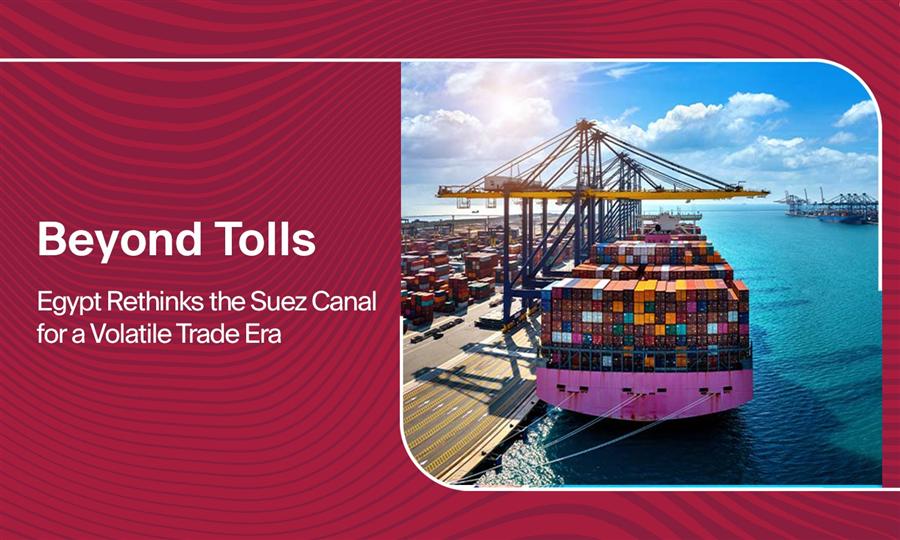
The Suez Canal has long stood as one of the world’s most vital maritime arteries. For decades, its economic model has relied primarily on transit fees collected from vessels passing through its waters—a revenue stream that, while substantial, is inherently limited due to fluctuations in global shipping demand and competition from alternative routes.
As the dynamics of international trade evolve, the canal’s strategic importance as a resilient hub for maritime lanes has opened new opportunities beyond toll collection. Stable traffic flows not only reinforce the canal’s role in global commerce but also provide a foundation for expanding port services such as bunkering, ship repairs, and logistics hubs.
Traditional Revenue Model
For decades, the Suez Canal Authority (SCA) has relied on transit fees charged to vessels crossing the canal as its primary source of income. Between late 2023 and mid-2025, the canal lost approximately $8 billion in revenues as many ships diverted around the Cape of Good Hope amid geopolitical unrest, according to an article by Minister of Foreign Affairs Badr Abdelatty published in the British maritime publication Lloyd’s List last May.
“This [loss] has served as a powerful, albeit costly, reminder that the canal's economic future cannot rest solely on the unimpeded flow of ships. The new imperative for the SCA and the Egyptian government is a rapid and robust diversification strategy to build economic resilience,” Ahmed Ghaly, a trade economist, tells Arab Finance.
In May 2025, the SCA introduced a 15% discount on transit fees for large container ships (net tonnage ≥130,000 tons). This rebate was designed to attract vessels back to the canal after months of declining traffic caused by regional instability, according to the SCA’s website.
The Suez Canal's revenues are projected to reach $4.2 billion by the end of the current year, up from the $3.9 billion recorded in 2024, SCA Chairman Osama Rabie revealed in November 2025.
Commenting on this, Mohamed Abdel Fattah, Economist and Director of Market Access and Government Affairs at M&P, says: “The recovery in Suez Canal revenues in late 2025 underscores the canal’s structural importance to global trade and its ability to regain traffic once disruptions ease. However, the current environment is fundamentally different from the pre-crisis period.”
From Security to Resilience
The Suez Canal is a critical chokepoint for global commerce, connecting the Mediterranean Sea with the Red Sea and serving as the shortest maritime link between Europe and Asia. However, Ehab Younis, Professor and Head of Economics Department at El Shorouk Academy, tells Arab Finance: “The reality is undergoing significant changes. The Suez Canal is no longer merely a maritime artery connecting East and West; it has become a living test of nations' ability to manage risk in a highly volatile global economy.”
He points out, “Recent geopolitical events, volatility in international trade, and the rise of alternative routes have revealed a crucial truth: military security alone is no longer sufficient to guarantee sustained demand for the canal. The key question today is no longer ‘Is the Suez Canal safe?’ but rather ‘Is the Suez Canal economically and digitally resilient enough to remain the preferred global option?’”
Traditionally, the canal’s revenue model has been built on transit fees. While lucrative, this approach exposes Egypt to fluctuations in global trade volumes and geopolitical tensions. As Younis notes, “Major shipping companies like Maersk and MSC do not view the canal simply as a shorter route, but rather evaluate it from a risk-adjusted cost perspective.”
To address this, the canal must shift from a toll-collection model to one based on a long-term partnership. This should involve “long-term transit contracts with tiered rates linked to annual transit volume, providing stability for both parties; partial sharing of insurance risks associated with geopolitical tensions reduces the overall cost of transit compared to alternative routes; and pricing flexibility minimizing fee volatility and gives shipping companies greater planning power,” Younis explains. He stresses that “this flexibility is not a concession, but a competitive tool that enhances the canal's attractiveness.”
Meanwhile, Ghaly notes that “the solution lies not in accepting the volatility, but in accelerating initiatives that create parallel, non-transit-based revenue streams. These streams must act as an economic buffer, making the nation's income from the Canal Zone more resilient to future disruptions in maritime traffic.”
Logistics Integration
Despite progress in digitalization through the Nafeza platform, logistics costs remain high. Younis notes: “The problem is not digitalization itself, but its limited scope. What we have today is a digital customs window, not a fully integrated digital value chain.”
Global benchmarks like Singapore and Jebel Ali show that successful hubs operate as integrated ecosystems, connecting transport, warehousing, trade finance, and insurance. For Egypt, the missing element is a comprehensive logistics operating system that transforms the canal zone into a true maritime hub, according to Younis.
Abdel Fattah reinforces this point, emphasizing that “long-term resilience lies in maximizing value per vessel, not just vessel count.” Expanding services such as bunkering, ship services, and logistics could gradually reduce dependence on transit fees.
While Abdel Fattah cautions that achieving a 20–30% revenue share by 2030 requires sustained investment and regulatory clarity, he sees these services evolving into a meaningful secondary revenue stream.
Evidence of this evolving integrated ecosystem is already visible through major infrastructure milestones. Ghaly explains that a key component of diversification is the transformation of the Suez Canal into a comprehensive logistics and industrial hub. The recent inauguration of the Suez Canal Container Terminal (SCCT) expansion, adding 2.2 million twenty-foot equivalent unit (TEUs) of capacity, is a tangible step in that direction.
The Green Corridor
Sustainability is another pillar of diversification. Green hydrogen projects are advancing, though Younis warns that “real revenues will not materialize before 2027–2028,” and only if transit is contractually linked to the canal and incentives are offered to green vessels.
Abdel Fattah situates this within the broader regulatory landscape: “The European Union’s (EU) Carbon Border Adjustment Mechanism (CBAM) introduces a structural shift in how carbon costs are embedded into trade flows, and this will increasingly influence shipping and routing decisions. The Suez Canal’s Green Channel initiative should therefore be viewed as a strategic adaptation to this evolving landscape, rather than a short-term competitive tool.”
The Green Canal Corridor Initiative is a long-term strategic investment. While initial, smaller-scale revenue streams may begin to materialize within the next three to five years, the full economic impact of the ability to truly offset major fluctuations in transit fees requires scaling production capacity and securing international offtake agreements.
AS Ghaly explains, the initiative is a commitment to safeguarding the canal's economic future by tapping into the burgeoning global demand for green fuels.
By incentivizing lower-emission vessels, the canal aligns with Europe’s regulatory direction. While this may not eliminate the Cape route’s viability during crises, it tilts the cost-benefit calculation toward Suez for environmentally regulated markets. Over time, tightening carbon pricing could make such initiatives decisive in reinforcing the canal’s central role, as per Abdel Fattah.
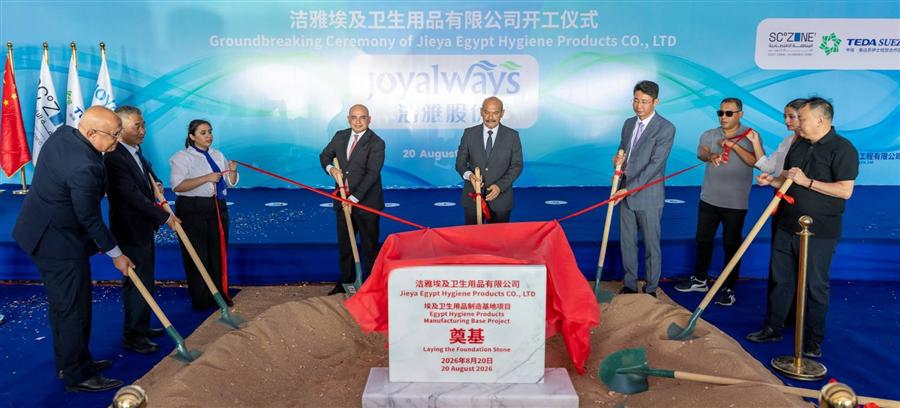
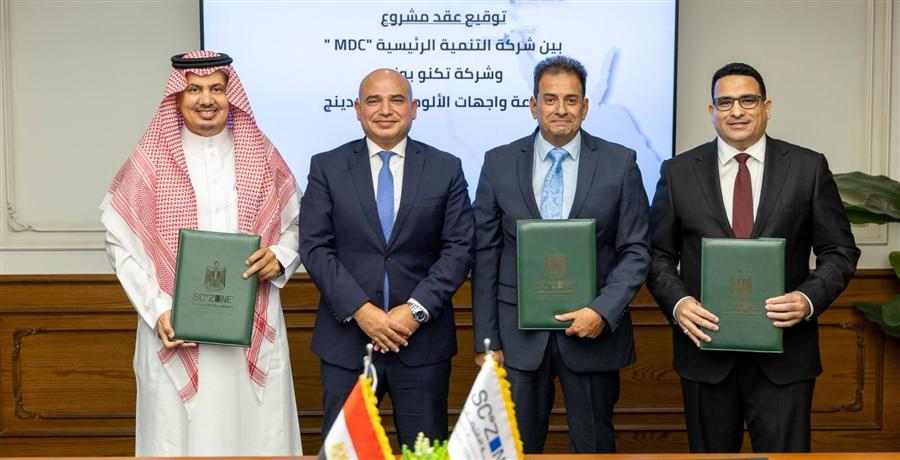
The Suez Canal’s enduring role as a cornerstone of global trade is unquestionable, yet its future competitiveness cannot rest solely on geography or transit fees. By leveraging the Suez Canal Economic Zone (SCZONE), enhancing port and logistics services, and embracing digital and green initiatives, Egypt is positioning the Suez Canal as more than a passageway, evolving into a dynamic engine of sustainable economic growth.
By Sarah Samir