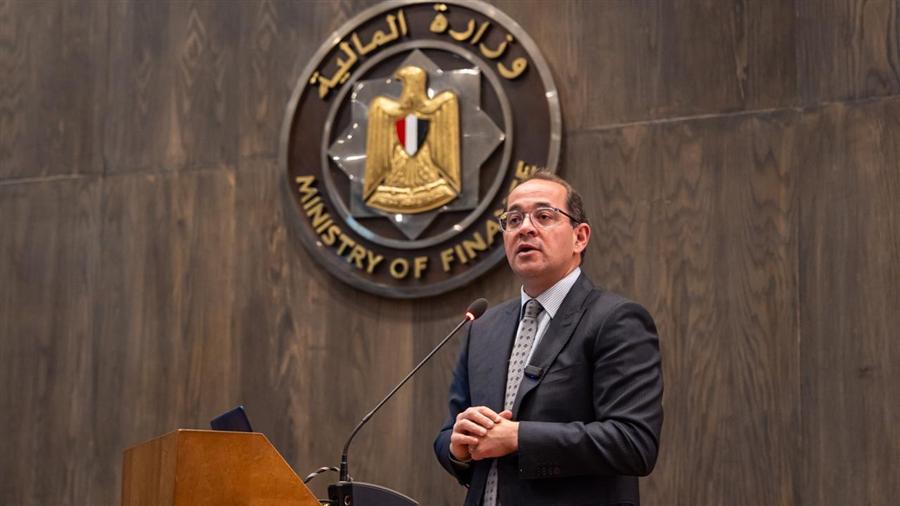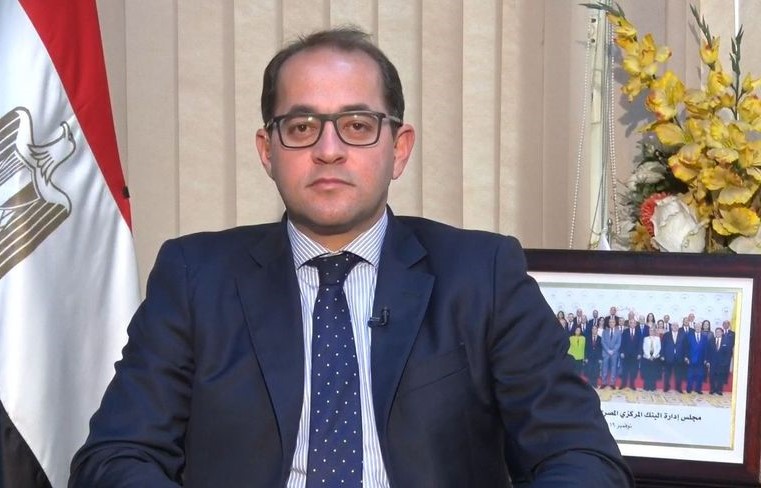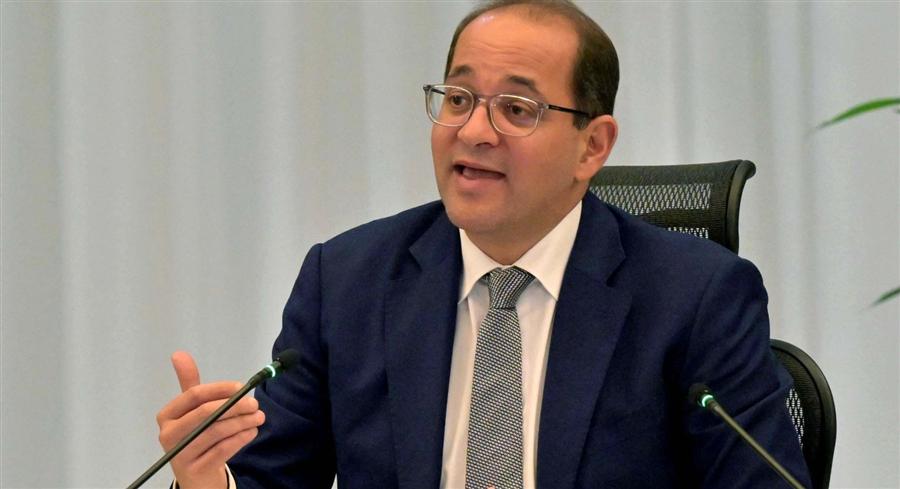
Arab Finance: Egypt’s Minister of Finance Ahmed Kouchouk announced the second package of tax incentives, saying it forms part of a wider plan to ease procedures for the taxpaying community, as per a statement issued by the ministry on December 3rd.
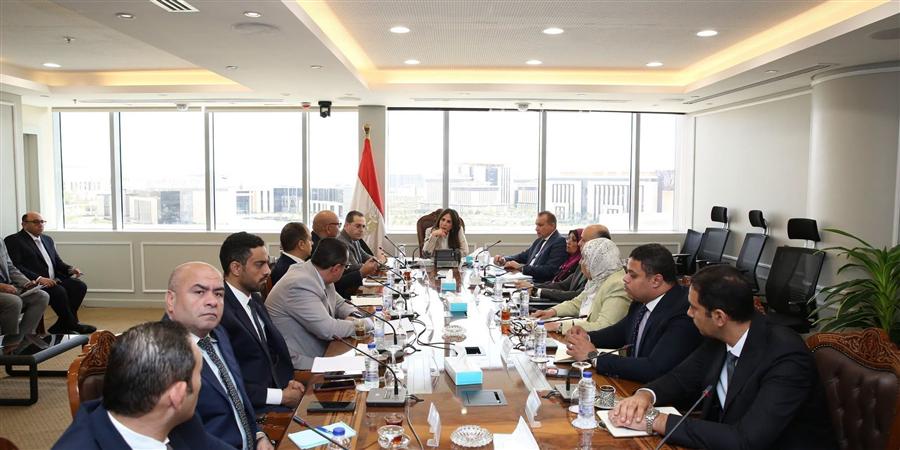
During the weekly press conference in the New Capital chaired by Prime Minister Mostafa Madbouly, Kouchouk explained that the full details will be presented for public discussion, with all views considered in the final framework.
The new measures are intended to respond to investor demands, strengthen cooperation with taxpayers, and expand the tax base.
Kouchouk said the first package set the foundation for the current phase, noting that the simplified and integrated tax system remains available for businesses with annual revenues of up to EGP 20 million.
Coordination is under way with the Micro, Small and Medium Enterprise Development Agency (MSMEDA) to support the first 100,000 taxpayers joining the simplified system, along with cooperation with the Ministry of Communications and Information Technology to encourage entrepreneurs to join the tax base and grow.
He explained that the second package includes tools designed to support compliant taxpayers through a white list, a distinction card, priority access to specialized services, and additional incentives.
Value-added tax (VAT) refund departments will be restructured to streamline procedures and improve liquidity for taxpayers, with white-list members eligible for refunds within one week.
Kouchouk said VAT refunds reached EGP 7.2 billion in fiscal year (FY) 2024/2025, marking a 151% growth, and that the ministry aims to further increase this figure.
Kouchouk said the ministry is proposing a renewal of the Tax Dispute Resolution Law and working to enhance internal and external dispute resolution committees to ensure faster case settlement.
He noted a planned legislative amendment to exempt dividend distributions from Egyptian subsidiaries of holding companies based in Egypt.
The minsiter also confirmed that new premium tax service centers will be launched through eTax in New Cairo, Sheikh Zayed, and New Alamein to improve the services available to taxpayers.
According to Kouchouk, new legislation will permit taxpayers for 2023 and 2024 to benefit from both the squartile and proportional tax systems.
He added that replacing the capital gains tax with a stamp duty aims to encourage institutional investment in the Egyptian Exchange (EGX).
The ministry is coordinating with the Financial Regulatory Authority (FRA) on a three-year set of tax incentives to encourage companies to list, with a focus on improving trading volumes and investment.
He said an electronic consultation platform will be launched to facilitate engagement with the tax community, along with an electronic system to speed up company liquidation and closure procedures.
Commercial audits will be separated from transfer pricing audits, and a new stage will be added for reviewing taxpayer appeals.
A mobile application for real estate transactions will also be introduced to simplify notifications and tax payments.
A 2.5% tax will be applied to the unit sale value for individuals, even when multiple transactions are made.
Kouchouk said taxpayers will be able to recover credit balances from tax returns to improve liquidity, and that credit and debit balances can be offset to ease payments.
A guide on the tax treatment of exported services has been issued to assist companies working across international markets.
A legislative amendment to the Unified Tax Procedures Law will allow a temporary tax card valid for four months to accelerate company establishment.
He added that the ministry is implementing measures to support tax fairness and integrate informal activity into the formal economy.
These include simplifying audit, refund, and cost-approval processes for compliant taxpayers.
Returns on foreign loans for private sector companies involved in strategic projects will be deductible from the tax base, and these projects will be exempt from the maximum limit on approved loan returns to ease financing.
Transit goods and related services will be exempt from VAT to support transit trade.
Kouchouk said the package also includes reducing VAT on medical devices from 14% to 5%, exempting inputs for dialysis and kidney-filter equipment from VAT.
This is in additon to extending the VAT suspension period to four years for medical machinery and equipment to encourage investment.