Silver has erupted onto the global stage, smashing records and rewriting investor playbooks. Yet beneath the headline-driven rally lies a deeper structural story: banks and strategists now point to industrial demand that could sustain prices well beyond short-term flight-to-safety flows.
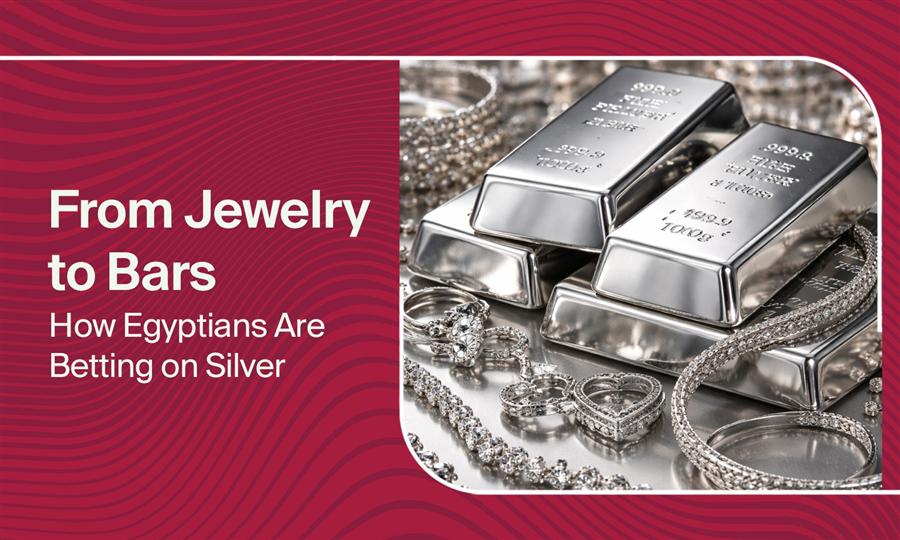
In Egypt, this global shift is already reshaping household behavior and market structure. Retail buyers are favoring bullion over jewelry to avoid high workmanship fees. Meanwhile, policymakers and banks are eyeing silver-backed instruments to finance green projects and broaden financial inclusion.
Global Trends in the Silver Market
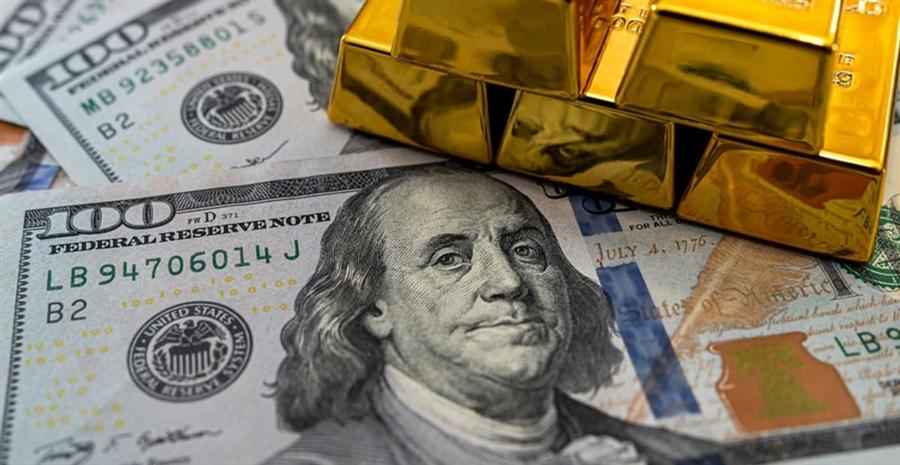
On January 20th, silver prices set a new all-time high of $95.34, before surpassing $110 on January 27th amid President Trump’s escalating tariff threats, which sent investors rushing toward safe-haven assets. While major banks expect prices to breach the $100 mark later this year due to deepening supply deficits, strategist Tom Bradshaw is eyeing a long-term target of $375 by 2028, according to Finance Magnates.
Outpacing gold in percentage gains, the white metal has now climbed an astonishing 266.17% on an annual basis, compared to the 83.77% year-on-year (YoY) increase reported by Trading Economics on January 27th.
Commenting on the rally, Ahmed Ghaly, a trade economist, notes: “While inflation hedging and geopolitical uncertainty, particularly regarding trade tensions and supply-chain security, remain foundational, the primary engine for silver today is structural industrial demand.”
“Silver is no longer just a safe haven; it is the indispensable conductor of the 2026 economy. We are seeing a perfect storm of three factors,” Ghaly says.
The first factor is the expansion of AI Infrastructure. “High-performance AI servers and data centers require significantly more silver for their electrical and thermal conductivity than traditional hardware. This demand is relatively price-insensitive, meaning tech giants will continue to buy even as prices rise.”
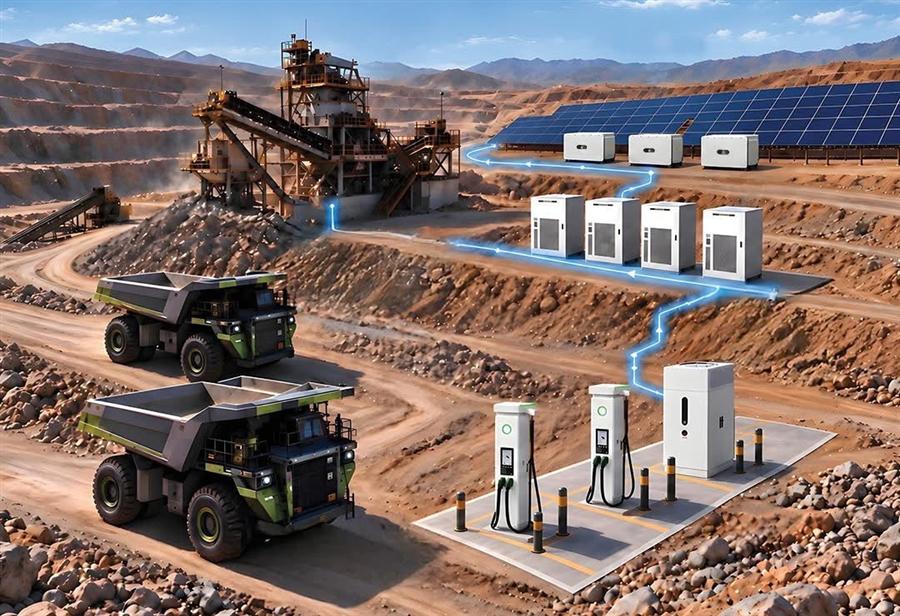
The second factor is energy transition. “Solar PV installations and electric vehicle (EV) production are hitting record highs. In solar, specifically, despite efforts to reduce silver usage, the sheer volume of global capacity expansion is keeping demand in deficit.”
The third factor is the supply scarcity. “With major producers, like China, tightening export licenses as of early 2026, the physical market is tighter than it has been in decades,” Ghaly points out.
Silver in the Egyptian Context
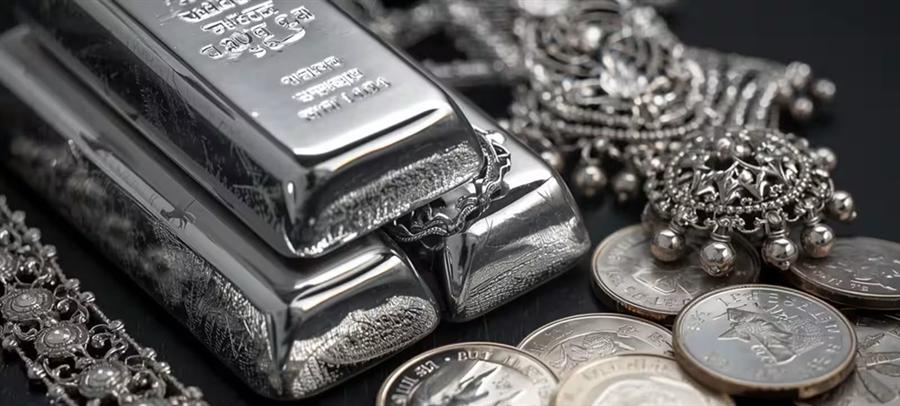
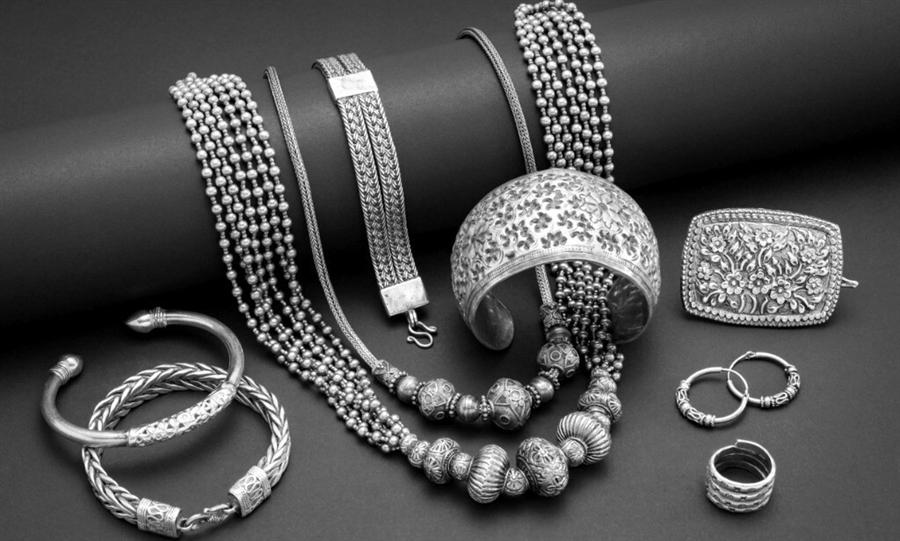
Throughout 2025, the Egyptian silver market has undergone a structural shift in consumer preference. Driven by the pursuit of rapid returns, nationwide sales of silver bullion—ranging from 50-gram bars to one-kilogram ingots—have surged.
This shift is largely a response to the prohibitive workmanship fees (masna’iya) on silver jewelry, which can inflate retail prices to as much as three times the spot value. Consequently, investors are increasingly bypassing accessories in favor of bullion to maximize their capital efficiency, according to the Egypt Business Directory.
The price of 999-purity silver (used in bullion) rose by around 268% from EGP 50.50 in January 2025 to EGP 186 in January 2026, based on rates published by a local gold and silver shop’s website. Meanwhile, 925-purity silver (used in coins) climbed by approximately 267.5% from EGP 46.80 to EGP 172.
Therefore, silver has become a way to preserve the value of savings. Bahaa Tahseen, a gold and silver expert and the owner of Jewelry Castle, tells Arab Finance: “As inflation climbs, priorities have shifted from pursuing high-risk returns to simple wealth preservation. Rather than traditional investments, savers are turning to gold and silver as accessible alternatives to high-barrier assets such as real estate or vehicles. With entry points as low as EGP 1,000, silver has become particularly popular.”
“Once a secondary asset, silver is rapidly gaining traction as a primary inflation hedge,” Tahseen points out. “This shift is driven by a widening supply-demand gap, as silver is getting into many modern industries. As a result, silver is attracting a new wave of investors, fueling a sustained upward trend in pricing.”
Consumer preferences are also changing. Tahseen explains that “the trend of buying jewelry for both fashion and savings is fading. Today, the focus is strictly on the bottom line, with buyers choosing coins and bars to escape high manufacturing fees and capitalize on silver's booming market prices.”
Echoing this view, Abdelrhman Ashraf, an economist with experience in national planning and the United Nations (UN) system, tells Arab Finance: “While silver is inherently more volatile than gold, due to its smaller market size and dual industrial and monetary demand profile, the current macroeconomic context strengthens its appeal.”
“With gold prices at elevated levels and silver remaining far more affordable, silver offers an accessible hedge for Egyptian households,” Ashraf adds. “This is particularly when combined with the Financial Regulatory Authority’s (FRA) framework for precious metals investment funds —similar to the one existing for gold— which enables participation even among low-income consumers.”
Investments Opportunities and Outlook
Silver’s rising prominence in Egypt is not only reshaping consumer behavior but also opening new channels for investment and industrial development. Ghaly notes, "We have seen the gold-to-silver ratio compress significantly toward the 50:1 mark. While silver is more volatile, its role as a strategic material for the energy transition makes it increasingly attractive for investors who want their ‘safe haven’ to also have a growth engine attached."
Egypt’s expanding solar energy hubs and ambitions in EV assembly further underscore the importance of establishing a domestic “silver value chain”—from refining to industrial paste production. Such a move would not only enhance industrial sovereignty but also secure reliable supplies for critical sectors.
Ghaly emphasizes, "Silver-backed financing could become a viable channel, particularly for funding green energy projects. By using silver as a collateralized asset or issuing silver bonds, Egypt could attract a new class of investors interested in both precious metals and sustainable development," while ensuring that Egyptian electronics and solar components remain globally competitive.
On the financial side, Ashraf underscores the role of banks and regulated institutions in building credibility around silver as an investment. “Silver’s lower price compared to gold makes it more accessible to households, but larger investors face constraints related to storage, authenticity, and resale.”
These frictions limit liquidity and discourage high-volume participation. “Banks and other well-established financial institutions can directly address this by guaranteeing storage and purity, thereby reducing the credibility gap and information asymmetry that currently surround silver. When these frictions are reduced, participation increases, not because preferences suddenly change, but because the asset becomes easier and safer to hold,” he explains.
Ashraf also refers to Egypt’s FRA framework for precious metals investment funds as a model. “Since the first fund launched in May 2023, approximately 131,000 investors have committed nearly EGP 925 million to these products, largely because they addressed practical constraints: low entry points, clear pricing, and secure, regulated storage. Applying the same structure to silver would not replace gold’s role, but would allow silver to function as a credible investment asset rather than posing logistical challenges.”
Looking ahead, silver demand in Egypt is expected to grow modestly but steadily. Ashraf depicts silver as the “common man’s gold,” noting that “it is expected to attract increasing participation through digital platforms and newly launched FRA-regulated funds, potentially driving a gradual cultural shift toward integrating silver alongside gold in diversified household savings portfolios.”
Silver’s recent surge reflects more than a short-lived flight to safety; it signals a structural revaluation driven by industrial demand, constrained physical supply, and shifting investor behavior.
Ultimately, silver’s ascent offers Egypt a dual opportunity: a more inclusive savings instrument for households and a strategic raw material for industrial modernization. Capturing that potential will require coordinated policy, credible financial infrastructure, and careful risk management to turn a global commodity boom into lasting economic benefit.
By Sarah Samir