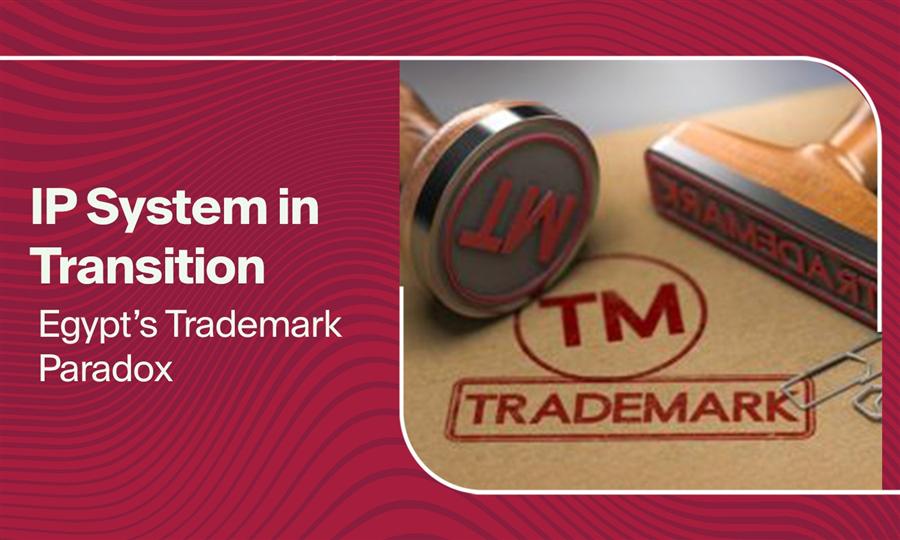
The 2025 Egyptian trademark landscape illustrates both the challenges of a developing intellectual property (IP) regime and the persistence of local entrepreneurial interest. While approvals fell sharply, this decline reflects not so much weakening innovation as it does administrative bottlenecks, stronger quality controls, and cautious foreign investor sentiment.
At the same time, continued local filings underscore the importance Egyptian companies place on brand protection as a foundation for market entry. This dual narrative of contracting foreign activity amid compliance challenges and strong domestic demand underscores broader economic implications for startups, small and medium-sized enterprises (SMEs), and foreign direct investment (FDI). It also reinforces the urgent need for reforms to improve efficiency, predictability, and accessibility, enabling Egypt’s IP regime to foster innovation, competitiveness, and sustainable growth.
Global and Domestic Context
Globally, trademark activity has softened amid economic uncertainty, tighter financial conditions, and geopolitical tensions, which weigh on innovation. Recent trends from the World Intellectual Property Organization (WIPO) show that emerging markets have been particularly affected, with many countries adopting stricter examination standards to improve the quality of registered marks.
In Egypt, this shift has contributed to a widening gap between trademark applications and approvals in 2025. Although more than 41,000 applications were submitted, only 7,827 were approved, according to the Central Agency for Public Mobilization and Statistics (CAPMAS). This indicates substantial delays and capacity constraints within the trademark office.
Authorities also appear to be enforcing stricter quality standards, rejecting incomplete or weak applications and applying more rigorous similarity checks. While these measures may strengthen the integrity of Egypt’s IP system over the long term, they risk creating barriers for SMEs that lack legal or procedural support. Despite these hurdles, Egyptians secured the vast majority of granted trademarks, demonstrating continued domestic demand for brand protection and entrepreneurial activity.
Economist Adham Mohamed tells Arab Finance: “Trademark activity is often a leading indicator of business dynamism, particularly in emerging markets where formal research and development (R&D) metrics may be limited. An increase in trademark filings typically reflects stronger brand creation, market entry, and private sector confidence. Conversely, a sharp decline may signal weaker investment sentiment, reduced entrepreneurial activity, or structural bottlenecks affecting business formalization.”
Foreign Activity and Confidence
Foreign trademark activity contracted sharply in 2025, with only 1,488 trademarks granted to non-Egyptian applicants, according to CAPMAS. The US and the UAE remained the top foreign registrants, but overall foreign participation declined. This trend likely reflects a combination of higher filing costs amid currency volatility, longer processing times, and increased regulatory friction. It also mirrors broader investor sentiment.
Trade economist Ahmed Ghaly notes that this divergence is not merely clerical but structural: “Foreign applicants operate in a dual-compliance environment, navigating both Egypt’s Law No. 82 of 2002 and the international standards of the Madrid Protocol. The Egyptian Patent Office (EGPO) has recently increased its examination rigor, aligning with the World Trade Organization’s Agreement on Trade-Related Aspects of Intellectual Property Rights (WTO TRIPS) standards. Because these stricter standards were applied just as the office cleared a massive post-COVID backlog, the influx of decisions in 2025 created a ‘statistical cliff’ that skews annual comparisons.”
He adds that foreign entities often file in highly competitive sectors, such as pharmaceuticals and technology, where refusals and oppositions are more common, while domestic applicants file in less crowded categories. This “composition effect,” he argues, suggests Egypt’s IP system is maturing and applying international standards more consistently.
Simultaneously, Egypt adopted a flexible exchange rate, tightened monetary policy, and continued fiscal reforms under its International Monetary Fund (IMF) program. While Egypt attracted record FDI inflows in FY 2023/2024—boosted by the Ras El Hekma deal—investors still face bureaucracy, transparency issues, and regulatory uncertainty. This points to an uneven recovery in broader FDI sentiment, according to the US Department of State's 2025 Egypt Investment Climate Statement.
Similarly, the European Bank for Reconstruction and Development’s (EBRD) 2025 Country Assessment confirms that, despite improvements in macroeconomic indicators, structural reforms lagged, and investor confidence remained sensitive to slow progress on state-ownership reforms.
Economic Consequences of Trademark Backlogs
The slowdown in trademark approvals carries meaningful economic consequences. Delays in securing trademark protection can hinder market entry for startups, increase uncertainty for SMEs, and raise entry costs, disproportionately affecting SMEs and startups that rely on early brand protection.
Mohamed warns that “weak IP protection can significantly erode Egypt’s competitiveness, particularly in export-oriented and consumer-facing sectors where brand value and product differentiation are critical.”
“Without adequate protection, firms face higher risks of counterfeiting, brand dilution, and unfair competition, which ultimately compress margins and discourage scaling. For investors, uncertainty around IP enforcement raises the cost of doing business, increases legal risks, and may deter long-term capital allocation, especially in sectors reliant on intangible assets,” Mohamed adds.
In addition, Ghaly underscores the FDI dimension: “IP protection is not a secondary concern for FDI; for knowledge-intensive and consumer-facing sectors, it is often the primary variable in due diligence. Sophisticated investors prioritize legal certainty and enforceability over the sheer volume of approvals. For entrepreneurs and SMEs, however, the most pressing issue is the time to registration. When a trademark takes 36-48 months to be granted, a startup is effectively denied brand exclusivity during its most critical growth phase.”
A Comprehensive Reform Path
Addressing challenges requires a comprehensive agenda. Key reforms should focus on digitizing application processes, reducing approval timelines, and enhancing transparency in examination procedures. Strengthening institutional capacity and aligning with international IP standards would also be critical.
Mohamed emphasizes, “Over the longer term, Egypt’s IP trajectory can serve as a bellwether for its innovation ecosystem. Sustained improvements in IP protection and efficiency would signal a more supportive environment for entrepreneurship, investment, and knowledge-based growth.”
Moreover, Ghaly outlines specific reforms: “Egypt should introduce a fast-track examination pathway for applications meeting strict formality requirements, fully digitize the opposition and publication workflow, calibrate fees for SMEs, and integrate trademark checks into company registration through GAFI.”
“None of these reforms require legislative amendment; they fall within the executive and regulatory discretion of the Ministry of Higher Education and Scientific Research and EGPO’s administrative authority,” Ghaly notes.
In summary, Egypt's 2025 trademark landscape reflects the resilience of domestic entrepreneurial demand and the challenges of an evolving system. The sharp decline in approvals points to administrative bottlenecks, tighter quality controls, and caution among foreign investors, while also reflecting the country’s efforts to meet international standards and boost institutional credibility.
At the same time, the continued presence of local applications shows the importance Egyptian companies place on brand protection as a key element of market participation. The issue is not the number of approvals, but the efficiency, predictability, and accessibility of the IP regime.
By Sarah Samir