Cairo: Moody's Investors Service said that the planned listing of Banque Du Caire on the Egyptian stock-exchange is credit positive because it will increase bank's low capital buffers, improve its market access for raising more equity and debt and increase reporting transparency and timeliness, an issue for government-owned Egyptian banks.
It is worth noting that, the governor of the Central Bank of Egypt announced plans to float a 20% stake in the government-owned Banque Du Caire (B3 stable, caa15) through an initial public offering (IPO).
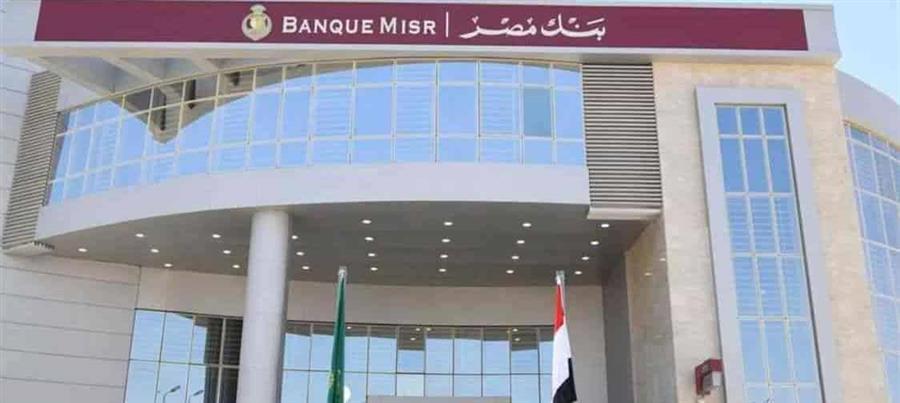
The IPO will increase Banque Du Caire’s low capital levels, a key weakness for government-owned Egyptian banks. Banque Du Caire is 100% owned by Banque Misr SAE (B3 stable, caa1), itself a 100% governmentowned bank. As of September 2015, Banque Du Caire’s shareholders equity was EGP5.5 billion, or 6% of total assets. At 8% as of December 2014, its Tier 1 ratio was also below the banking system average of 11%.
If shares are offered at the current book value (i.e., the bank’s current shareholder equity per share), the bank will raise EGP1.4 billion or around 2% of total assets. That said, larger privately owned banks trade at nearly 3x book value, so a higher price may be achieved. A stock exchange listing will make it easier for Banque Du Caire to tap the market again in the future – for either equity or debt – because the bank will be familiar to investors. Given that the IPO covers only 20% of shares, we expect the government, via Banque Misr, will remain a committed shareholder willing to support the bank in case of need.
Higher capital buffers will support Banque Du Caire’s solvency, especially in view of its large concentrations in Egyptian government securities and its plans to grow loans to small and medium enterprises (SMEs) aggressively. As of December 2015, 44% of banking system assets were invested in government securities.
We estimate Banque Du Caire’s exposure to government securities accounted for more than 40% of assets as of September 2015. In addition, the bank’s Chairman and CEO Mounir El-Zahid recently announced plans to more than double loans to the riskier SME sector, to EGP3.4 billion by December 2016 from EGP 1.4 billion as of December 2015. The bank’s strategy is in-line with the central bank’s January 2016 requirement that Egyptian banks grow SME loans to 20% of gross loans over the next four years.
The IPO will also improve Banque Du Caire’s reporting transparency and timeliness because as a listed bank, it will be bound to a reporting schedule. Delays in publishing results are common for Egypt’s governmentowned unlisted banks because their accounts require auditing by a public sector auditor.
Moreover, a stock exchange listing will be accompanied with increased disclosures, especially in the areas of corporate governance and asset quality.
The listing is part of the government’s effort to increase investment and boost economic growth which, although improved from 2011-13, has lost steam. GDP growth for the quarter ending September 2015 was 3.1%, lower than 4.5% for the fiscal year ending June 2015.
The share listing will deepen the domestic stock exchange and facilitate greater investor interest. Only 13 out of 40 banks operating in Egypt are listed, covering 25% of the market by assets. Banque Du Caire will be the third largest traded bank, after Commercial International Bank (Egypt) SAE (B3 stable, b3) and QNB Al Ahli (unrated).