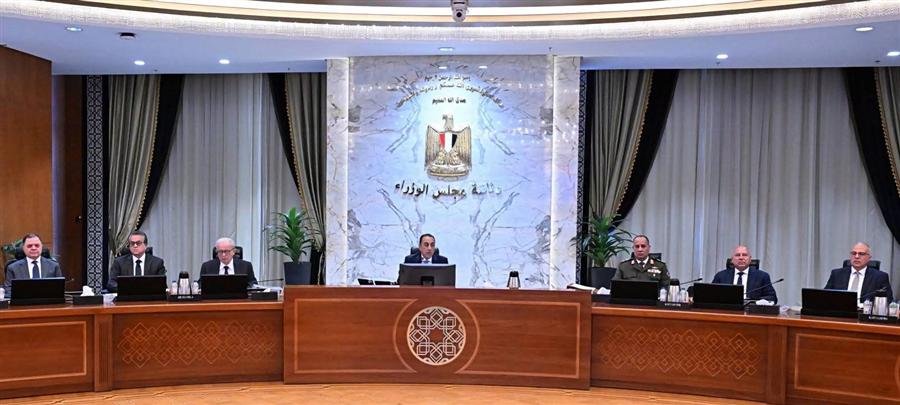
Arab Finance: Egypt’s Cabinet has approved a draft Prime Ministerial decree to establish the Comprehensive National Data System, an electronic system designed to centralize government data and strengthen performance monitoring, data governance, and integration, in line with presidential directives, as per a statement.
Supported by advanced analytical tools and artificial intelligence, the system would cover all ministries, governorates, public authorities, government agencies, and their affiliated entities. It would comprise six platforms covering sector performance, economic forecasts, national projects, government programs, national strategies, and the implementation of presidential directives and Cabinet decisions.
The Egyptian State Sectors Performance Indicators Platform would collect, manage, analyze, and display data to monitor performance trends over time and provide an integrated view of participating entities. It would also use composite indicators to assess sectors across economic, human, and social development, infrastructure, urban planning, food security, industry, and the environment.
The Scenarios and Forecasts Platform would use quantitative economic models to assess scenarios for key economic variables. Its dashboards would forecast gross domestic product growth, foreign direct investment, remittances from Egyptians abroad, changes in exports, and monthly inflation. It would also estimate Egypt’s credit rating using international credit rating agencies’ criteria.
For national investments, the National Projects Platform would periodically track implementation progress and expenditure, linking resources used to actual outputs and measuring project outcomes and development impact. This would help identify development gaps, assess the efficiency of investment allocation, and guide decisions on project priorities and resource distribution.
The Government Action Program Platform would monitor progress toward the program’s objectives and provide mechanisms for measuring its performance. It would support oversight of policy and program implementation while linking public spending to actual outcomes.
The National Strategies Monitoring Platform would track the goals, core pillars, targets, and performance indicators of strategies across relevant entities. By linking progress to associated programs, policies, and projects, it would measure outcomes and development impact, support efficient implementation, and align government efforts with strategic objectives.
The sixth component, the National Platform for Monitoring Presidential Directives and Cabinet Decisions, would provide real-time information on implementation status and actions taken. Relevant entities would update their progress directly, while a comprehensive dashboard would measure completion rates and assess each entity’s performance to support improvements.
A permanent committee reporting to the Prime Minister would oversee the system. Chaired by the Head of the Information and Decision Support Center (IDSC), it would include representatives from relevant entities and convene at its Chairperson’s invitation at least once a month or whenever necessary.
The committee would approve the system’s framework, components, and indicators, alongside updates needed to reflect changing national priorities and economic or social developments at the local, regional, and international levels. It would oversee operations and ensure that outputs and indicators remain aligned with strategic priorities, presidential directives, and Cabinet decisions.
Its responsibilities would also include setting rules for managing, updating, and exchanging data, defining authority and responsibility, and establishing mechanisms to maintain data quality, integrity, and consistency.
The committee would monitor whether participating entities submit and update data and indicators within specified deadlines and respond to directives. It would approve compliance measures and incorporate them into institutional performance evaluations in accordance with applicable regulations.
It would also ensure that entities take corrective action to address obstacles and coordinate efforts to resolve administrative or operational difficulties affecting the system’s efficiency and sustainability. Periodic reports on performance, compliance, and implementation would require its approval, as would the addition of platforms or databases under prescribed technical and organizational standards.
Every three months, the committee’s Chairperson would submit a report to the Prime Minister detailing its findings, recommendations, and implementation mechanisms, ahead of submission to the President.
In a separate decision, the Cabinet approved a draft Prime Ministerial decree to reconstitute the Supreme Committee for Tobacco Control under Law No. 52 of 1981 on preventing the harmful effects of smoking.
The Minister of Health and Population would chair the committee. Its membership would include the Ministers responsible for Local Development, Environment, Finance, Education and Technical Education, Higher Education and Scientific Research, Justice, Youth and Sports, and Industry, alongside the Minister of State for Information.
Other members would include the Grand Mufti of Egypt, representatives of Al-Azhar Al-Sharif, the Egyptian Church, and civil society organizations working in public health and tobacco control, as well as two experts in public health and smoking-related diseases. The committee could also seek assistance from relevant ministries, state agencies, experts, and specialists.
The committee would develop tobacco control policies and coordinate ministries’ and other bodies’ efforts to monitor implementation. The Minister of Health and Population would submit its recommendations to the Cabinet for action.
Meetings would take place at the Chairperson’s invitation at least once every six months or whenever necessary. A technical secretariat, formed by a decree from the Minister of Health and Population, would support its work. The secretariat would be led by the Head of the ministry’s Central Administration of Environmental Affairs and include representatives from participating entities.
On development financing, the Cabinet approved a draft presidential decree concerning a €58.22 million financing agreement with the International Fund for Agricultural Development (IFAD) to support the Climate-Resilient On-Farm Water Management in the Nile Valley project.
The project falls under the food pillar of Egypt’s Nexus of Water, Food and Energy (NWFE) program, the national platform for green projects. It aims to improve water-use efficiency, raise incomes and strengthen livelihoods for smallholder farmers participating in value chains, and support food security.