Egypt is intensifying its pharmaceutical localization drive as part of a broader strategy to strengthen healthcare resilience, reduce reliance on imports, and ease pressure on foreign currency reserves. With global supply chain disruptions exposing vulnerabilities in access to essential medicines, Cairo is positioning domestic manufacturing as both a health security priority and an economic driver.
The effort combines rising self-sufficiency, expanded production capacity, and targeted import substitution with ambitions to build a competitive export base. Ultimately, Egypt aims to transform itself into a regional hub for pharmaceuticals while ensuring patients have access to high-quality, affordable medicines.
Enhancing Pharmaceutical Supply Security
Egypt is moving towards boosting the localization of the pharmaceutical industry, supporting local manufacturing to meet market needs, and reducing reliance on imports, while working to produce high-quality medicines at fair prices.
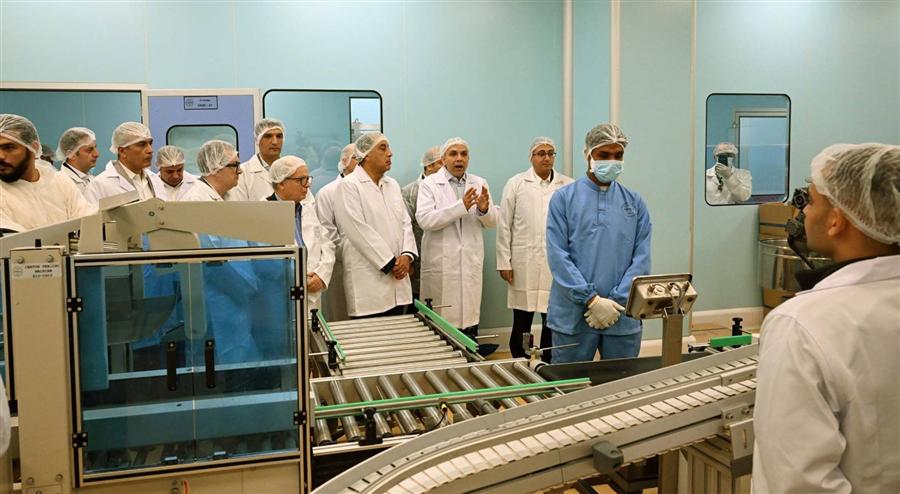
Egypt now meets 91.3% of local medicine demand through domestic production, supported by more than 170 factories and 986 production lines, according to the Cabinet’s Information and Decision Support Center (IDSC). Localization efforts have already resulted in 129 pharmaceutical products being produced locally, saving an estimated $633.7 million in import costs.
Muhammad Nouh, R&D General Manager at the Egyptian International Pharmaceutical Industries Co. (EIPICO), tells Arab Finance that localization is reshaping hospital procurement and bolstering supply continuity.
“Egypt’s localization efforts are gradually strengthening the resilience of the local pharmaceutical supply chain by increasing domestic manufacturing capabilities and reducing dependence on imported medicines and critical inputs. For hospitals, this can translate into greater availability and continuity of supply, particularly for essential and strategically important medicines,” Nouh says.
The Egyptian Drug Authority (EDA) has also announced the adoption of the Egyptian National Drug Policy, a comprehensive framework aimed at ensuring the provision of safe, effective, and high-quality medicines. The policy enhances regulatory efficiency, stimulates local manufacturing and innovation, and consolidates Egypt’s competitiveness at local, regional, and international levels.
Strategic Targets Ahead
Egypt’s next phase of pharmaceutical localization targets 400 active ingredients across 30 therapeutic groups, with potential savings of $1.57 billion if localization efforts succeed, according to IDSC data.
Nouh emphasizes that localization must go beyond numbers. “Localization should not be measured simply by the number of locally manufactured products. The real impact depends on the depth of localization, manufacturing capacity, quality standards, availability of APIs and critical raw materials, and the ability of local manufacturers to maintain sustainable production and supply,” he says.
Policy incentives include expanding domestic R&D, forging partnerships with global pharmaceutical firms, and advancing technology-transfer agreements. This aligns with remarks by Minister of Health Khaled Abdel Ghaffar last July, when he highlighted localizing the biopharmaceutical industry and increasing domestic production as fundamental pillars of national health security. He also stressed the state’s commitment to supporting national companies, empowering researchers, and removing obstacles for investors.
Export Expansion
Egypt’s pharmaceutical exports now reach 147 countries, according to IDSC data, which underscores the country’s ambitions to become a regional pharmaceutical hub for Africa and the Middle East.
Nouh argues that the ultimate goal should be global competitiveness. “The ultimate objective should therefore be to move from local manufacturing for domestic consumption toward globally competitive pharmaceutical manufacturing from Egypt,” he notes.
“Localization will have its greatest strategic value when Egyptian companies are able to develop, manufacture, and export high-quality products to regional and international markets,” he adds.
EDA Chairman Ali El-Ghamrawy highlighted Egypt’s growing credibility, noting that the country achieved World Health Organization recognition for its oversight of locally produced pharmaceuticals and vaccines, reaching Maturity Level 3 for medicines and vaccines—the first African nation to do so.
The Macroeconomic Benefits of a Strong Pharmaceutical Industry
The drive to localize pharmaceutical production carries significant macroeconomic implications. Nouh highlights that “localization can create a more sustainable balance between cost efficiency and patient access by reducing exposure to foreign currency fluctuations, international supply-chain disruptions, and import-related costs.”
“The objective should be sustainable affordability rather than simply the lowest possible price. A strong local pharmaceutical industry needs to remain economically viable while ensuring that patients have continuous access to safe, effective, and affordable medicines,” Nouh says, emphasizing the need to balance affordability with sustainability of local production.
He further cautions that pharmaceutical pricing must reflect the actual costs of maintaining high-quality manufacturing, ensuring regulatory compliance, transferring technology, and continuously investing in R&D and infrastructure.
Excessive pressure on prices, Nouh warns, could undermine the sustainability of local production.
Building a Sustainable Pharmaceutical Industry
Despite progress, Egypt remains dependent on imported raw materials until full localization is achieved. Egypt currently imports over 90% of its pharmaceutical raw materials, Ahmed Kilani, Chairman of Arab API, said during an event in January to lay the foundation stone for the Arab API factory, a project aimed at lowering the country’s pharmaceutical raw materials imports.
Building a stronger R&D ecosystem and developing a skilled workforce are also critical. Stressing the importance of regulatory predictability and public-private partnerships, Nouh notes that “successful localization requires a long-term, integrated strategy rather than simply transferring manufacturing to the local market. Pricing mechanisms need to provide sufficient economic incentives for manufacturers to invest in technology, quality systems, capacity expansion, and R&D.”
“Regulatory predictability is equally important. Clear and consistent regulatory requirements, efficient registration pathways, and harmonization with international standards can significantly improve the investment environment and facilitate the development of products that are suitable not only for the Egyptian market but also for export,” Nouh adds.
“Public-private partnerships can play a particularly important role in this process,” he points out. “Government institutions can provide the appropriate regulatory framework, infrastructure, incentives, and strategic direction, while the private sector contributes manufacturing expertise, technology, investment, R&D capabilities, and access to international markets.”
Egypt’s push to localize pharmaceuticals is reshaping healthcare resilience and easing pressure on foreign currency reserves, while also laying the groundwork for export competitiveness. The success of this strategy will hinge on reducing reliance on imported raw materials, strengthening R&D, and ensuring predictable regulation.
With sustained investment and public?private collaboration, pharmaceutical localization could evolve beyond import substitution into a broader driver of industrial growth and regional competitiveness.
By Sarah Samir