Arab Finance: Egypt plans to establish five to seven mega data centers over the next four to five years, Minister of Communications and Information Technology Raafat Hendy said, outlining the country’s digital infrastructure and economic targets through 2030.
Some of the facilities are expected to be operational and serving international markets by 2030, while construction continues on the remaining centers. The plans also include developing a national workforce skilled in advanced technologies and quantum computing.
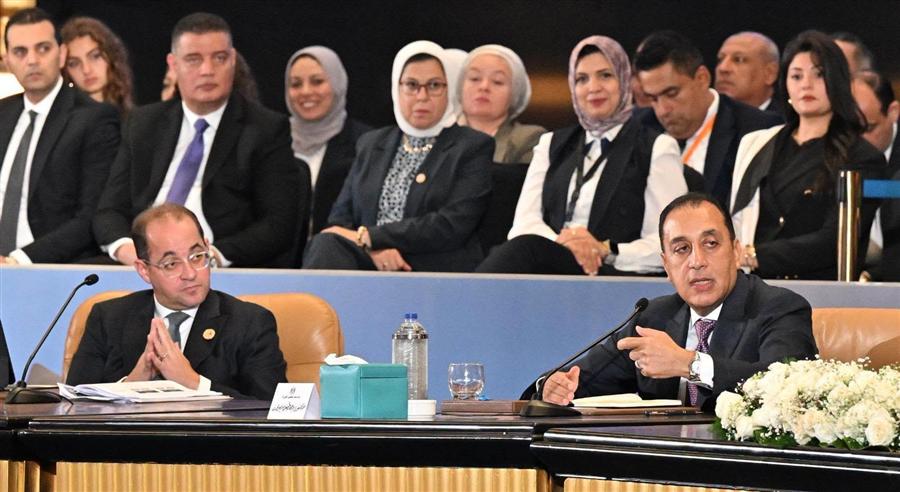
Hendy outlined the targets during the Digital Egypt session at the Egypt 2026 Forum, held under the patronage of President Abdel Fattah El-Sisi. He explained that the ministry’s agenda through 2030 combines commitments to citizens with strategic responsibilities toward the state and the national economy.
The economic targets include raising the information and communications technology (ICT) sector’s contribution to gross domestic product (GDP) to 8% and increasing annual digital exports to $12 billion by 2030. Egypt also aims to expand local mobile phone manufacturing capacity to 30 million units to meet domestic demand and supply export markets.
Alongside these targets, the ministry plans to create 200,000 new jobs, including high-value roles in technology and artificial intelligence (AI), and support 250 startups in developing AI applications.
For public services, Egypt aims to increase the number of services available on the Digital Egypt platform to 400 by 2030 and expand its user base to between 30 million and 35 million citizens. The platform, launched by El-Sisi in 2022, currently offers around 250 digital government services and is undergoing further development.
Connectivity targets include extending fiber-optic connections to more than 55% of households and providing fifth-generation (5G) mobile network coverage across all governorates.
Hendy said these plans build on more than EGP 600 billion in government and private-sector investment in telecommunications infrastructure over the past decade. The spending has supported network upgrades and the replacement of copper cables with fiber-optic infrastructure nationwide.
Approximately 20,000 government buildings have been connected to the fiber-optic network, alongside the installation of around 5.5 million fiber-optic lines. The ministry aims to add one million new lines annually.
Mobile coverage has also expanded through the addition of more than 3,000 towers a year. Telecommunications operators have invested more than $6 billion over 10 years to acquire spectrum, Hendy added.
He stressed that reliable digital infrastructure is essential to delivering government services quickly and efficiently. He also noted that Egypt has ranked first in Africa for fixed internet speeds for six consecutive years.
Infrastructure projects extend to villages covered by the Decent Life, or Hayah Karima, presidential initiative, which benefits 60 million citizens. The ministry’s work under the initiative includes laying fiber-optic cables, improving mobile coverage, upgrading post offices, and providing digital skills training.
International connectivity is another area of investment. Hendy said Egypt’s subsea cable expansion over the past decade encompasses 10 new cables, including six still under construction. Additional landing stations and cable routes are intended to maintain uninterrupted international services and reinforce Egypt’s role as an international telecommunications hub.
Turning to the strategy’s broader priorities, Hendy said the ministry has pursued four objectives since 2014: creating high-value jobs in Egypt and abroad, providing affordable and high-quality telecommunications and internet services nationwide, simplifying access to digital government services, and developing citizens’ digital capabilities.
He pointed to the outsourcing industry as an example of progress in employment and investment. The industry has attracted global companies and now comprises approximately 280 centers employing 200,000 people, with around 80% of its operations serving export markets.
To develop the workforce supporting these industries, Egypt has established 24 innovation centers across governorates. The centers nurture ideas, incubate startups, and train young people for work in outsourcing, software development, and electronics manufacturing.
More than two million citizens have benefited from digital capacity-building programs over the past decade, Hendy said. The training system covers different age groups and professional fields across all governorates, including through the Digital Egypt Generations initiatives.
Another program, Digital Pioneers, is implemented in cooperation with the Egyptian Military Academy and combines specialized technology training with national awareness and identity development.
Hendy emphasized that citizens are the central participants in digital transformation and its primary beneficiaries. Achieving the intended benefits of technology requires digital literacy, continuous learning, creativity, and innovation, enabling people to help shape the transformation and use its services effectively.
He added that the ICT sector has become essential to national development and competitiveness as technology spreads across different aspects of life. Its achievements, he said, reflect cooperation between government institutions and private-sector companies.
The ministry is also expanding the use of AI to improve government services and provide proactive services to citizens. Hendy stressed that continued skills development and lifelong learning are necessary to respond to AI-driven changes in the labor market, describing human capital development as the ministry’s foremost priority.