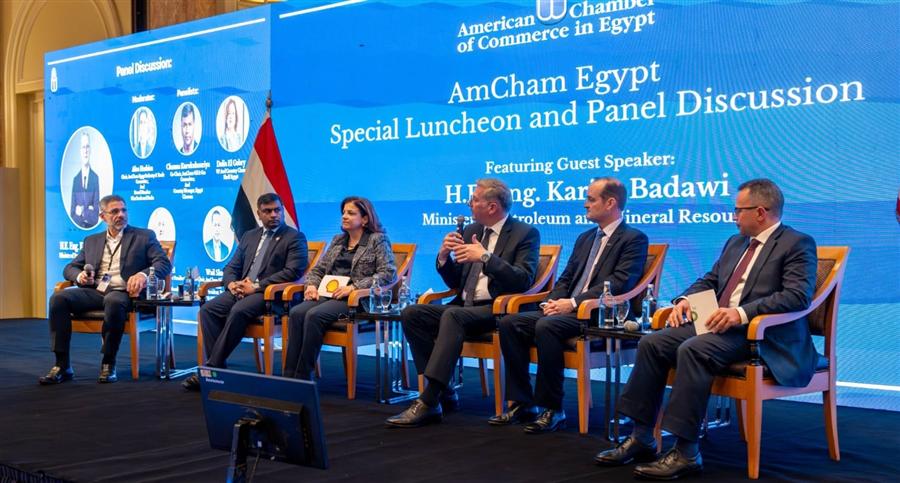
Arab Finance: Minister of Petroleum and Mineral Resources, Karim Badawi, said Egypt has reduced outstanding payments owed to international oil companies (IOCs) from $6.1 billion at the end of June 2024 to about $1.3 billion, with a target to clear the balance entirely by next June, as per a statement.
Speaking at a meeting organized by the American Chamber of Commerce in Cairo, Badawi said resolving arrears had been a top priority under Abdel Fattah El-Sisi, given its impact on investment flows and production levels. He noted that regular monthly payments alongside reductions in accumulated dues had helped restore confidence among international partners.
Badawi said the government’s energy strategy rests on two pillars: settling partner dues to stimulate investment and diversifying the energy mix. Egypt is targeting a 42% share of renewable energy by 2030, while also expanding nuclear power generation to reduce reliance on natural gas, which currently accounts for about 60% of domestic consumption.
He added that newly introduced incentives have helped revive exploration and production activity following a slowdown linked to arrears. These measures include improving the economics of gas projects, extending and renewing agreements, and offering opportunities near existing production areas to enhance returns.
APA Corporation has already increased gas output in the Western Desert as a result of these incentives, he said.
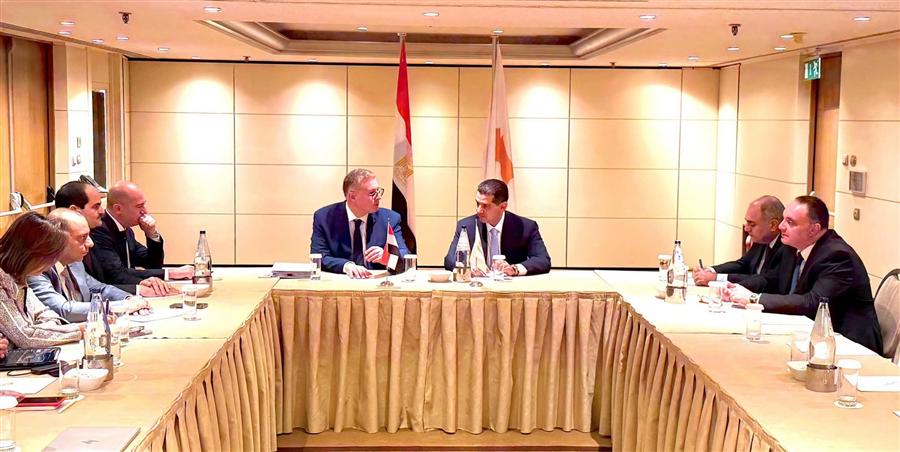
On regional cooperation, the minister highlighted Egypt’s partnership with Cyprus to transport and process Cypriot gas using Egyptian infrastructure for either re-export or domestic industrial use.
He also pointed to the role of advanced technology in expanding exploration, including seismic surveys in the southern Western Desert and the Red Sea, as well as the use of horizontal drilling and hydraulic fracturing. New contractual frameworks are also being developed to attract investment in frontier areas such as the Western Mediterranean, the Red Sea, and the southern Western Desert.
Badawi said Egypt is maintaining stable gas supplies to the power and industrial sectors, supported by regasification vessels and liquefied natural gas import infrastructure, ensuring supply security during peak demand periods.
From the industry side, Shell’s Egypt head Dalia ElGabry said the company has focused recent investments on boosting gas production through the West Nile Delta Deep Marine project, bringing two new phases online and preparing to launch Phase 12.
She added that Shell conducted Egypt’s first 4D seismic survey, identifying new opportunities, and is currently drilling the West Mena well using the Stena Ice Max rig, with production expected before year-end.
She also said Egypt’s role as a regional energy hub is now being realized, supported by operations at the Idku liquefied natural gas plant.
At bp, Wael Shaheen, Vice President of Egypt, said the company is intensifying activity in Egypt, particularly in the Mediterranean, with plans to begin drilling its first gas well under its 2026 program within days.
He said improved payment timelines and incentives have accelerated project execution, pointing to a recent gas discovery with Eni that is being fast-tracked for production. bp is also looking to expand into Red Sea exploration, he added.
Greg McDaniel, Senior Vice President of APA Corporation, said the company has invested about $5 billion in Egypt over the past five years and has operated in the country for more than three decades. He noted that an agreement signed 18 months ago with the petroleum ministry has improved the attractiveness of gas investments in the Western Desert.
Meanwhile, Chevron’s Egypt managing director Channa Kurukulasuriya said the company has been active in Egypt since 2020 and is currently investing in three areas, with talks underway to expand into three additional blocks.
He added that drilling at the Nargis field in the Mediterranean is expected to begin within weeks in partnership with Eni, while cooperation with Egypt is also key to developing Cyprus’ Aphrodite field by leveraging Egypt’s infrastructure as a regional gas hub.