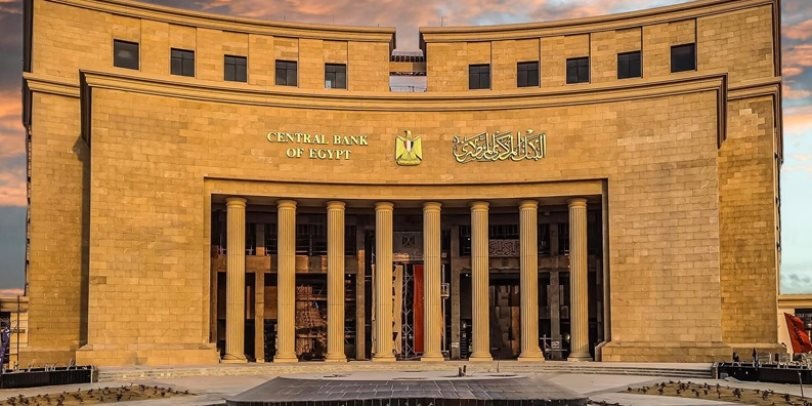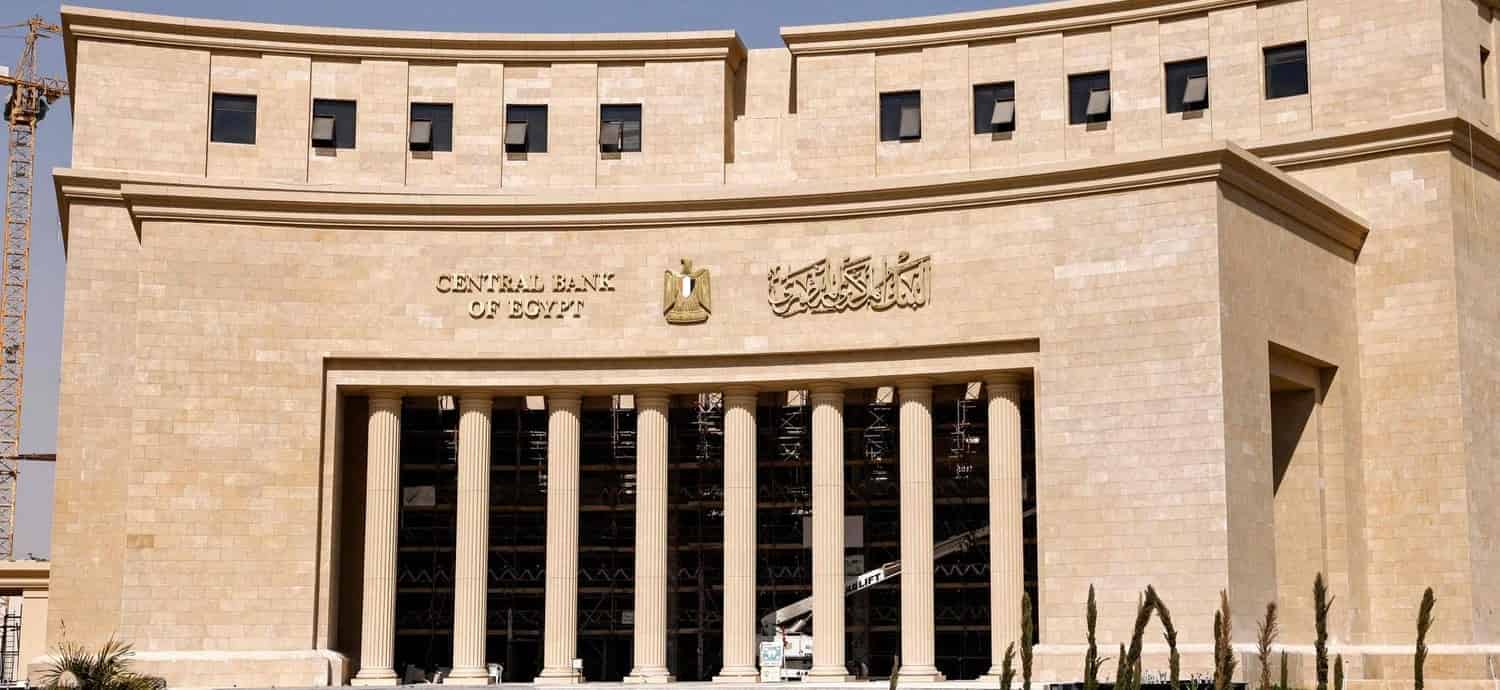
Arab Finance: Egypt’s exchange-rate flexibility has alleviated the impact of moderate capital outflows on the country’s foreign exchange (FX) reserves, limiting the effects of the US-Iran war on the country’s ‘B’/stable sovereign rating, Fitch Ratings noted in its latest report.
Fitch highlighted that the Egyptian pound has weakened by around 10% against the US dollar since late February, following non-resident capital outflows estimated at more than $10 billion.
The Central Bank of Egypt (CBE) has not intervened to support the currency, which helped preserve FX reserves and maintain relative stability in domestic dollarization levels.
The combined net foreign asset position of the CBE and the banking sector dropped by $7 billion in the two months through April 1st to $22 billion. However, the figure remained higher than the amount registered in November 2024, when Fitch upgraded Egypt to 'B.'
Net international reserves remained stable at $53 billion at end-April, while the domestic FX liquidity remained strong, with no gap between the parallel and official exchange rates.
Fitch said: “In our base case, in which we assume the Strait of Hormuz will begin to re-open around July, we project Egypt’s gross FX reserves will fall to $50 billion at the end of the fiscal year (FY) 2026/2027, equivalent to four months of current external payments, broadly in line with the ‘B’ median.”
“Were the war in the region to last longer than we expect, then this would moderately pressure Egypt’s external finances, inflation, and to a lesser extent public finances, mainly because of its sizeable energy trade deficit,” it added.
Remittance inflows from the GCC countries, which account for most of the total, remain exposed to regional economic risks. Nonetheless, remittances so far remained resilient, jumping 30% year-on-year (YoY) to $22 billion in the first half (H1) of FY2025/2026, as per the CBE’s data.
The agency also indicated that it does not expect a drop in financial support from GCC partners, including foreign direct investment (FDI) or deposits held at the CBE, given Egypt’s strategic importance to the region.
Tourism revenues face additional risk, although the sector maintained a resilient performance. Fitch expects some regional substitution to partly offset weaker demand from Western markets.
Meanwhile, the agency forecasts that Suez Canal activities will recover at a slow pace, mitigating further downside.
The weaker currency, higher energy prices, and fuel subsidy cuts in March contributed to a pick-up in inflation to 14.9% in April from 11.9% in January, and services inflation was even higher.
Fitch forecasts inflation to remain high through the summer before gradually falling to an average of 12% in FY2026/2027, still more than double the ‘B’ median of 5%.
Egypt’s gross domestic product (GDP) growth expanded to 5% in the third quarter (Q3) of FY 2025/2026 and averaged 5.2% in the first nine months of FY 2025/2026.
In this regard, Fitch expects growth to moderate to 4.4% in FY 2026/2027 as domestic demand weakens.