Arab Finance: Egypt’s banking sector is well-positioned to resist the effects of the Iran-US conflict due to healthy capital, profitability, and foreign-currency liquidity, according to a report issued by Fitch Ratings.
This means banks are more resilient during the current situation than they were during the escalation of the Russian invasion of Ukraine in 2022, the report added.
Hence, their Issuer Default Ratings and standalone Viability Ratings (VRs) remain closely linked to Egypt's sovereign rating, which is currently B with a stable outlook.
The rating agency expects the regional war’s effect on Egypt to remain indirect. However, the sovereign faces potential challenges, including higher energy import costs, remittance risks, exchange rate pressures, and limited access to external financing.
Fitch also noted that Brent averaged $70 per barrel in 2026 amid current events, which poses risks to Egypt’s ratings, as a prolonged conflict or higher oil prices would have a more substantial impact.
Non-resident holdings of Egypt’s local-currency treasury bills (T-bills) are high, reaching about $45 billion at the end of September 2025, or about $21 billion excluding banks’ repo operations.
Since the conflict began at the end of February, portfolio outflows from local-currency T-bills have exceeded $6 billion, adding to pressure on the Egyptian currency. The exchange rate between EGP and USD hit EGP 52.4 on March 12th, a depreciation of about 9% from the end of 2025.
The report highlighted that Egyptian banks’ loan books remain fairly dollarized at about 33% of sector loans at the end of August 2025. This leaves capital ratios relatively vulnerable to significant weakening of the Egyptian pound.
“Based on past devaluation episodes, we estimate that a 10% move in the exchange rate against the US dollar typically results in a 30 bp-50 bp change in the sector’s common equity Tier 1 (CET1) ratio,” it added.
At the end of the third quarter (Q3) of 2025, the sector’s CET1 ratio stood at 14%, its highest since 2020 and well above minimum regulatory requirements.
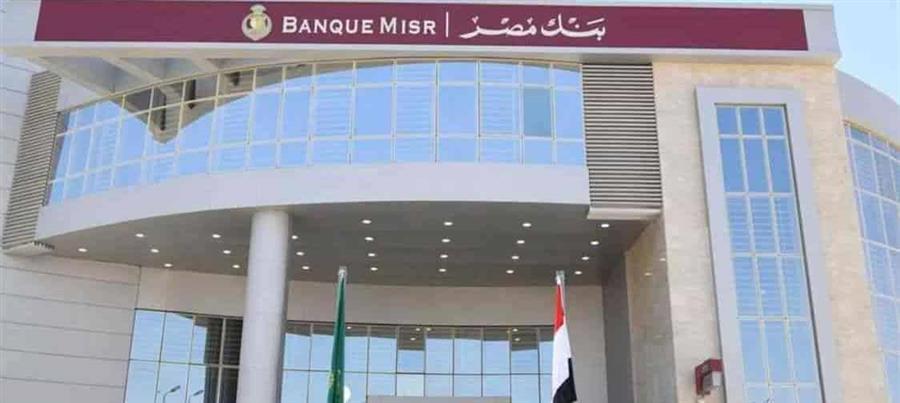
“We believe that the VRs of National Bank of Egypt (NBE) (B/Stable/b) and Banque Misr (B/Stable/b) are more exposed to currency-related CET1 weakening, since their buffers above regulatory minimum requirements are tighter,” Fitch indicated.
However, both lenders have strengthened their CET1 levels since the previous major depreciation in Q1 2024, while performance metrics remained strong.
Addressing higher oil prices, the report elaborated that the surge will put upward near-term pressure on price inflation and may slow Egypt’s monetary easing. Portfolio outflows could also push up treasury yields.
“Banks’ performance metrics generally benefit from higher interest rates, and we expect profitability to remain strong, with sector return on equity sustained above 20%, maintaining robust internal capital generation,” Fitch noted.
The agency concluded: “We continue to expect the cost of risk to average 100bp in 2026, underpinned by the solid provisioning buffers accumulated since 2022. However, we also anticipate a modest deterioration in asset quality due to higher energy prices and weaker economic conditions under our updated base case.”