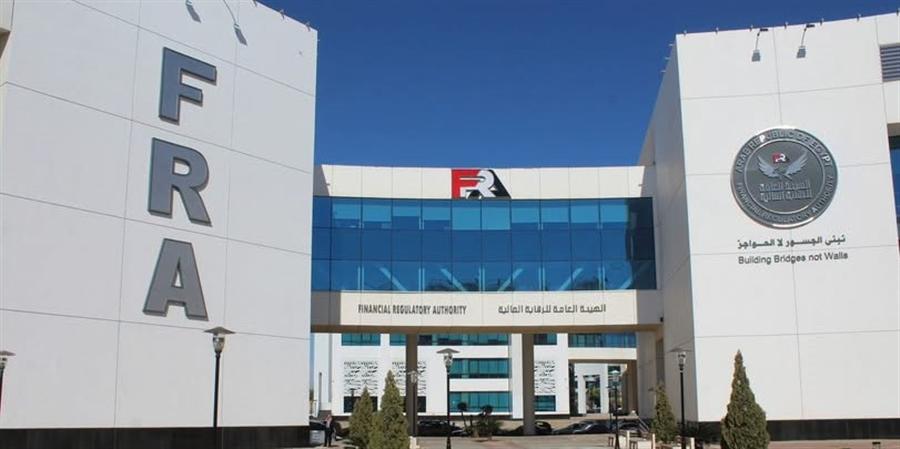
Arab Finance: The Financial Regulatory Authority (FRA) has approved amendments to the regulations governing subscription to investment fund units in exchange for in-kind shares, introducing new facilitations aimed at enhancing flexibility for investors and supporting the development of the investment funds market, as per a statement.
The authority said the amendments are designed to enable investors to deploy in-kind contributions more effectively, ease exit mechanisms, and allow financing through pledging fund units, in line with market needs and broader financial development objectives.
The decision was approved under the leadership of Mohamed Farid, chairman of the FRA.
Under the new rules, contributors of in-kind shares are required to retain 51% of the investment fund units received in exchange for those shares for a period of two years, or until the fund disposes of the in-kind contribution, whichever comes first.
This replaces the previous requirement that prohibited the disposal of 100% of the units for two years from the issuance date, with any violation deemed invalid.
The amended regulations also allow the transfer of ownership of the retained units during the lock-off period, provided the purchaser is a bank, insurance company, investment fund, specialized investment entity, or a legal entity with proven experience and a strong track record in the fund’s field of activity.
Such transfers require the approval of both the FRA and the unit holders’ group, and the purchaser must be independent of the fund manager and commit to retaining the units until the end of the specified period.
In addition, the FRA confirmed that these units may be pledged, as long as the pledge does not result in their transfer to any party other than the pledgee during the retention period.
If the units are listed on the Egyptian Exchange (EGX), the fund’s investment manager must notify both the exchange and the central securities depository of the restrictions imposed on units issued in exchange for in-kind contributions.
The regulations specify that in-kind contributions must fall within the investment vehicles permitted for the fund and must not involve companies under liquidation or declared bankrupt.
Where the contribution consists of real estate assets, the property must be registered with the real rstate registry or allocated by a decision from a competent authority, free of legal disputes.
In-kind contributions may take the form of registered real estate, listed shares, or unlisted shares.
The FRA added that the board of directors of the fund company must approve offering the in-kind contribution to unit holders, provided that two-thirds of the unit holders are present.
The fund is permitted to invest directly in the in-kind assets to generate periodic income or capital gains, and may partially divest by transferring ownership of a portion of the contribution, subject to regulatory and unit holder approval, while maintaining the required legal retention percentage.
According to the authority, the amendments provide greater flexibility for funds in managing their portfolios and generating returns, while maintaining safeguards for investors.
The FRA reiterated its commitment to continuously developing regulatory frameworks that strike a balance between investor protection and enabling the effective use of available investment instruments, with the aim of encouraging broader participation in the investment funds market.