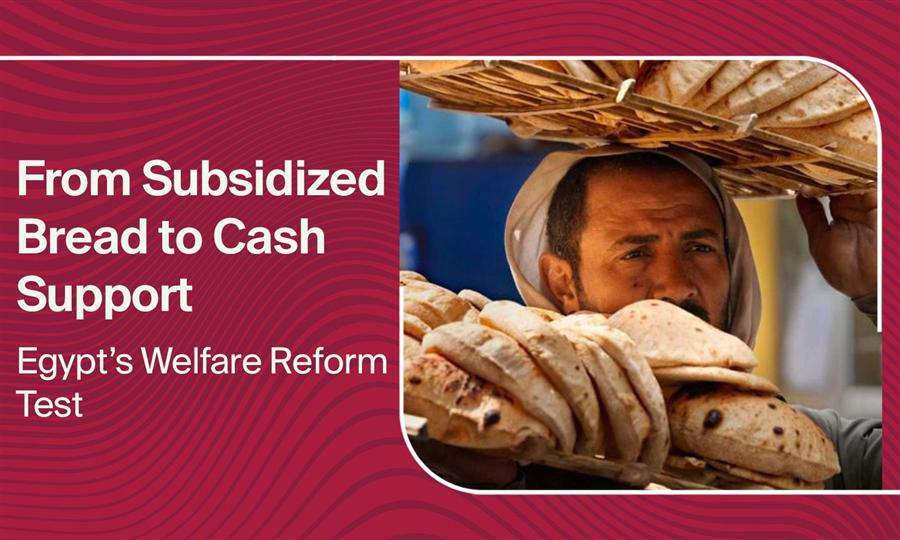
For decades, Egypt’s system of in-kind food subsidies—most notably its bread program—has been a cornerstone of the nation’s social contract, ensuring affordable access to basic staples for millions of households. While this policy has provided a safety net against hunger, it has also been plagued by inefficiencies. As Egypt grapples with mounting budgetary pressures and the need for more effective social protection, the government’s gradual shift toward cash transfer programs represents a pivotal reform moment.
Cash transfers promise greater flexibility, efficiency, and precision in reaching vulnerable households, aligning Egypt with global best practices seen in initiatives such as Brazil’s Bolsa Família and India’s Direct Benefit Transfer. Yet, the transition is far from straightforward. Success will depend on controlling inflation, strengthening digital payment infrastructure, and building public trust in government institutions.
The Evolution of Egypt’s Commodity Subsidy System
For decades, Egypt has relied on commodity subsidies, providing staples like bread, rice, and sugar at below-market prices through state outlets. In 2014, reforms introduced the Tamween ration card system (RCS), allowing households to purchase a set quota of subsidized goods monthly.
Through the RCS, the government subsidizes the price of specific goods, including bread, oil, sugar, and rice. Citizens receive monthly credit on their smart cards that can only be used to purchase these specific items from designated state-supported outlets or authorized grocers. The state manages the supply chain, procurement, and distribution of these goods.
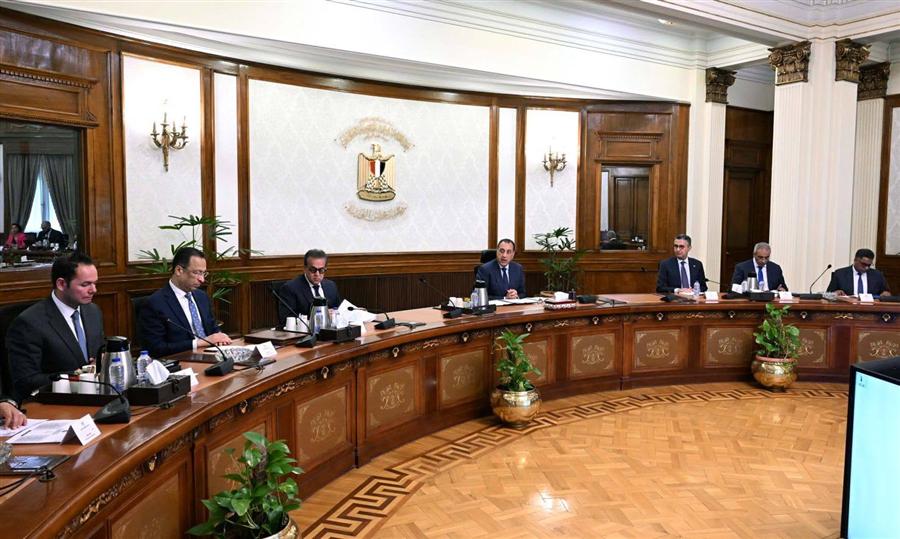
Speaking at a press conference in May 2026, Prime Minister Mostafa Madbouly announced that Egypt would gradually phase out its long-standing commodity subsidy system and replace it with direct cash support for low-income citizens, with the first implementation steps expected to start in fiscal year (FY) 2026/2027.
The Strategic Necessity for Change
This announcement reflects a broader economic reality. As Mohamed Riad, a senior economist, tells Arab Finance: “Egypt is approaching a pivotal moment in its economic reform trajectory. The transition from in-kind subsidies toward direct cash transfers is no longer merely a fiscal consideration; it is increasingly becoming a strategic necessity driven by mounting budgetary pressures, rising subsidy costs, and the need for a more efficient and targeted social protection system.”
The financial scale of the current framework is immense. Egypt continues to allocate massive public resources to subsidies, with bread subsidies alone costing the state more than EGP 125 billion annually. “The current subsidy structure reinforces Egypt’s structural dependence on imported wheat, leaving the economy highly vulnerable to global commodity shocks and exchange-rate fluctuations,” according to Riad.
Riad emphasizes that “a well-designed transition toward targeted cash support could generate significant medium- and long-term savings by reducing waste, improving targeting efficiency, lowering distribution and storage costs, and limiting the distortions created by artificially low prices. More importantly, such reforms would allow the government to redirect public spending toward productive investments, including healthcare, education, industrial development, and infrastructure. Gradual reform could therefore strengthen both fiscal sustainability and economic resilience.”
Voices from the Ground
Public opinion on the reform is mixed, reflecting both optimism and apprehension. Ahmed, a 36-year-old breadwinner, told Arab Finance, “I still prefer in-kind support over cash. My concern is that once people start receiving money directly, prices of essential goods will rise, and the cash will no longer cover the same quantities we rely on today.”
“At the same time, I recognize that cash transfers could give households more flexibility. If I received financial support, my family’s spending might increase, but the advantage is that it would allow us to diversify how we use that support.”
Meanwhile, Safaa, a 56-year-old housewife, shared a more balanced perspective: “I believe shifting to cash support could be beneficial; it would allow families to choose better-quality products. However, I worry that it may become a burden for lower-income households. If prices rise, the cash provided might not cover the same quantity of goods that in-kind support once guaranteed.”
These ground-level fears highlight the true challenge of the reform, which extends far beyond infrastructure. According to Riad, the critical issue is whether Egypt can shift toward cash support without exposing vulnerable households to inflationary shocks and declining purchasing power. “In-kind subsidies, particularly bread subsidies, have historically acted not only as economic support mechanisms but also as implicit social stabilizers,” he says.
Economist Retaj Asser echoes this concern, noting that “inflation erodes the real purchasing power of transfers, reducing their welfare impact over time. This risk is especially severe for low-income households because a large share of their consumption basket is concentrated in essential goods such as food and energy.”
Shifting to Targeted Transfers for Higher Allocative Efficiency
Economist Ibrahim Yousif underscores the inefficiencies of Egypt’s current subsidy model, stating that “the primary inefficiency of the current model lies in its broad, semi-universal nature, which inadvertently leads to substantial fiscal leakage.”
Citing the World Bank’s Public Expenditure Review 2022, Yousif highlights that “food subsidies account for approximately 1.4% of gross domestic product (GDP), yet the benefits are not exclusively captured by the vulnerable. Statistics indicate that roughly 38% of ration card expenditure and 35% of bread subsidy are utilized by households within the upper 40% of the welfare distribution.”
Yousif argues that targeted cash transfers, such as Egypt’s Takaful and Karama, deliver far greater allocative efficiency by using data-driven eligibility criteria. He emphasizes the importance of establishing a Unified Social Registry and applying Proxy Means Testing (PMT) to minimize both exclusion and inclusion errors.
International precedents support this shift. As Riad points out, “Brazil demonstrated through the Bolsa Família program that targeted cash transfers can reduce poverty more efficiently than generalized subsidies while simultaneously stimulating domestic demand and improving fiscal discipline. Likewise, India successfully leveraged digital identification systems and direct benefit transfers to dramatically reduce subsidy leakage and improve the efficiency of public expenditure.”
“These cases illustrate that direct cash support, when supported by strong governance and digital infrastructure, is economically superior to broad in-kind subsidy systems that often suffer from inefficiency and unequal distribution,” he adds.
At the same time, Asser highlights the potential for positive behavioral change. “When households are no longer restricted to subsidized staples, they often diversify spending toward higher-quality foods and non-food essentials,” she notes. “Replacing part of the subsidy with cash may reduce dependence on cheap calorie-dense staples and increase demand for proteins, fruits and vegetables, dairy products, education, healthcare, and transportation.”
As per Asser, such a shift could improve nutritional outcomes and human capital development over the long run, provided markets function effectively, and inflation remains contained.
On the macroeconomic front, Yousif warns against the immediate removal of subsidies, noting that although headline inflation has moderated to 12.3%, a sudden phaseout could reignite hyper-inflationary pressures. Instead, he advocates for a gradual, well-sequenced transition supported by strong foreign reserves and fiscal discipline to ensure Egypt’s growth trajectory, currently peaking at 5.3%, remains resilient.
Asser also stresses that “indexing cash transfers to inflation is one of the most effective mechanisms for protecting household welfare. Without indexation, the real value of transfers declines continuously during inflationary periods, weakening poverty-reduction effects and potentially increasing food insecurity.”
The intended move from Egypt’s decades-old commodity subsidy system to cash transfers is a defining chapter in the country’s economic reform journey. For decades, in-kind support, such as the Tamween RCS and heavily subsidized bread, has been a critical social stabilizer. However, current data show an unsustainable reality.
Building on successful international experiences, a move towards targeted, data-driven cash support provides a more effective economic model. Through a Unified Social Registry and PMT, Egypt could achieve higher allocative efficiency, reduce fiscal leakage, and redirect critical public resources to healthcare, education, and productive infrastructure.
By Sarah Samir