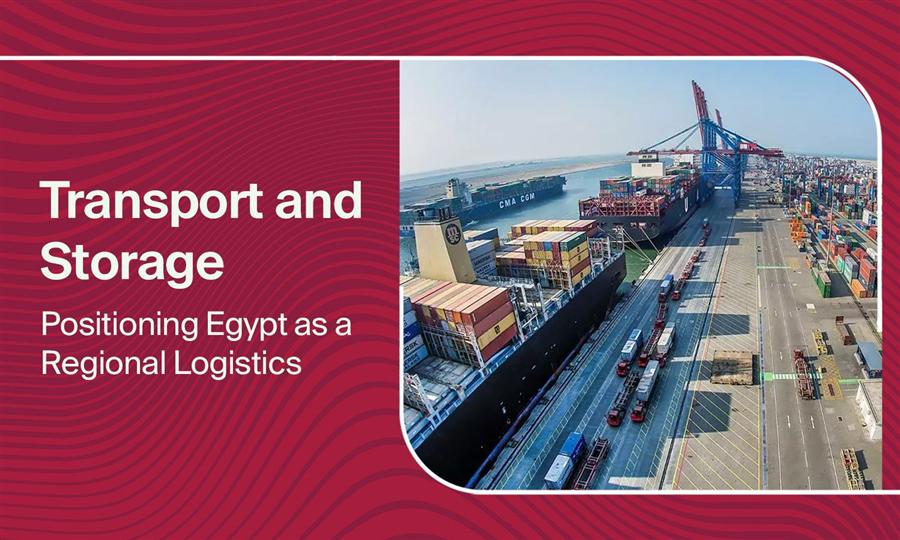
Egypt’s transport and storage sector has quickly become a key driver of the country's economic growth, supporting both domestic productivity and international trade. Once viewed as just a supporting service, the sector is now a key part of Egypt's economic transformation.
The sector’s growth is not just a big deal for the economy but also a turning point for strategy. It shows that Egypt is moving toward a more tradable, export-oriented economic structure, and it opens new discussions about competitiveness, resilience, and sustainability.
The Regional Gateway Ambition
Egypt’s transport and storage sector has become an increasingly influential component of national economic activity, both in terms of its direct contribution to gross domestic product (GDP) and its role in enabling trade, logistics, and industrial expansion.
Recent data from the Ministry of Planning and Economic Development show that the sector reached EGP 376.1 billion in the third quarter (Q3) of 2025, its highest level on record, reflecting sustained momentum despite global and regional disruptions. This expansion reinforces the sector’s position as one of the core drivers of Egypt’s shift toward a more tradable, export-oriented economic structure.
The sector has also emerged as one of the fastest-growing pillars of the national economy, recording 7.4% growth in Q2 of fiscal year (FY) 2025/2026, according to the Information and Decision Support Center (IDSC).
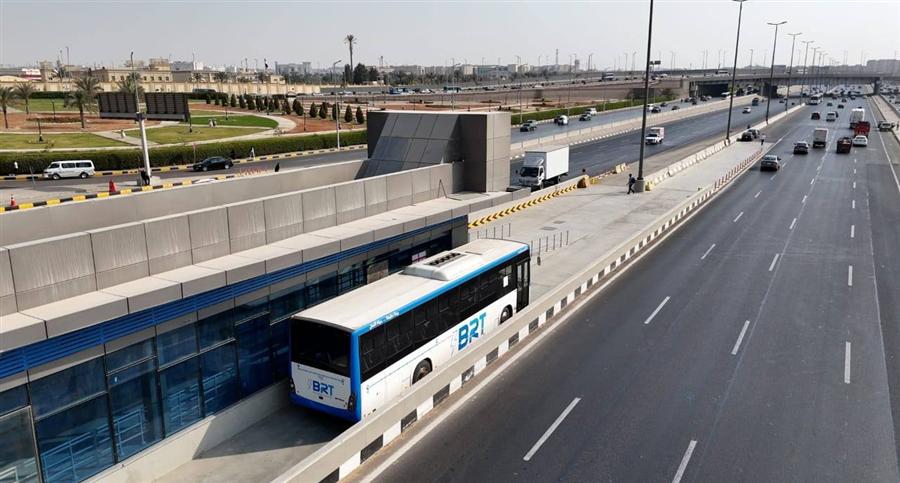
Strategically, transport and storage lie at the heart of Egypt Vision 2030, which positions logistics and infrastructure modernization as foundational to economic transformation. The government’s long-term agenda emphasizes multimodal connectivity, port expansion, digital logistics systems, and the development of industrial-logistics zones, all aimed at strengthening Egypt’s role as a regional logistics gateway linking Africa, the Middle East, and Europe.
These priorities align with ongoing public investment programs and structural reforms aimed at enhancing efficiency, reducing bottlenecks, and attracting private-sector participation. Together, these dynamics place the transport and storage sector at a critical intersection of economic policy, infrastructure development, and global trade integration, setting the stage for the growth drivers, challenges, and future outlook explored in the following sections.
Transport and Logistics: A Key Competitiveness Driver
The transport and storage sector’s recent performance is deeply intertwined with Egypt’s long-term development agenda, particularly its alignment with the objectives of Egypt Vision 2030. As Ahmed Hussein Selim, a chief economic researcher, maritime analyst, and PhD holder in economics, tells Arab Finance: “The transport and storage sector in Egypt is increasingly aligned with the objectives of Egypt Vision 2030, particularly in terms of infrastructure modernization and connectivity. Significant investments in road networks, ports, and logistics hubs have enhanced efficiency and positioned Egypt as a regional logistics gateway.”
Yet, Selim points out that “further integration between different modes of transport, along with accelerated digital transformation, will be essential to sustaining this alignment.” He also highlights the importance of attracting more investment into renewable energy, as Egypt’s transition toward a greener economy depends on expanding clean energy capacity and embedding sustainability into logistics operations.
From Connectivity to Supply Security
Beyond its broad alignment with Egypt Vision 2030, the specific mechanics of the sector’s 7.4% growth reveal a calculated shift toward integrated logistics. Basem Badr, a teaching assistant of economics, explains that this momentum “reflects the state’s strategy to develop integrated logistics corridors, driven by key investments in seaports, railway modernization (including high-speed rail), dry ports and logistics zones, and the national roads network, collectively improving connectivity, reducing congestion, and lowering transport costs and time.”
An important, yet often overlooked, dimension of this sector is the management of strategic reserves. Selim suggests that “Egypt can benefit from developing trade in strategic reserves by enabling greater private sector participation. This includes allowing private companies to establish and manage storage facilities for key commodities, especially energy, and to engage directly with the government through structured purchasing and selling arrangements.”
This shift is not merely about efficiency; it is also a matter of national security. Recent regional disruptions stemming from US-Israeli-Iranian tensions have highlighted the vulnerability of energy supplies.
“Granting these companies [the private sector] the flexibility to trade such reserves internationally would enable them to capitalize on global price fluctuations, while ensuring continuous stock renewal and enhancing overall supply security,” according to Selim.
Overcoming Operational Hurdles
Despite the upward trajectory, the path to becoming a global hub is paved with significant operational challenges. “Logistics companies in Egypt face several challenges, including fluctuating fuel costs, evolving regulatory frameworks, and gaps in skilled labor,” Selim says. “Additionally, supply chain disruptions and the need for technological adoption, such as automation and data systems, present ongoing operational hurdles.”
To address these, Selim advocates for a national strategy focused on three pillars: strengthening applied education, aligning educational outputs with the specific needs of the logistics industry, and localizing technology. While the government has begun to recognize these priorities, a more integrated national strategy is required to translate these insights into standard practice.
To move from a transit point to a global anchor, Egypt is looking toward "smart logistics". Therefore, Selim emphasizes that digital transformation, specifically automating customs through a “single window” system, is vital for regional competitiveness. At the same time, Egypt’s strategy is shifting toward value-added development. Rather than merely moving goods, Egypt’s goal is to become an industrial hub for manufacturing, assembly, and re-export.
Positioning Egypt as a Logistics and Sustainable Gateway
Egypt is also positioning itself as a premier "near-shoring” destination, serving as an ideal production base close to European markets, enabling faster exports compared to East Asia, Badr points out.
The next decade of Egypt’s transport and storage is likely to be defined by its "green hub" potential. There is a growing movement toward energy-efficient transport, electrification, and optimized routing. "Egypt has strong potential to integrate renewable energy, particularly solar, into storage facilities and logistics operations, creating both environmental and economic benefits," notes Selim.
Badr agrees, stating that Egypt is “positioning itself as a center for green hydrogen and clean ship fueling, aligning with sustainable supply chains.” This transition, supported by the development of an electric rail network linking seaports and dry ports, promises a future that is not only faster and cheaper but also significantly cleaner.
Egypt’s transport and storage sector has moved decisively from being a supportive service to a strategic engine of growth, reshaping the country’s economic trajectory. Its rapid expansion underscores Egypt’s ambition to become a regional logistics hub, linking Africa, the Middle East, and Europe through modernized infrastructure, integrated corridors, and digital transformation. Yet the sector’s significance extends beyond connectivity; it is now central to supply security, industrial competitiveness, and the transition toward sustainable, green logistics.
By Sarah Samir