Women Empowerment in Labor Force: A Game-Changer for Egypt’s Growth
Updated 8/15/2023 8:00:00 AM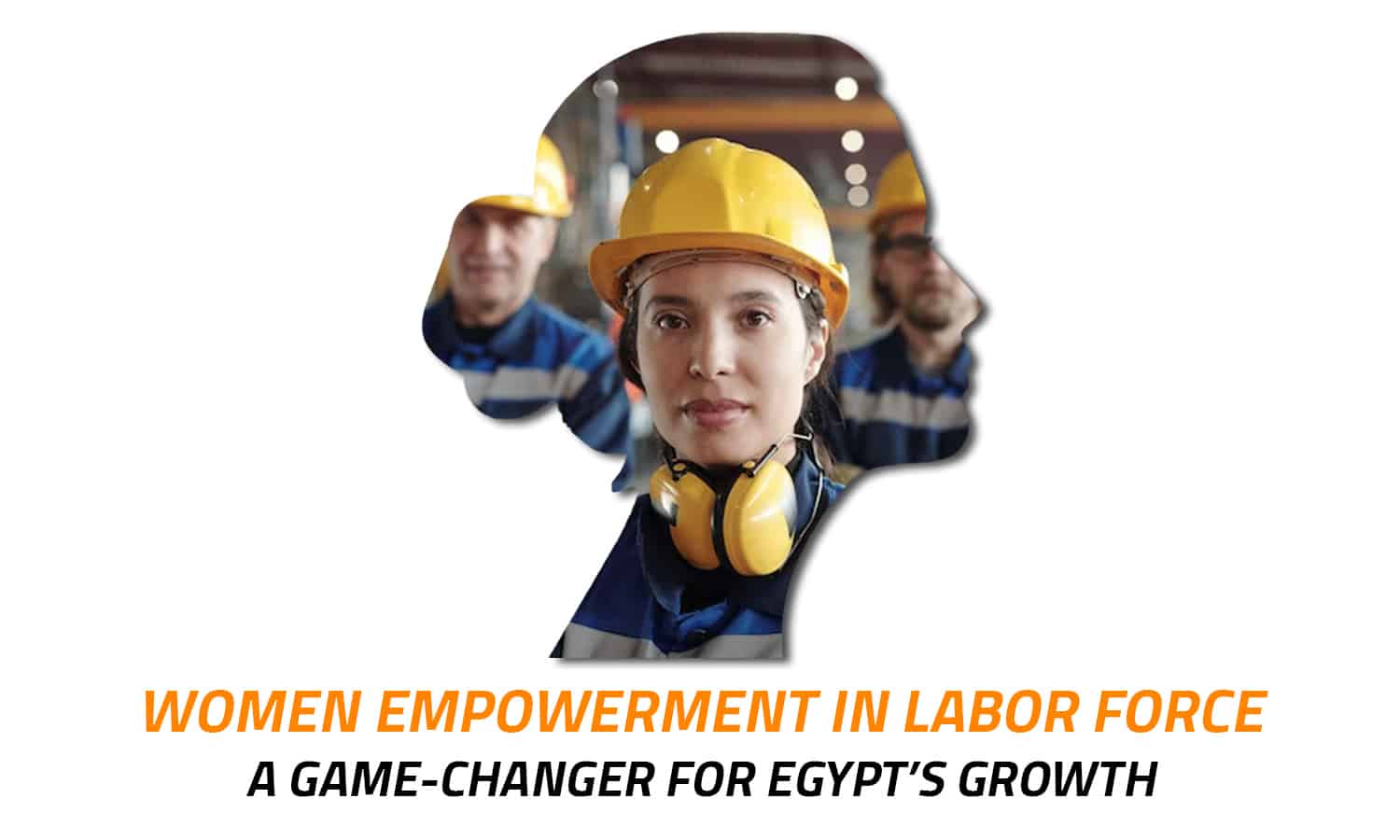
In Egypt, women make up nearly half of the country’s population, playing a notable role in the state’s economy. However, women have not shown their full potential, and their efforts are not fairly reflected in the country's economic growth. Therefore, the country is working on embracing their potential and talents to be a significant economic contributor.
Gender Equity Impacts Economy
Gender equity is an important contributor to economic growth. Having diversity and inclusion in the workplace and on boards allows access to diverse creative solutions. Fayda Abdeen, an economic expert at the Cabinet's Information and Decision Support Center (IDSC), tells Arab Finance: “Gender equity encourages greater workforce participation by ensuring that women have equal access to education, employment opportunities, and leadership positions.”
While growth and stability are necessary requirements to provide the opportunities that women need, we find that their participation in the labor market is part of the equation for growth and stability as well. Specifically, higher female labor force participation could boost growth in rapidly aging economies by mitigating the impact of a shrinking labor force, according to the book entitled ‘Women, Work, and the Economy: Macroeconomic Gains from Gender Equity’, published by the International Monetary Fund (IMF).
Moreover, Abdeen explains: “When women have equal access to quality education and training, they can earn the necessary skills to participate in high-value sectors of the economy. This leads to a more skilled and productive workforce, which is crucial for sustainable economic growth.”
Actual Representation
On January 1st, 2023, Egypt's population reached 104.5 million, 48.5% of whom were women, according to a press release published by CAPMAS in March.
Women in Egypt are not significantly contributing to the formal economy. In the first quarter (Q1) of 2023, the size of women in Egypt’s labor force was around 17.6% of total labor force, reaching 5,381 million, compared to 25,190 million men, according to CAPMAS' quarterly labor force bulletin issued in June.
Meanwhile, the female unemployment rate reached 19.2% of the total number of women in the labor force in Q1 2023. This is a huge number compared to the unemployment rate among men, which recorded 4.5% of total men in the labor force in the same quarter.
Moreover, women on Egyptian companies’ boards accounted for 19.7% in 2022, recording a 26.6% year-on-year (YoY) growth, according to the Egypt 2022 Women on Boards (WoB) Observatory Annual Monitoring report.
In 2021, Hands Along the Nile Development Services Organization published that "in Egypt, an astounding 71% of women are economically active in this informal economy."
Nirmeen El Sayyad, UN Women Project Manager at the American University in Cairo (AUC) and an economic expert, says: "Formalizing the informal sector with its current structure will eventually highlight the significant role of females."
Additionally, Abdeen notes, "Recognizing and valuing these contributions of women’s economic activities in the informal economy allows policymakers to design and implement gender-responsive policies, which enables better policy formulation, supports economic empowerment, and fosters inclusive economic growth and development."
Women tend to choose the informal economy as they do not usually find the needed flexibility. Ehdaa, a 30-year-old mother working as a private instructor, tells Arab Finance: "The private sector does not have the flexibility found in the public sector; it does not consider working mothers. When I was applying for schools or academies, they rejected me once they knew I had a child."
El Sayyad adds: “Developing a more female-friendly working environment in the private sector will definitely attract more females to join. Providing proper and convenient maternal leaves, nurseries, and flexible working hours arrangements will help improve and increase female participation in the private sector.”
Gender Smart Solutions
Over the past years, Egypt has been taking steps to narrow gender gaps in labor. One of these steps is launching the National Project for Development of the Egyptian Family (NPDEF) in February 2022. Funded by EGP 2.9, the program aims to work on the population file from a comprehensive development perspective. The program focuses on women's economic empowerment and financial inclusion, the digital savings and loan program, the use of technology, entrepreneurship, and financial education.
The financial inclusion of women is a step that cannot be disregarded. El Sayyad notes that “women's financial inclusion will positively affect economic development, as the inequality gap decreases, enabling higher economic development, which will eventually also boost both physical and social wellbeing.”
Another program is the Rabeha program, which started in May 2023. The program opened "a series of employability skills training for the dates, medicinal and aromatic plants, and handicraft sectors that target 1,000 women from the governorates of Giza, Fayoum, Beni Suef, and Minya," according to an article published by the United Nations (UN) Egypt.
Abdeen explains: “While the representation of women in the public sector may be higher, achieving gender equality and balanced representation in both the public and private sectors remains an ongoing challenge. Therefore, we still need lots of efforts to address gender biases, promote equal opportunities, and create inclusive work environments in all sectors of the economy.”
With the ongoing programs, Egypt can empower women’s inclusion to develop economic growth. As Egypt moves forward to boost the financial inclusion of women and considers the informal economy, women’s economic contribution will be well represented.
By Sarah Samir
Related News