Arab Finance: Egypt's real estate market has remained resilient despite a challenging macroeconomic environment, with inflation, currency movements, and rising construction costs continuing to reshape property prices and buyer behavior. Official and industry data point to sustained price pressures: according to the Official Egyptian Real Estate Platform, residential property prices rose by around 30.4% year-on-year (YoY) as of April 2025, while leading developers continued to report strong sales growth amid rising unit prices. At the same time, affordability and the widening gap between property prices and purchasing power have intensified the debate over whether current valuations accurately reflect underlying development costs and sustainable demand.
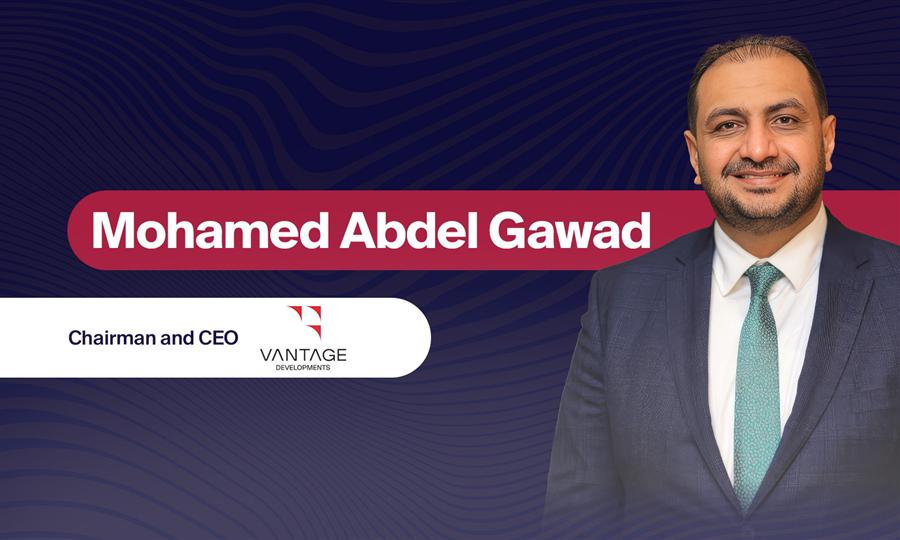
Against this backdrop, Vantage Developments is placing greater emphasis on data-driven decision-making, market intelligence, and technology as the Egyptian real estate sector enters a more complex phase. In an exclusive interview with Arab Finance, Mohamed Abdel Gawad, Chairman and CEO of Vantage Developments, discusses how developers are navigating escalating costs and changing demand, why Egypt needs a more comprehensive real estate price index, and how AI and data analytics could improve pricing transparency, valuation, and investment decisions.
1-In an increasingly competitive real estate market, how is Vantage Developments differentiating itself? And what are the company's key strategic priorities over the next few years?
At Vantage, our approach is built on three priorities: data-driven decisions, understanding market needs, and creating sustainable long-term value.
We view real estate development as an integrated ecosystem that goes beyond constructing or selling properties. It requires strategic planning, effective execution, risk management, and a deep understanding of economic and market dynamics.
At Vantage Developments, we believe successful development is driven by data-based insights, strategic analysis, and a clear understanding of market needs, economic trends, and demographic shifts.
This approach enables us to deliver real estate products that create genuine value for our customers and address both their current and future needs.
Our focus is also on sustainable business practices and long-term planning. We measure success not only by sales performance, but also by our ability to create lasting value for our customers and contribute to the continued growth and resilience of the real estate market.
2-Vantage Developments emphasizes innovation and data-driven decision-making. Can you share a recent initiative that demonstrates how this approach creates value for customers and investors?
A strong example is M Signature in New Cairo, which illustrates how we are translating our focus on innovation and data-driven development into a differentiated product for both customers and investors.
M Signature was developed as Egypt’s first homegrown branded serviced residence, combining fully finished and furnished apartments with hotel-level services and professional management by Morganti GCC. The concept responds to the growing demand for high-quality, service-integrated urban living, while offering investors a professionally managed asset with a differentiated positioning in the market.
The project also integrates technology into the resident experience, including smart-building infrastructure for lighting, heating, ventilation, and air conditioning (HVAC), and security, smart access, and a digital resident platform for maintenance requests, service tracking, and resident engagement. At the same time, energy-efficient systems and sustainable materials are being incorporated into the development.
From an investment perspective, the combination of a differentiated branded product, professional property management, lifestyle services and a strategic New Cairo location is designed to support long-term rental and resale value. For us, M Signature demonstrates that innovation is not simply about introducing technology.
3-Egypt's real estate prices have risen significantly over the past few years amid inflation, currency depreciation, and higher construction costs. How have these factors fundamentally reshaped developers' pricing strategies?
The significant increase in inflation, currency depreciation, and construction costs has made pricing a much more dynamic and carefully managed process for real estate developers. Pricing can no longer be based simply on current construction costs or competitor prices; developers need to anticipate how costs and market conditions may evolve throughout the project lifecycle.
At Vantage Developments, we look at pricing as part of an integrated system. We consider construction materials, labor, transportation, energy, land, operational and financing costs, alongside demand, purchasing power and broader market conditions.
This means pricing strategies need to be regularly reviewed and adjusted based on changing cost structures and market dynamics. While interest rates are an important consideration, they are only one part of the equation. The objective is to establish pricing that reflects the real cost of development while remaining aligned with market demand and delivering sustainable value for both the customer and the business.
Ultimately, the current environment has reinforced the importance of data, continuous market monitoring and forward-looking pricing rather than relying on fixed assumptions.
4-Many buyers believe property prices have become detached from purchasing power. To what extent do today's selling prices genuinely reflect development costs, and how much are they influenced by market expectations and investor demand?
In most cases, real estate prices are closely linked to the actual cost of development. However, there are exceptional cases where some developers may offer prices below the true development cost due to liquidity pressures or short-term financial obligations. Therefore, relying on individual cases to assess the entire market can create an inaccurate perception of actual price levels.
In reality, selling prices are shaped by a combination of factors, including land costs, construction inputs, financing, labor, and operational expenses, as well as overall market conditions and customer demand. A proper assessment of pricing should consider the full development cycle rather than focusing on isolated transactions.
At Vantage Developments, we believe that sustainable pricing requires a balance between reflecting the real cost of development and delivering value that meets customers’ needs. Market expectations and investor demand are important factors, but long-term success depends on making decisions based on accurate market analysis, economic fundamentals, and the ability to create lasting value.
5-What indicators should investors monitor when evaluating whether property prices are sustainable rather than relying solely on headline price increases?
Investors should look beyond headline price increases and evaluate the fundamentals that determine the sustainability of real estate values, including supply and demand dynamics, market absorption rates, purchasing demand, and broader economic conditions.
Real estate is a distinguished investment asset because it is linked to a tangible asset and supported by real market demand. Its value is influenced by multiple factors, including population growth, urban expansion, and the actual cost of development, rather than by a single variable.
At Vantage Developments, we believe that sustainable investment decisions should be based on accurate market data, continuous analysis, and a clear understanding of the factors shaping the market. Long-term value creation remains the key measure of success.
6-One of the industry's long-standing challenges is the absence of a comprehensive Real Estate Price Index. How would such an index improve market efficiency and strengthen investor confidence?
A credible Real Estate Price Index is an important step toward greater transparency, efficiency, and confidence in the market. Today, stakeholders often have to rely on fragmented market information, making it difficult to establish a clear and objective view of how prices are moving and how market conditions are evolving.
A reliable index would provide a common reference point for developers, investors, and customers, helping them distinguish between genuine market movements and short-term fluctuations. It would also improve the quality of investment and development decisions by providing greater visibility and predictability.
At Vantage Developments, we believe this is particularly important in a market where costs and conditions can change rapidly. Greater transparency and more consistent market benchmarks would allow developers to plan more effectively, give investors greater visibility into market values, and ultimately strengthen confidence in the sector.
We also believe greater predictability is needed in pricing structures, particularly where land payments are linked to changing interest rates. Clearer and more stable mechanisms, or longer payment periods, would help developers manage costs and pricing more effectively.
Ultimately, the value of an index is not simply in publishing numbers, but in creating a trusted market reference that supports more informed decisions across the entire real estate ecosystem.
7-What data should be incorporated into a national property index to ensure it accurately reflects market realities across different regions and property segments?
The index should capture the different factors that drive real estate performance across regions and property segments. At a minimum, this should include selling price movements by location and property type, transaction volumes, supply and demand, absorption rates, and changes in construction and development costs.
It should also take into account broader structural factors, such as demographic trends and urban expansion, as these can significantly influence demand and values in different areas.
At Vantage Developments, we have also introduced AI tools to help us monitor and analyze the multiple variables that influence the market, including costs, pricing trends, and market movements. We believe similar quality and consistency in market data would make a national index far more useful and actionable.
The objective should be to create an index that reflects the market as it actually operates—not simply where prices are today, but the underlying factors driving those prices and how they are changing over time.
8- Artificial intelligence (AI) is transforming industries worldwide. How can AI improve real estate valuation, pricing transparency, and investment decision-making in Egypt?
AI can play an important role in improving the efficiency and transparency of Egypt’s real estate market by enabling more accurate valuation, better pricing analysis, and more informed investment decisions.
Digital transformation is a key pillar of Egypt’s Vision 2030 and the country’s broader development agenda, with a focus on building a knowledge-based economy, enhancing digital infrastructure, and expanding the use of technology across sectors.
Within the real estate sector, AI can support this direction by analyzing large volumes of market data, tracking price movements, understanding demand patterns, and providing more accurate insights to support decision-making.
At Vantage Developments, we believe that technology and data analytics are essential tools for creating greater efficiency and transparency, helping developers, investors, and customers make decisions based on reliable information rather than assumptions.
9-Beyond pricing, where do you see the greatest opportunities for AI and data analytics across the real estate value chain—from planning and construction to sales and customer experience?
Beyond pricing, AI and data analytics can create value across the entire real estate value chain, from planning and development to customer engagement.
In the planning phase, data analytics can help developers better understand market needs, demographic trends, and demand patterns, enabling more informed decisions about project concepts and positioning. During construction, technology can support greater efficiency through improved planning, monitoring, and resource management.
On the sales and customer experience front, AI can help provide deeper insights into customer preferences, enhance communication, and deliver more personalized experiences.
At Vantage Developments, we believe that technology is not only a tool for improving operational efficiency, but also a key enabler of creating better-designed projects, stronger customer experiences, and long-term value across the real estate ecosystem.
10-What are the biggest challenges in collecting standardized market data across developers, brokers, and government entities, and how can these challenges be addressed?
One of the main challenges in collecting standardized real estate data is ensuring consistency, accuracy, and alignment between the different stakeholders involved, including developers, brokers, and government entities. The market includes diverse segments and regions, which makes establishing unified definitions, reporting standards, and data collection methods essential.
Addressing this challenge requires greater collaboration between all stakeholders and the development of a clear framework for collecting, verifying, and sharing market information. Technology can play an important role by enabling more efficient data management and analysis.
At Vantage Developments, we believe that reliable and transparent market data is fundamental to making better decisions. A standardized approach to data collection would benefit the entire sector by improving market visibility, supporting informed investment decisions, and contributing to a more efficient real estate market.
11-Looking ahead, what structural reforms or digital initiatives would have the greatest impact on making Egypt's real estate market more transparent, efficient, and internationally competitive?
The greatest opportunities lie in strengthening transparency, improving access to reliable market data, and accelerating digital transformation across the real estate sector.
Establishing standardized market data systems, including reliable property indicators and digital platforms that support data sharing between stakeholders, would help create greater visibility and enable more informed decision-making. In parallel, adopting advanced technologies such as AI and analytics can improve efficiency across planning, development, and customer engagement.