Arab Finance: As Egypt accelerates its industrialization agenda and intensifies efforts to expand non-oil exports, the ready-made garments (RMG) sector has emerged as one of the country's fastest-growing manufacturing industries and a key source of foreign currency earnings. Benefiting from strategic access to European markets, preferential trade agreements, and a competitive manufacturing base, the industry is attracting renewed international interest as global brands diversify their sourcing strategies.
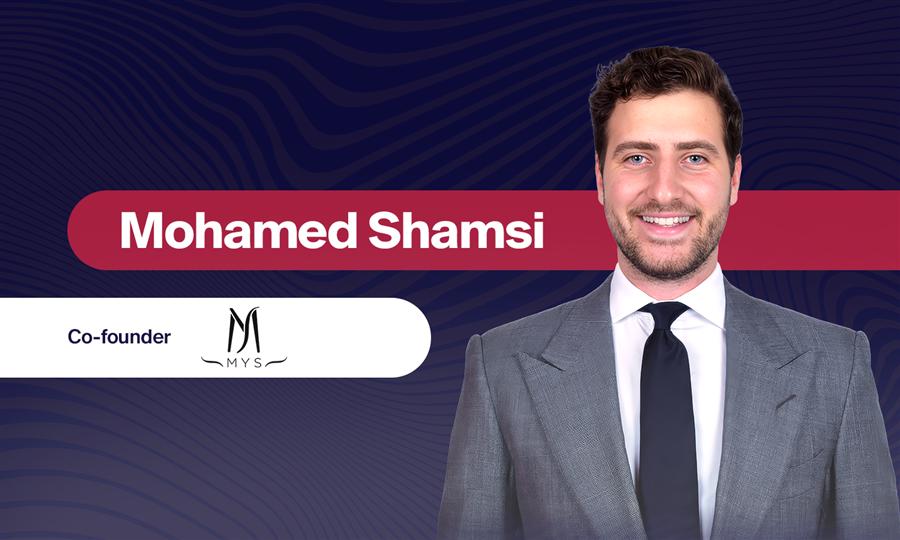
Against this backdrop, Arab Finance sat down with Mohamed Shamsi, Co-founder of MYS Fashion, to discuss MYS Ready-Made Garments' export growth strategy, the company's expanding presence in European markets, the role of technology and responsible manufacturing in strengthening competitiveness, and his vision for positioning Egypt among the world's leading apparel manufacturing and sourcing destinations.
1-Could you introduce the company, describe its evolution over the past four decades, and explain the core values that have enabled it to build long-standing relationships with international apparel brands?
First, I would like to clarify the distinction between our two companies. MYS Ready-Made Garments (MYS-RMG) is our manufacturing business, founded in 1984, and is the company I will primarily refer to throughout this interview. MYS Fashion, on the other hand, is our retail fashion brand, which I will discuss later when addressing our long-term vision.
MYS-RMG was founded by Abdelmalek Shamsi in 1984, and I represent the third generation of our family to lead the business. What began as a local garment manufacturer has grown into an export-oriented company serving international retailers across global markets.
When I joined the company two years ago, my priority was to accelerate export growth while building on the strong foundation established by previous generations. Since then, we have invested significantly in our people, strengthened our quality management and production systems, and enhanced our operational efficiency. Today, we proudly serve more than 25 international clients, with exports accounting for over 80% of our production.
Throughout my career, I have learned that long-term partnerships are built on consistency. International buyers value suppliers who communicate transparently, respond quickly to challenges, and deliver the same high standards of quality season after season. I believe this commitment has enabled us to build enduring relationships with our clients, and it remains at the heart of everything we do.
2-MYS recently participated in the Apparel Export Council of Egypt's trade mission to the United Kingdom. What were the key outcomes of the visit, and how do you expect it to support the company's export strategy and business development over the coming years?
The UK has long been a strategically important market for MYS-RMG, making our participation in the Apparel Export Council of Egypt's trade mission a valuable opportunity to further strengthen our presence. The Council has played a pivotal role in connecting Egyptian manufacturers with international buyers and supporting the growth of the country's apparel exports, and this mission reflected its continued commitment to expanding global market access.
The visit allowed us not only to engage with prospective customers but also to strengthen relationships with existing clients. We showcased our manufacturing capabilities to several leading retailers and brands while advancing discussions with potential new partners. We have already made progress in developing some of these opportunities, which demonstrates the long-term value of such trade missions in supporting business development and export growth.
Over the past two years, we have made significant progress in expanding our footprint in the UK market. When I assumed responsibility for export development, we served a single UK client. Today, we work with more than 10 UK brands and retailers, making the UK our second-largest export market. Looking ahead, our objective is to build on this momentum by strengthening existing partnerships, expanding our customer base, and further increasing our presence across the UK and the broader European market.
3-Egypt's ready-made garments industry is competing with major manufacturing hubs such as Turkiye, Bangladesh, and Vietnam. What competitive advantages does Egypt offer today, and where do you believe the industry still needs to improve to strengthen its global position?
Every sourcing destination has its own strengths, and the objective should not be to replicate countries such as Turkiye, Bangladesh, or Vietnam. Egypt has distinct competitive advantages, and the priority should be to build on those strengths.
One of Egypt's greatest advantages is its proximity to European markets. Compared to many Asian manufacturing hubs, Egyptian exporters can offer significantly shorter transit times, an increasingly important advantage as global retailers seek greater supply chain flexibility and faster replenishment. Coupled with Egypt's extensive trade agreements, well-established textile industry, and skilled workforce, these advantages position the country as an increasingly attractive sourcing destination for international brands.
That said, there is still room to enhance the industry's competitiveness. Greater integration across the textile value chain, increased domestic production of fabrics, accessories, and trims, continued investment in vocational training, and further improvements in logistics and customs efficiency would all strengthen Egypt's position in global apparel markets. Addressing these priorities would enable manufacturers to respond more quickly and efficiently to the evolving requirements of international buyers.
4-MYS exports to several European markets, including the UK, Poland, France, and the Netherlands. Which international markets do you see offering the greatest growth opportunities over the next five years, and what is driving demand in those markets?
Europe will remain our primary growth market over the next five years, particularly the UK and Western Europe. We have built strong momentum in the UK over the past two years and see significant opportunities to deepen existing partnerships while expanding our presence among new retailers and brands. At the same time, markets such as France, Germany, Italy, and the Nordic countries continue to offer attractive growth opportunities for Egyptian apparel manufacturers.
The key driver behind this demand is the evolution of global sourcing strategies. International retailers are placing greater emphasis on supply chain resilience, shorter lead times, and supplier diversification to mitigate risk. Egypt is well positioned to meet these requirements through its strategic proximity to Europe, preferential trade agreements, and well-established manufacturing capabilities.
Beyond production capacity, international buyers increasingly seek manufacturing partners that offer responsiveness, transparency, product development expertise, and the flexibility to adapt quickly to changing consumer demand. These capabilities have become central to our business model and play a key role in building long-term partnerships with global brands.
While Europe remains our immediate priority, we also see considerable long-term potential in North America and the Gulf Council Countries (GCC) as both regions continue to diversify their sourcing strategies. Our objective is not simply to expand into more markets, but to establish sustainable partnerships in markets where we can deliver long-term value.
5-The ready-made garments industry has become one of Egypt's largest non-oil export sectors. In your view, what role can the industry play in supporting economic growth, employment, and export diversification over the coming decade?
The ready-made garments industry has the potential to become one of Egypt's most important drivers of sustainable economic growth over the coming decade. In addition to generating employment, it is one of the country's leading sources of foreign currency and among its fastest-growing export industries.
Egypt's ready-made garment exports increased from approximately $2.4 billion in 2023 to $2.84 billion in 2024, before reaching a record $3.39 billion in 2025. The sector has maintained this momentum in 2026, with exports rising by 15% during the first four months of the year compared with the same period in 2025.
The industry's contribution extends well beyond garment manufacturing. Each export order supports an integrated value chain encompassing cotton cultivation, textile production, dyeing, accessories, packaging, logistics, and retail. As a labor-intensive industry, it also creates employment opportunities across a broad range of skill levels, making it a significant contributor to inclusive economic development.
Looking ahead, the Apparel Export Council of Egypt (AECE) has set an ambitious target of increasing ready-made garment exports to $12 billion by 2031. Achieving this objective will require continued investment in manufacturing capabilities, workforce development, vertical integration, and the attraction of additional international investment. If these priorities are sustained, Egypt will be well positioned to further strengthen its competitiveness as a regional apparel manufacturing and export hub.
Ultimately, the success of the sector extends beyond individual companies. A stronger ready-made garments industry enhances the global reputation of "Made in Egypt," attracts new investment, expands export opportunities, and generates broad economic benefits across the manufacturing value chain.
6-Egypt has placed increasing emphasis on localizing industries and strengthening domestic manufacturing. How can deeper integration between textile production, garment manufacturing, and accessories help improve the competitiveness of Egypt's apparel sector and reduce reliance on imported inputs?
Egypt has a significant opportunity to establish itself as a fully integrated apparel manufacturing hub. The country already possesses many of the essential foundations, including globally recognized cotton, an established textile industry, and a skilled garment manufacturing base. The next step is to strengthen integration across every stage of the value chain.
Today, many manufacturers, including MYS-RMG, continue to rely on imported fabrics, trims, accessories, and packaging for certain product lines. While imports will remain an important component of the industry, expanding domestic production of these inputs would significantly enhance the sector's competitiveness. A more integrated local supply chain would shorten lead times, reduce logistics costs, improve operational flexibility, and enable manufacturers to respond more quickly to evolving customer requirements.
Greater collaboration among textile producers, garment manufacturers, accessory suppliers, and technology providers would also foster greater innovation and product development. A more integrated industrial ecosystem would generate higher value within Egypt, strengthen domestic capabilities, and make the country a more attractive sourcing destination for international buyers seeking reliable, end-to-end manufacturing solutions.
7-Environmental and social compliance have become key considerations for international retailers. How is MYS investing in sustainability, responsible manufacturing, and international certifications to meet the evolving requirements of global brands?
Sustainability has become a fundamental requirement for doing business with international brands. Today, retailers expect their manufacturing partners to meet rigorous standards not only in product quality, but also in environmental stewardship, ethical labor practices, and supply chain transparency. At MYS-RMG, we view these expectations as an opportunity to strengthen our operations and enhance our long-term competitiveness.
As part of this commitment, MYS-RMG was selected as one of 25 Egyptian garment manufacturers to participate in the GTEX/MENATEX Program, funded by the International Trade Centre (ITC). Through the program, our team has participated in a series of technical workshops focused on Resource Efficient and Cleaner Production (RECP) and sustainable manufacturing practices.
These initiatives have enabled us to identify practical opportunities to improve resource efficiency, reduce waste, and integrate sustainability more effectively into our day-to-day operations.
8-Automation, artificial intelligence (AI), and digital production planning are reshaping apparel manufacturing worldwide. How is MYS leveraging technology to improve productivity, product quality, and operational efficiency while maintaining the craftsmanship associated with Egyptian-made garments?
Technology is transforming the apparel industry at an unprecedented pace. However, its role is not to replace people but to empower them to make better decisions and operate more efficiently. At MYS-RMG, we have invested in digital production planning and data-driven management systems to enhance visibility across our operations, enabling us to respond more quickly, optimize resource allocation, and maintain consistent production performance.
A key milestone in this transformation has been the implementation of Garment IO, a smart production management system that provides real-time visibility across our production lines. Rather than relying solely on manual reporting, our teams can continuously monitor productivity, efficiency, quality, and production progress, enabling faster decision-making and timely corrective actions. This has strengthened production planning, improved cross-functional communication, and enhanced our ability to deliver consistent quality and on-time performance.
We also continue to leverage operational data to drive continuous improvement across the business. As AI and digital technologies evolve, we see growing opportunities to enhance production planning, quality control, demand forecasting, operational efficiency, and human resource management through more advanced data analytics and intelligent automation.
Despite these technological advances, apparel manufacturing remains a people-driven industry. The craftsmanship, attention to detail, and expertise of our workforce continue to define the quality of our products. Our strategy is to combine these strengths with advanced technologies to deliver greater efficiency, higher quality, and increased responsiveness while preserving the craftsmanship that distinguishes Egyptian-made garments.
9-Apparel exporters continue to navigate exchange-rate fluctuations, higher logistics costs, and intense global competition. What are the most significant challenges facing Egyptian garment exporters today, and what policy measures would further strengthen the industry's competitiveness?
The global apparel industry has become increasingly competitive. Today, international buyers expect competitive pricing, shorter lead times, consistent quality, greater flexibility, and full compliance with international standards, all while maintaining operational efficiency. Although Egyptian manufacturers have made significant progress, continued improvements in competitiveness will be essential to keep pace with these evolving market expectations.
One of the sector's greatest opportunities lies in strengthening Egypt's domestic supply chain. Expanding local production of fabrics, trims, accessories, and packaging materials would reduce reliance on imported inputs, shorten lead times, and provide manufacturers with greater flexibility to respond to customer demand. Continued investment in logistics infrastructure, customs modernization, and more efficient trade facilitation would further enhance Egypt's position as a reliable sourcing destination for international brands.
Continued collaboration between the government, the AECE, and the private sector will also be critical. Policies that support workforce development, encourage investment in advanced manufacturing technologies, and promote the adoption of internationally recognized sustainability and quality standards will strengthen the long-term competitiveness of the industry.
10-Looking ahead, what is your long-term vision for MYS, and how do you see the company contributing to Egypt's ambition of becoming a leading regional hub for apparel manufacturing and exports?
Our long-term vision is to build two complementary businesses that contribute to the continued development of Egypt's apparel industry. Through MYS-RMG, we aim to become one of the region's leading apparel manufacturing partners and a globally recognized shirt manufacturer, distinguished by quality, innovation, product development, and long-term partnerships with international brands.
At the same time, MYS Fashion represents our long-term ambition to leverage this manufacturing expertise to build an Egyptian fashion brand that reflects quality, craftsmanship, and timeless design, with the potential to compete in international markets.
An important milestone in advancing this vision is our selection to exhibit at Première Vision Paris in September 2026. As the only Egyptian ready-made garments manufacturer participating in one of the world's leading textile and fashion sourcing exhibitions, we see this as an important opportunity to showcase Egypt's manufacturing capabilities, innovation, and craftsmanship to a global audience while strengthening relationships with international buyers and industry stakeholders.
Beyond our own growth, we believe the success of Egyptian manufacturers contributes to the broader development of the national apparel industry. Continued investment in people, technology, sustainability, and product innovation will enhance the competitiveness of "Made in Egypt," attract new international business, and support Egypt's ambition to establish itself as a leading regional hub for apparel manufacturing and exports.