Arab Finance: Travel and tourism contributed $11.6 trillion to the global economy in 2025, equivalent to 9.8% of global gross domestic product (GDP), and supported 366 million jobs worldwide, according to the World Travel & Tourism Council (WTTC). However, the sector’s economic importance comes with environmental pressures: tourism-related activities accounted for an estimated 6.5% of global greenhouse gas emissions in 2023. This has strengthened the case for governments to pursue tourism models that protect natural resources, support local livelihoods, and sustain destinations’ long-term competitiveness.
In Egypt, the Green Sharm El-Sheikh Project seeks to translate these priorities into action by integrating renewable energy, waste management, sustainable transport, biodiversity conservation, and community-based tourism. In this interview with Arab Finance, Mohammed Elewa, National Project Manager of Green Sharm El-Sheikh, discusses how the initiative aims to mobilize private investment, create green business opportunities, and develop a model that could be replicated across Egypt’s coastal destinations by 2028.
1-Could you give us an overview of the Green Sharm El-Sheikh Project and the main transformation you are seeking to achieve in the city by the project's completion?
The project is a six-year initiative implemented by the Ministry of Environment in cooperation with the United Nations Development Program (UNDP) and in partnership with the South Sinai Governorate, with support from the Global Environment Facility and significant co-financing and investment from public and private partners.
Our objective is not simply to implement a collection of environmental projects. We are trying to establish an integrated model in which energy, mobility, waste, water, biodiversity, protected areas, tourism, and private-sector investment are managed as parts of a unified sustainable city system.
We have therefore been working at two levels simultaneously.
The first is physical transformation: renewable energy, energy efficiency, waste systems, sustainable transport, biodiversity conservation, protected-area management, and community-based ecotourism.
The second, and perhaps more important, is institutional transformation. We have developed the Sharm El-Sheikh Sustainable Development Strategy so that these interventions do not end when individual projects or grants come to an end. The intention is to embed sustainability into the way the city plans, invests, and operates.
By 2028, success means that ‘Green Sharm’ is no longer a special initiative, but standard practice. Environmental sustainability must become the natural baseline for all future urban and economic development in the city.
2-Sharm El-Sheikh has made significant progress in renewable energy. What have been the most important lessons from the project's solar pilots, particularly in convincing hotels and other private-sector operators to invest in renewable energy?
We started by helping reduce some of the barriers that prevent hotels from investing: technical uncertainty, lack of reliable feasibility information, unfamiliarity with suppliers and technology, and the initial capital requirement.
Through the Green Sharm photovoltaic (PV) pilot, 12 hotels have completed solar installations while another six have already signed contracts for installation. At the broader city level, installed solar capacity has now reached approximately 55 megawatts (MW). What is particularly important is that this transition is increasingly being driven by private investment rather than grants alone.
We have also seen individual hotels expand their systems after seeing the actual results. That is perhaps the most convincing indicator. Once an operator can see the reduction in purchased electricity, understand the technology, and calculate the payback, the conversation changes completely. Sustainability stops being viewed as a compliance cost and starts being viewed as an investment.
That is why our second PV call is designed differently. We are using even further reduced project resources to catalyze investment and initiate expansions, rather than trying to finance the entire installation. For on-grid solar, for example, the current support mechanism provides a contribution of $100 per kilowatt, capped at $20,000 per hotel, with the business financing the remaining investment.
That is the model we want to scale: relatively limited public or development finance used strategically to unlock much larger private investment.
3-Beyond individual pilot projects, how is Green Sharm working to make sustainability financially viable for hotels and businesses? What incentives or financing mechanisms are needed to encourage wider private-sector investment in green technologies?
We have learned that there is no single financing instrument that will green an entire tourism economy. Different technologies and different businesses require different solutions.
Our current program therefore combines technical assistance with targeted co-financing. For example, we are currently supporting three investment pathways: on-grid solar PV, off-grid solar systems for activities such as safari operations and eligible marine facilities, and high-efficiency cooling and refrigeration using lower-impact refrigerants.
But financial support alone is not enough. Businesses need credible technical specifications, qualified suppliers, baseline consumption data, predictable approval processes, and clear information about return on investment.
The long-term objective is to move from individual grants toward a financing ecosystem. That may include concessional finance, commercial lending, green credit lines, ESCO-type arrangements, guarantees, performance-based incentives, and blended-finance instruments.
My view is that government and development partners should not permanently pay for commercially viable technologies. Their role should increasingly be to remove the barriers that stop the private sector from investing itself.
The strongest model is one in which a relatively small amount of concessional or grant finance de-risks the first investment, demonstrates the economics, and then allows banks, investors, and businesses to scale the market.
4-Waste management and plastic pollution are among the project's key areas of focus. What measurable changes have been achieved so far, and where do you see the biggest remaining gaps in Sharm El-Sheikh's waste-management system?
Waste is probably the area where it is most important to distinguish between infrastructure and the overall system.
The project has completed a Solid Waste Management Strategy for Sharm El-Sheikh and identified six priority pilot interventions. We have also expanded the project's work specifically on plastic waste, building on earlier efforts to reduce single-use plastics and working with hotels, tourism operators, schools, suppliers, and local communities.
At the city level, important infrastructure improvements have also taken place, including improved disposal and recycling capacity. But infrastructure by itself does not solve the waste problem. The remaining gap is the value chain.
We still need stronger segregation at the source, reliable collection of separated fractions, viable recycling markets, better data on quantities and material flows, and stronger commercial incentives for businesses to reduce waste before it is generated.
Plastic is a particularly good example. Awareness has improved substantially, but awareness alone does not change behavior. We therefore need to move from saying “do not use this” to making affordable alternatives available and commercially attractive.
We are now increasingly linking waste reduction to circular-economy opportunities. In Al-Gharqana, one of the Bedouin villages we are working in, for example, we are exploring how plastic waste can become an input for locally produced handicrafts. That links environmental improvement directly with local income generation.
Ultimately, the success indicator is not how much waste we collect. It is how much waste we prevent, separate, recover, and keep out of landfills and the marine environment.
5-Tourism is central to Sharm El-Sheikh's economy. How can the city reduce the environmental footprint of tourism while maintaining its competitiveness as an international destination? And what does a genuinely “green tourist destination” mean in practical terms for hotels, visitors, and local businesses?
I would actually slightly reverse the premise. Done properly, reducing the environmental footprint should strengthen Sharm's competitiveness, not weaken it.
A tourism destination competes on quality, operating costs, natural assets, and increasingly on environmental credibility.
For a hotel, being green should mean lower energy and water consumption, better waste management, responsible procurement, and lower operating costs.
For the visitor, it should mean cleaner transport, less plastic, better-managed natural areas, high-quality ecotourism experiences, and confidence that visiting the destination is not destroying the assets they came to see.
For a local business, it should mean new markets: renewable energy, recycling, sustainable transport, local food, environmental services, ecotourism, guiding, crafts, and community experiences.
And for the government, it means managing the destination as a system rather than regulating each sector independently.
There is also a very direct economic argument. Sharm's tourism proposition depends heavily on its natural capital, particularly the Red Sea, coral reefs, and surrounding protected areas. Degrading those resources is therefore not simply an environmental loss; it is the depreciation of one of the city's most valuable economic assets.
A genuinely green destination is one where protecting that asset becomes part of the tourism business model.
6-How is the project's funding structured, and how important is blended financing and private-sector investment to sustaining the initiatives beyond the project's implementation period?
The financing structure itself reflects what Green Sharm is trying to demonstrate.
The core Global Environment Facility (GEF) grant is approximately $6.2 million, while the overall financing structure includes around $56.7 million in mobilized and expected co-financing from the government, development partners, and the private sector.
That leverage is important because a city cannot be transformed through grant funding alone.
We use grant resources where they have the greatest catalytic value: technical assistance, studies, capacity development, policy and institutional frameworks, demonstration projects, and limited financial contributions that reduce the perceived risk of new technologies.
However, when there is a commercially viable investment, our objective is increasingly to bring the private sector in.
That is why blended finance is so important. Development finance can absorb some of the early risk or address affordability barriers, while private capital provides the scale.
The real sustainability test for Green Sharm is therefore not how much donor funding we can attract. It is whether the project creates investment models that continue attracting capital after the project closes.
7-What opportunities is the project creating for local residents, particularly through green jobs, ecotourism, and small businesses?
One of the areas I care strongly about is ensuring that the green transition creates local economic value.
In and around the protected areas, we are moving from viewing communities simply as beneficiaries toward treating them as partners in conservation and tourism.
In Al-Gharqana village, inside Nabq Protected Area, we supported the establishment of a formally registered local association, community facilities, and a handicrafts workshop. We have been supporting women with skills development and exploring market-based activities in handicrafts, plastic upcycling, and tourism.
At a wider South Sinai level, more than 400 women living in and around protected areas have received support in producing, packaging, and marketing handmade products.
But the potential goes much further.
Ecotourism can create opportunities for local guides, drivers, food producers, artisans, camp operators, and small hospitality businesses. Protected areas can also generate new forms of private investment in which communities participate in the value chain rather than remaining outside it.
Our work in Nabq, Ras Mohammed, and Abu Galloum is particularly important in this respect. We have completed an ecotourism development plan, a community development plan, and an investment plan aimed at creating economically viable opportunities that simultaneously support conservation.
If we do this correctly, conservation and livelihoods stop being competing agendas. A healthy ecosystem becomes an economic asset that the community has a direct interest in protecting.
8-What is the project's vision for mobility in Sharm El-Sheikh, and what needs to happen for sustainable transport to become the dominant model rather than a complementary option?
The objective is not simply to add some electric vehicles to a conventional transport system. It is to change the system.
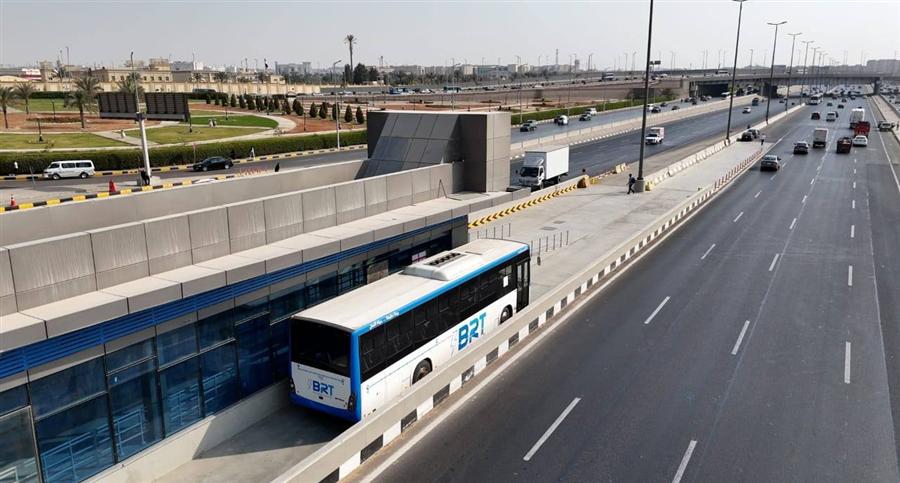
Sharm has already begun that transition. Electric buses have entered municipal operation and cycling infrastructure is expanding. But sustainable mobility will only become dominant when it becomes more convenient and economically attractive than the conventional alternative.
That requires several things to happen together: a larger and more reliable public transport network, charging infrastructure, electrification of hotel and tourism fleets, cleaner taxis and service vehicles, better pedestrian and cycling connections, and clear standards for new vehicles entering the tourism transport market.
There is also an important planning dimension. Hotels, the airport, tourism centers, residential areas and major attractions need to be connected as one mobility system.
Financing matters as well. Fleet conversion has a relatively high upfront cost even where lifetime operating costs are lower. Financial institutions therefore have an important role to play through leasing, green loans, and other mechanisms that spread that capital cost over the useful life of vehicles.
The transformation becomes permanent when electric and low-carbon mobility is no longer a special project but simply the most practical transport choice in the city.
9- Which elements of the project are most transferable to other tourism destinations such as Hurghada, El Gouna, Marsa Alam or coastal cities, and what lessons have you learned that could make replication easier and less costly?
I believe the most replicable part of Green Sharm is not any individual technology. It is the methodology.
First, establish a city-level sustainability strategy rather than implementing disconnected environmental projects.
Second, identify areas where relatively small public or development investments can unlock much larger private investment.
Third, use pilots to prove economics and performance before scaling.
Fourth, involve hotels and tourism operators from the beginning because in tourism cities the private sector controls a large proportion of energy, water, waste and transport demand.
Fifth, protect natural capital as part of the economic strategy of the destination.
And finally, involve local communities in the tourism value chain.
The technologies themselves, solar PV, efficient cooling, waste segregation, electric mobility, and water efficiency, are all transferable. But copying technology without copying the enabling environment usually produces isolated pilots rather than transformation.
Replication can also become considerably cheaper because the next city does not need to repeat every feasibility study, specification, procurement model, or institutional experiment. Green Sharm can provide tested tools, technical requirements, financing approaches, operating models and lessons learned.
That is ultimately one of the project's most important functions: to reduce the cost and risk of the next green tourism transformation in Egypt.
10-Looking toward 2028 and beyond, what would you consider the project's most important measures of success?
I would not measure Green Sharm's success by the number of pilot projects we completed.
The real question is what remains after the project.
By 2028, I would look at whether private investment in solar energy, energy efficiency, and sustainable technologies continues without project support; whether waste is increasingly prevented and recovered rather than disposed of; whether sustainable mobility has gained a meaningful share of everyday transport; and whether the protected areas surrounding Sharm are better managed and better financed.
I would also look at whether local communities are earning more income from sustainable tourism and conservation-compatible businesses, whether hotels are reducing resource consumption and operating costs, and whether the Sustainable Development Strategy is actually guiding public and private investment decisions.
And I would measure competitiveness.
If Sharm can demonstrate that environmental performance improves the visitor experience, protects its natural assets, reduces business costs, and opens new tourism markets, then sustainability becomes an economic advantage rather than an obligation.
For me, the ultimate measure of success is very simple. By the end of the project, Green Sharm should no longer be a collection of green interventions. It should be the way Sharm El-Sheikh does business.