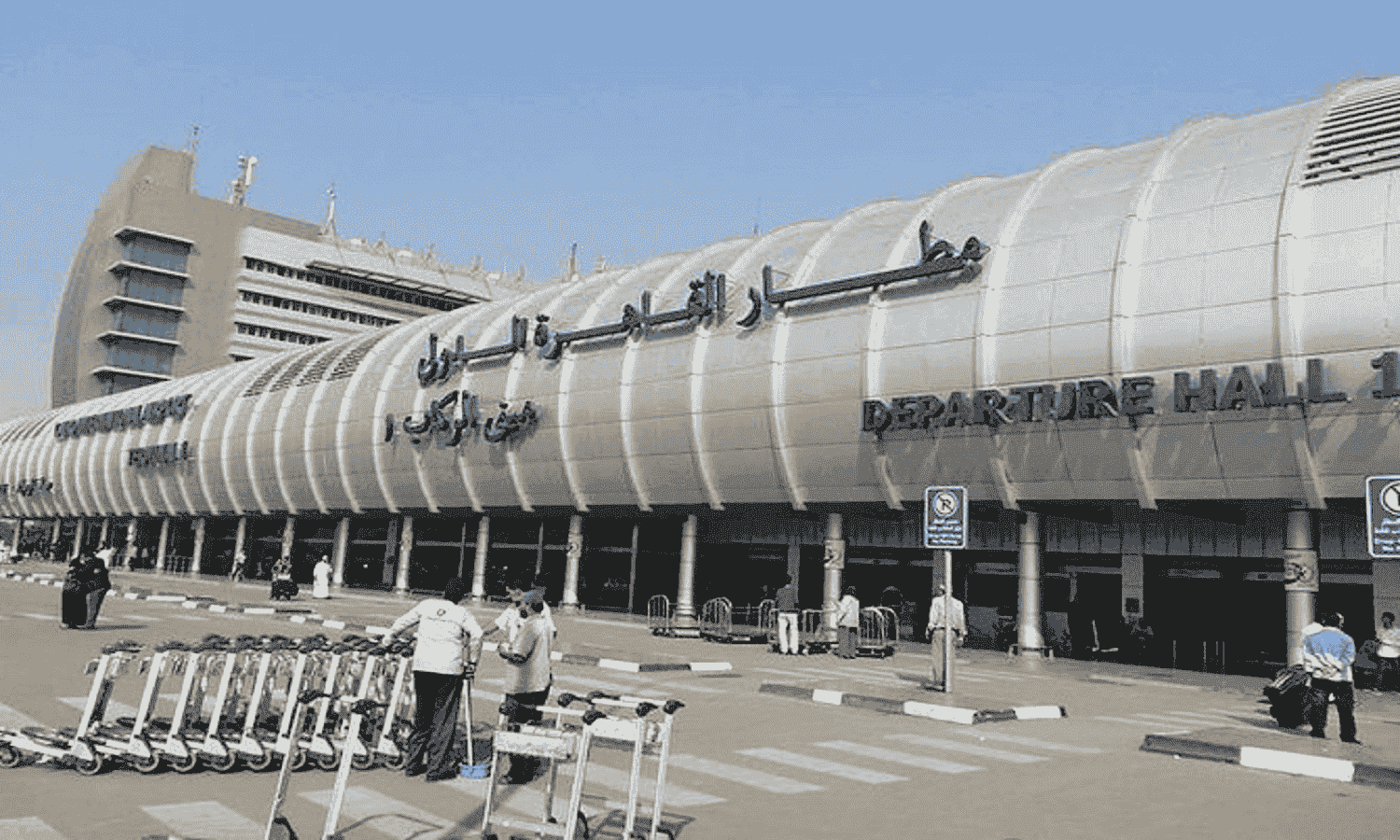
Egypt’s airports play a part in the nation’s economic modernization. Facilities such as Cairo International, Hurghada, and Sharm El-Sheikh serve as gateways for millions of travelers each year. Yet, their operational frameworks remain inefficient, limiting Egypt’s ability to fully leverage its geographic advantage as a hub for tourism and trade.
Recognizing these challenges, the government has launched modernization initiatives and encouraged private investment to accelerate the transformation of airport operations. This push aligns with global trends in aviation technology, where smart airport systems are redefining efficiency standards.
Current Status
Egypt’s aviation sector is undergoing a number of modernization projects across different airports. The Cairo International Airport is witnessing a $4.5 billion expansion project at Terminal 4. This expansion aims to double annual passenger capacity from 30 million to 60 million, Minister of Civil Aviation Sameh El Hefny revealed in September 2025. This scale of growth reflects the government’s effort to turn aviation infrastructure into a stronger engine for tourism, trade, and connectivity.
At the operational level, passenger growth is one of the biggest pressure points. As Aly Sameh, Flight Operations Supervisor, tells Arab Finance, notes, “Cairo International Airport and other major airports are handling a continuous increase in passenger traffic while keeping operations smooth and maintaining service quality. Peak-hour congestion, coordination between different airport stakeholders, and keeping up with new technology and security requirements are also major challenges.”
Meanwhile, Hurghada International Airport has emerged as a focal point for private sector participation. Passenger traffic surged to 10.5 million in fiscal year 2024/2025, marking a 22% year-on-year (YoY) increase and reflecting Egypt’s growing tourism appeal. In partnership with the International Finance Corporation (IFC), the government has launched a public-private partnership (PPP) initiative to bring private operators into airport management. More than 60 international consortia have expressed interest, underscoring investor confidence in Egypt’s aviation growth strategy, according to statements published by the Ministry of Civil Aviation in September and November 2025.
Sharm El-Sheikh International Airport is also undergoing a $420 million phased upgrade project, designed to expand capacity beyond 10 million passengers annually. Terminal 1 has already been modernized with expanded retail and dining facilities, while Terminal 2 continues to serve EgyptAir and charter flights from Eastern Europe. These upgrades are part of Egypt’s broader plan to attract 30 million tourists by 2030, positioning Sharm El-Sheikh as a premier Mediterranean destination.
Next-Generation Passenger Processing
To alleviate terminal congestion and handle growing traveler volumes, Egypt is focusing heavily on digital infrastructure. Current modernization initiatives target “biometric systems, smart passenger processing, automated check-in and boarding, as well as advanced security and operational technologies,” Sameh points out.
According to Sameh, integrating these smart systems fundamentally alters the passenger experience and resource management. “Biometric check-in systems help reduce queues and speed up passenger processing, which improves the overall travel experience. AI-driven scheduling also helps airports and airlines manage resources more efficiently, improve staff allocation, and reduce operational delays, leading to smoother daily operations,” he explains.
Accelerating these high-tech deployments relies heavily on PPPs. Hence, Sameh points out that PPPs support this modernization process by providing critical investment, specialized operational expertise, and direct access to international aviation standards and technologies. This collaborative model ultimately speeds up development and improves overall terminal efficiency.
Revolutionizing Air Cargo Through IoT and Automation
Egypt’s digital aviation overhaul is not restricted to passenger terminals; it is actively transforming the country’s logistics and trade capabilities. On the cargo front, “Egypt is prioritizing automated cargo handling systems and digital customs clearance platforms like Nafeza,” Mohamed Elshazly, a logistics and airport operations specialist, tells Arab Finance.
Elshazly points out that digital customs platforms have revolutionized supply chains by cutting cargo release times from days down to just hours. He adds that PPPs are equally vital in logistics, “bringing global logistics players who invest in warehouse automation and tracking tech that the government alone cannot fund quickly.”
“The Internet of Things (IoT) is also critical for both predictive maintenance and operational safety. We rely on IoT sensors installed on critical airport equipment such as unit load devices (ULDs), high-loaders, conveyor belts, and X-ray screening machines,” according to Elshazly.
Elshazly illustrates that the IoT ecosystem operates on two distinct fronts. First, IoT sensors monitor real-time data, including vibration, temperature, motor hours, and hydraulic pressure. The system actively flags anomalies before an equipment failure occurs. For instance, if a high-loader's hydraulic system shows abnormal pressure patterns, teams receive an instant alert to service it before it breaks down on the tarmac and delays a flight. This shifts the operational paradigm entirely from reactive repairs to proactive maintenance, significantly reducing equipment downtime.
Meanwhile, IoT-enabled ULDs transmit real-time location, temperature, and shock data, which is vital for sensitive cargo like pharmaceuticals. If a shipment is exposed to extreme heat or experiences a hard impact during handling, systems trigger an immediate alert.
Logistics staff can then isolate and inspect the shipment while informing the client immediately, ensuring cargo integrity and maintaining strict compliance with International Air Transport Association (IATA) safety standards. On the tarmac, this technology also tracks ground support equipment movement to prevent costly collisions on the ramp.
“In short, IoT gives us full visibility. We move from hoping equipment works to knowing it will work, which is the foundation of airport safety and on-time performance," Elshazly notes.
Overcoming Implementation Barriers
Despite the clear economic and operational benefits, transitioning to a highly digitized aviation hub presents real-world friction. Elshazly notes that the biggest barrier is integrating new technologies, such as pre-clearance and advanced X-ray systems, with legacy government frameworks. Furthermore, upskilling ground staff and customs officers to confidently navigate these digital platforms requires a significant time investment.
While the initial capital expenditure for these systems is high, the long-term economic outlook remains incredibly positive. Elshazly explains that return on investment (ROI) through faster operations, enhanced security, and reduced demurrage fees is huge for Egypt's logistics sector.
The sweeping modernization of Egypt's aviation infrastructure represents a critical pivot toward establishing the nation as a premier global hub for trade and tourism. While massive physical expansions at major gateways like Cairo International, Hurghada, and Sharm El-Sheikh lay the groundwork to handle booming traffic, the true evolution is happening digitally. By successfully weaving together private capital, IoT infrastructure, and smart automation, Egypt is steadily cementing its status as a highly efficient, tech-forward aviation hub bridging Africa and the Middle East.
By Sarah Samir