Al Protein Biotech secures $2.1M LOIs in global protein race
Updated 2/15/2026 9:00:00 AM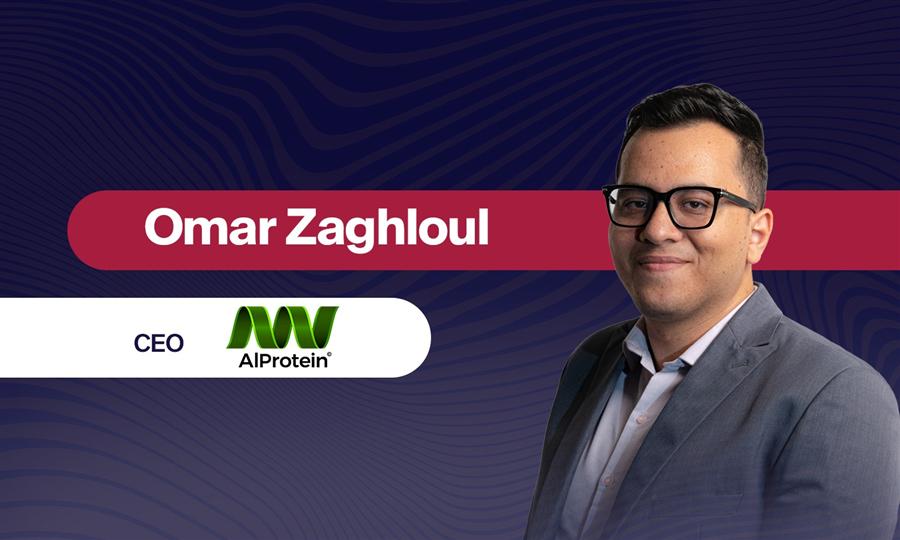
Arab Finance: Egypt's food-tech sector closed 2024 with online meal-delivery revenue topping $517 million, nearly 7x higher than in 2020, according to a report by imarc, a global management consulting firm, on Egypt’s online food delivery.
Globally, sustainable proteins reached $20.75 billion in 2024 and are forecast to hit $40 billion by 2033, according to MMR statistics. Meanwhile, microalgae proteins were valued at $841 million in 2025 and are expected to grow at 7.25% CAGR through 2034, as per Fortune Business Insights. In MENA, alternative proteins hit $2.75 billion in 2025, and are projected to grow to $2.96 billion in 2026, according to MMR Statistics.
Al Protein Biotech Inc., ranked in the FoodTech 500 for two years in a row, develops AI-optimized microalgae and water lentil proteins like RubiPro and CheesePro, offering over 60% protein content, 35% better emulsification, and up to 5x cost savings over traditional sources.
In this exclusive interview, CEO Omar Zaghloul details the company's pre-revenue pipeline exceeding $2.1 million in letters of intent (LOIs), local resource leverage, and deep-tech advice for Egypt's entrepreneurs.
1-Could you introduce Al Protein Biotech Inc. and the core challenge your company was founded to address?
Al Protein Biotech Inc. is a food-tech and biotech company focused on developing sustainable protein ingredients derived from microalgae and water lentils.
The company was founded to address a critical global challenge: producing scalable, high-quality protein while minimizing water use, land dependency, and environmental impact. In recognition of this work, Al Protein Biotech has been listed in the FoodTech 500 global ranking for two consecutive years.
2-As CEO, what was the founding motivation or moment that convinced you that AI-driven microalgae and water lentil production was the future of sustainable food?
The key moment was realizing the food production could be completely decoupled from traditional agriculture's limitations. Seeing the immense environmental damage from land-intensive crops, we knew the future was not just a better crop, but a better system.
When we first saw our AI successfully optimize a co-culture, boosting yields by over 20% while using brackish water, we knew we had found it: a new, intelligent way to farm that could turn deserts into food hubs. We were not just making protein; we were building the farm of the future.
3-What is the single biggest value proposition of your water lentil and spirulina proteins over traditional protein sources?
Our single biggest value proposition is superior performance without compromise. Our ingredients, like RubiPro™ and CheesePro™, replace both unhealthy synthetic binders and expensive, unsustainable nut proteins.
We offer a clean-label, organic solution that delivers 35% better emulsification and exceptional texture, with more than 60% protein content being Organic, all while being up to 5x more cost-effective to produce. It is the "holy grail" for food manufacturers.
4-How does your AI/IoT system specifically reduce production costs and environmental impact?
Our AI is our efficiency engine. It continuously monitors thousands of data points and makes real-time alerts, which allows us to slash operational costs by up to 40% by predicting and neutralizing contamination early-on.
By optimizing nutrient intake and harvest times, it boosts yields by over 10%. Environmentally, this precision control enables us to use zero arable land and recycle 85% of the brackish water we use, creating a radically smaller footprint.
5-Between RubiPro™ and CheesePro™, which product line is currently the primary revenue driver, and why?
While both have immense potential, our initial commercial focus and the bulk of our more than $2.1 million in signed LOIs are driven by RubiPro™. The market pain of replacing synthetic binders like methylcellulose in the massive plant-based meat sector is incredibly acute and immediate.
Food manufacturers are actively seeking a clean-label, high-performance solution right now, and RubiPro™ is the perfect answer.
6-What is the current revenue split between the domestic Egyptian market and your international contracts?
As we are pre-revenue, our current focus is on fulfilling our initial pipeline. The revenue split of our signed LOIs is heavily weighted towards international markets, with approximately 65-70% of our committed pipeline originating from major clients in Europe and the wider MENA region, and the remainder representing domestic opportunities.
7-How reliant is Al Protein Biotech on local Egyptian resources and suppliers, and how does that affect your global competitiveness?
We have a powerful hybrid model. While our core AI technology is globally unique, we are highly reliant on local Egyptian resources for our nutrient inputs, with about 90% sourced locally.
This is a massive competitive advantage. It dramatically lowers our production costs, shortens our supply chain, and makes us incredibly resilient to the global commodity price shocks that affect our competitors.
8-By 2030, what share of the Egyptian alternative protein market do you aim to capture?
By 2030, our ambition is to be the undisputed leader in high-value, functional protein ingredients in Egypt. While the overall market is still in its early stages, we aim to capture a significant double-digit share (over 25%) of the B2B functional ingredient segment, becoming the go-to partner for every major food manufacturer in the country seeking to innovate in the plant-based space.
9-What is the most valuable piece of advice for deep-tech entrepreneurs starting their journey in Egypt today?
Think global from day one, but build local first. Leverage Egypt's incredible talent pool and resource advantages to build a cost-effective and resilient MVP. But from the very beginning, ensure your technology, IP strategy, and business model are built to compete and win on the international stage.
Also, in the current market, resilience is everything. Your primary goal is to stay alive. Focus relentlessly on achieving a state of capital efficiency that gives you the longest possible runway.
Forget the vanity metrics. Your greatest achievement in the early days is not a flashy headline; its surviving long enough to see your deep-tech innovation break through. Do not let your ambition be confined by borders, but make sure your operational plan is bulletproof.
Related News