SwissCham Egypt Spotlights Profit Reinvestment Signaling Investor Confidence
Updated 2/1/2026 9:00:00 AM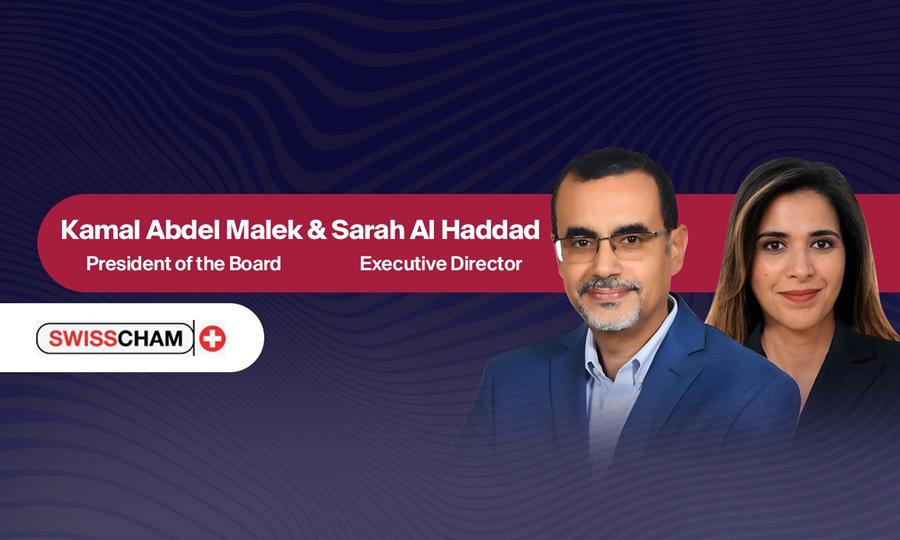
Arab Finance: Switzerland ranks among Egypt's top foreign investors, with Swiss firms demonstrating strong commitment through high profit reinvestment rates and a focus on strategic sectors like industrial automation, pharmaceuticals, and sustainable solutions.
The Swiss Chamber of Commerce in Egypt (SwissCham) released its latest economic impact report on January 26th, underscoring bilateral trade growth, untapped export opportunities, and contributions to Egypt's Industrial Localization strategy.
In this interview, Kamal Abdel Malek, President of the Board, and Sarah Al Haddad, Executive Director, detail how Swiss investments enhance Egypt's industrial base, workforce skills, and investor appeal.
Questions for Kamal Abdel Malek, President of the Board of the Swiss Chamber of Commerce in Egypt:
1-As Chairman of SwissCham, how do you evaluate the evolution of Swiss foreign direct investment (FDI) in Egypt over the past two years, and what does Switzerland’s current ranking among foreign investors signify for the bilateral relationship?
The past two years have been a testament to the resilience of Swiss investment. Despite global and local economic pressures, Swiss firms have shown a sophisticated awareness that the Egyptian market remains rich with opportunities. This led many companies to reinvest profits locally—capital that might otherwise have been repatriated—turning a period of crisis into a strategic win.
This measurable impact is captured in the Swiss Business Impact in Egypt 2025 report. Switzerland's ranking as the 9th-largest foreign investor signifies that our bilateral relationship is rooted in "permanent capital" rather than speculative flows.
We recorded approximately $600 million in FDI during 2023–2024, and prior to this period, Swiss investments in Egypt totaled $1.3 billion. This brings the estimated total Swiss investment volume to roughly $2 billion by 2025.
2- Regarding the investment portfolio, which strategic sectors dominate these investments?
Our investments are remarkably balanced, with approximately 50% in the industrial sector and 50% in services. Within the industrial sector, we see massive potential in pharmaceuticals, where Egypt is rapidly becoming a regional gateway to Africa. We also see significant activity in building materials, chemicals, and infrastructure-related engineering.
Looking ahead, we are excited about "green" sectors. While not always 100% Swiss-owned, joint ventures using advanced Swiss technology are preparing to enter Egypt’s green hydrogen and waste-to-energy markets, focusing on carbon capture and sustainable industrial reuse.
3- We have seen a massive boom in Egyptian exports to Switzerland recently. What is your vision for this growth?
Last year was exceptional, with trade reaching a balanced $2 billion. This was largely driven by gold exports, which reached nearly $900 million. While the rising international price of gold boosted these figures, my vision for the future, as outlined in the Swiss Impact Report, is one of diversification.
Egypt has the potential to meet Swiss consumer demands across various sectors, and we must work to balance the nature of the products we export to ensure sustainable, long-term trade growth beyond precious metals.
4- Given your expertise in industrial automation and sustainable solutions, how are Swiss companies specifically contributing to the modernization of Egypt’s industrial base and the transfer of advanced technology?
Swiss firms are inherently driven by efficiency and sustainability. Because Swiss labor costs are high globally, our companies utilize highly automated production systems.
By implementing these advanced lines in Egypt, we are not just producing goods; we are integrating the Egyptian market into a global, high-tech ecosystem. This provides a unique learning curve for Egyptian workers and creates a "trickle-down" effect, where local service providers must upgrade their capabilities to support these automated factories, thereby boosting local investment.
5- What role does the Chamber play in supporting Egypt’s Industrial Localization strategy and increasing the local component in Swiss-manufactured products?
The Chamber acts as a strategic matchmaker between Swiss technical requirements and Egyptian industrial capabilities. Currently, approximately 50% of Swiss investment in Egypt is concentrated in industrial sectors. For localization to be successful, we must move beyond simple assembly to "deep supply chains."
Manufacturing complex equipment requires a cascade of production components—from raw metals to precision parts. Our strategy at the Chamber is to map the nature of these supply chains and identify how we can better utilize Egypt’s rich natural resources to provide high-quality raw materials locally.
By helping Swiss firms find local alternatives that meet global standards, we enable them to transform their operations into truly localized hubs.
This effort is already yielding results: our report shows that Swiss companies in Egypt currently source an average of 45% of their inputs from the local market.
Our goal is to increase this percentage by connecting foreign investors with local suppliers who can provide the specialized components needed for high-tech manufacturing. By strengthening these local links, we are not just supporting Swiss companies; we are building a more resilient and self-sufficient Egyptian industrial base.
6- The report identifies substantial untapped export potential between the two nations. What is your strategic plan to bridge this gap in high-potential sectors?
Communication is key. We have launched monthly webinars specifically targeting Swiss small and medium enterprises (SMEs) that may lack the resources to explore Egypt on their own.
Conversely, we are connecting Egyptian startups, particularly in Fintech, Healthtech, and IT, with Swiss partners. To strengthen this link, we established an Egyptian Chamber in Switzerland last year to be "on the ground," bringing our two commercial communities closer together than ever before.
7-What is the primary highlight of the report from your perspective as Chairman?
The primary highlight is the distinctive nature and longevity of the Swiss investment footprint in Egypt. We have companies that have been investing here for over 100 years—a fact that many in the business community may not fully realize. These investments are deeply integrated into Egyptian life, spanning critical sectors like food, healthcare, and infrastructure.
Beyond the data, I must thank the Swiss companies for their role in this project. I especially want to thank the Chamber members who displayed such high levels of transparency.
While not every company is accustomed to sharing such details, approximately 11 Swiss firms cooperated by providing data that might be considered private, ensuring we could present a real and accurate picture of their investment impact in Egypt. This report is a testament to the private sector's role in strengthening the ties between our two countries.
Questions for Sarah Al Haddad, Executive Director of the Swiss Chamber of Commerce in Egypt
8-In your role as Executive Director, how is SwissCham working to create a more transparent and empowering business environment for Swiss companies currently operating in Egypt?
We act as the primary gateway and focal point. Recognized by both governments, we provide essential market research and "deep insights" that a Swiss firm needs to make an informed decision.
Once the decision is made, we serve as the link to Egyptian government agencies, streamlining the paperwork and administrative hurdles. We ensure that the transition from a Swiss boardroom to an Egyptian operational site is as seamless as possible.
9-Swiss investments focus on "long-term value" instead of short-term capital. How does this reflect your view on the stability of the Egyptian economy and the Chamber's role?
This "permanent capital" approach is what creates true sustainability. It is not just about inflows coming in; it is about creating 25,000 direct jobs and a massive indirect delivery network. At the Chamber, our role is to grow this community.
When a new Swiss investor looks at Egypt, the best thing we do is facilitate a meeting with our "legacy" members—companies that have operated through various economic cycles in Egypt. By connecting new investors with established Swiss business names of a similar profile, we provide them with deep, executive-level insights from people who have successfully navigated the market. This peer-to-peer networking through the Chamber encourages a stable, supportive environment that makes new companies feel secure in making their own long-term commitments.
10-The report indicates a high rate of profit reinvestment by Swiss firms. What message does this send to the international investment community about confidence in the Egyptian economy?
The message is of absolute confidence and stability. When a company chooses to reinvest its profits locally rather than repatriating them, especially during global or local economic volatility, it signals that Egypt is viewed as a sustainable, long-term base for growth.
During the recent crisis, for example, ABB and Nestlé were notable for reinvesting significant portions of their profits in Egypt. Coca-Cola HBC is another prime example: not only has it maintained its presence, but it is also expanding, with plans to inaugurate a new production line and another in Alexandria.
These firms are using Egypt as a "springboard"—investing locally to export to the rest of the region and the continent. This reinvestment cycle eventually brings higher value back to parent companies, proving that the Egyptian market is a "win-win" for those who commit to it.
11-Beyond financial capital, how are Swiss companies impacting the Egyptian labor market and technical skills?
The impact is profound because it is rooted in capacity building. We have 25,000 direct jobs, but the real value is in the skill transfer. Major companies have established agreements and graduate projects with the Swedish Academy of Sciences, as well as other local institutions, to ensure a pipeline of high-tech talent.
Another example is SGS, which provides professional and laboratory accreditation, such as the ISO/IEC 17025:2017, recently achieved by some of our members. Whether through direct employment or broader supply chain, Swiss companies are committed to raising the global competitiveness of the Egyptian workforce.
12-What is the Chamber’s roadmap for attracting a new wave of international companies to Egypt, and how can the success stories of "legacy" Swiss companies be used as a blueprint for future foreign investors?
Our greatest asset is our network. When a new investor enters the market, we arrange meetings with established Swiss companies, including legacy Swiss companies that have been operating in Egypt for over 100 years. Through our monthly busy network activities, experienced leaders provide a "real-world" perspective that no brochure can match.
By highlighting these success stories and the transparency of our members—11 of whom shared private data to make our Impact Report possible—we show new investors that, with the right partnership, long-term success in Egypt is not just possible, it is proven.
13-From an operational perspective, what do you consider the most significant takeaway from the 2025 report?
For me, the standout highlight is the overwhelming evidence of long-term commitment and local integration, which has positioned Switzerland among the top 10 investors in Egypt. The data reveals that 73% of Swiss companies operate as wholly owned entities, showing a preference for high governance standards and direct quality control.
Furthermore, the fact that 64% of these companies rely on a 100% Egyptian workforce is a major testament to the success of knowledge transfer and the quality of local talent. This report is not just a collection of numbers; it is a blueprint that shows how Swiss "permanent capital" creates a sustainable, high-value ecosystem that benefits the Egyptian economy far beyond the initial investment.
Related News