Arab Finance: The cement sector, a cornerstone of Egypt’s infrastructure, is increasingly defined by its ability to navigate international environmental standards and volatile global trade routes. The industry has experienced steady growth in recent years, fueled by a resurgence in domestic demand and multi-decade mega-projects like Ras El Hekma.
At the helm of one of the sector's most significant players is Titan Cement Egypt, a firm currently executing a massive $3 billion investment strategy aimed at production expansion and carbon footprint reduction.
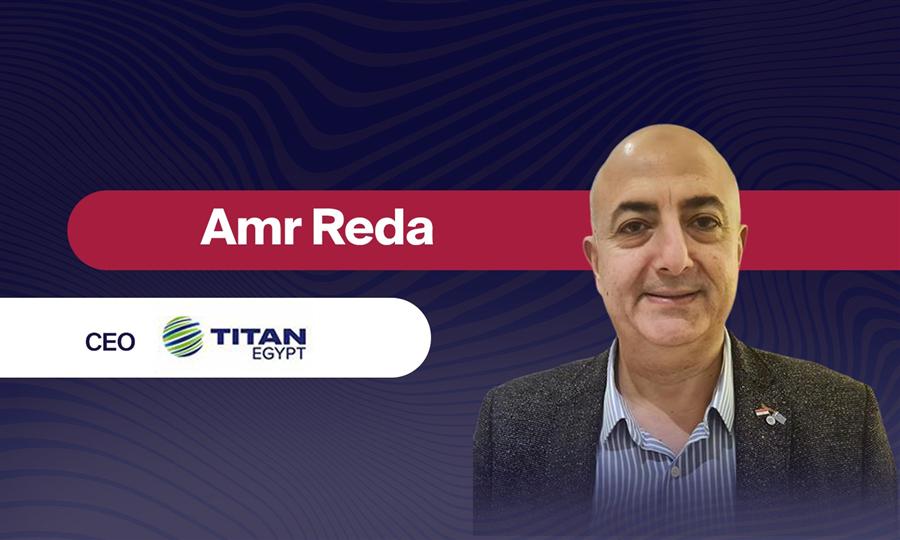
In this exclusive interview, Amr Reda, CEO of Titan Cement Egypt, discusses the strategic importance of the US and European export markets, the logistical hurdles of regional trade, and why the transition to alternative fuels is no longer an option but a "gate" to the future of Egyptian industry.
1-How do you assess the Egyptian cement sector and its growth prospects?
The Egyptian cement market has experienced substantial growth recently, and we are optimistic about its stabilization. I expect the sector to grow by 5% over the next four years. This anticipated growth rate would be a major boost to the local market and would contribute to its stability. At the same time, export markets must be preserved, as they are a key support for the cement industry in Egypt.
Naturally, export markets depend on the regional and international conditions surrounding Egypt, as well as the specific determinants affecting the local cement market, the situation in importing countries, and the competitiveness of other exporting markets.
2-What are the main requirements for the domestic market growth?
The domestic market requires a steady influx of new investments to grow, whether in national mega-projects, urban development initiatives, or infrastructure projects.
3-How do you view the cement sector's growth in light of major projects like Ras El-Hekma and Marassi Red Sea developments?
The Ras El Hekma project is set to commence this year and will continue through 2040. Meanwhile, Marassi Red Sea project is scheduled to start in 2027 and run until 2030. All of these factors are expected to drive growth in Egypt’s cement sector.
Domestic demand also saw a robust recovery in 2025, with local cement volumes rising 13% year-on-year (YoY). Bulk cement volumes surged by 22% due to reliance on mega-projects and large-scale contractors. Meanwhile, bagged cement rose 8%, supported by individual consumers, small contractors, and the finishing works in the market. This momentum was driven by the resumption of projects that had been suspended since the 2022 liquidity crisis and foreign currency shortages. I expect this momentum to continue in the coming period.
4-Oversupply in the cement sector is currently one of the most prominent challenges. How do you view this challenge, both domestically and in export markets?
We must look deeply into oversupply in the cement market outside the domestic market. Our export capacity, based on available production, is linked to our ability to reach markets at a competitive price while serving them sustainably.
For example, if a cement exporter lacks logistical capabilities, such as timely transport and packaging, foreign buyers will seek another supplier, even if the price is higher. An Egyptian producer might have a competitive price, but the target market might lack the infrastructure to receive the product. For instance, Syria currently can only receive bagged cement but not bulk, whereas the Algerian market is equipped to receive bulk cement.
So, an exporter might have surplus production capacity, but at the same time cannot export to markets lacking port infrastructure. Therefore, when discussing export opportunities, we must study our capabilities and those of others, alongside competitive abilities, ensuring a suitable price and sustainable export.
5-How do you view the price differences between the Egyptian market for exports and competitors like Vietnam, where the difference can be as much as $20 in Vietnam’s favor?
The Vietnamese market sells cement at roughly $20 less per ton than in Egypt. Vietnamese cement is priced at $32 per ton, while Egyptian cement is priced around $50. However, Egypt holds a competitive advantage in freight costs, which are lower than in Vietnam.
The real question is how we can maintain our competitive edge, especially considering potential competitors such as Iran, Algeria, and even Saudi Arabia if they develop their ports. We operate in a changing world, so we must remain vigilant and alert to changes affecting the Egyptian market and react quickly.
Exports are a complementary market, not the primary one for cement production. The domestic market remains the backbone of the industry; exports serve to optimize production capacity and cannot be relied upon 100%.
6-Which countries offer the most promising export opportunities for Egypt?
Beyond existing markets, we see opportunities in Gaza, Syria, Sudan, West Africa, and primarily the US, followed by European countries. Currently, Libya is one of our largest importers of Egyptian cement, accounting for 38% of total exports.
7-How do you assess cement consumption within Egypt?
Last year, domestic consumption reached 54 million tons out of a total production of 85 million tons. The highest annual consumption was in 2016, when it hit 56 million tons.
8-What is the impact of the European Carbon Border Adjustment Mechanism (CBAM) on cement exports?
We have a clear sustainability agenda aligned with European environmental standards and are making steady progress. This transition is supported by increasing the use of alternative fuels and renewable energy, as well as diversifying our portfolio toward eco-friendly, low-carbon products.
The foundations for eco-friendly products already exist in Egypt, so it is important to facilitate and encourage compliance with environmental standards to promote "Green Building." This includes making alternative fuels available at reasonable costs to replace solid fuels. Flexibility and support from government entities are essential to align with the national green energy agenda.
At Titan Egypt, we are committed to reducing our carbon footprint and expanding the use of eco-friendly fuels. Our subsidiary, GAEA, specializes in green alternative energy and is dedicated to driving this transition.
9-Some studies suggest using cement for roads as an alternative to imported asphalt. How realistic is this?
Studies have shown that concrete roads can reduce vehicle fuel consumption by approximately 3%. They offer a longer lifespan and lower maintenance costs compared to asphalt roads, which are susceptible to high temperatures, cracking, and rutting.
Concrete roads are also more environmentally sustainable, as they reflect rather than absorb heat, reducing the need for high-intensity night lighting and thereby lowering lighting infrastructure costs. Furthermore, innovative cement-sand mixes can be used for rural roads to increase durability and prevent mud formation during rainy seasons.
10-What is Titan’s current export volume and your future targets?
Titan exported approximately 850,000 tons last year. For 2026, we are targeting exports of around 1 million tons out of a total production of 4.2 million tons. We aim to eventually increase our annual production capacity to 5.3 million tons.
11-What are your expectations for demand for Egyptian cement in foreign markets?
Demand for Egyptian cement is expected to rise in Europe, particularly with the eventual reconstruction efforts in Ukraine. There is also massive potential in the US market. Our commitment to a lower carbon footprint serves as a gateway to new markets. We anticipate a split of 25% exports and 75% domestic sales.
12-What is the size of your expected investments in the near future?
We aim to make direct investments worth a total of $3 billion into the Egyptian market by 2029, in addition to investment in solar and electrical energy, estimated at $20 million.