Arab Finance: Egypt has established a permanent committee to monitor steel billet availability and prices as the government works to address production challenges facing steelmakers and rolling mills, according to a joint statement from the Ministry of Industry and the Ministry of Investment and Foreign Trade.
The committee brings together representatives from both ministries, the Ministry of Supply and Internal Trade, and the Egyptian Competition Authority (ECA). Its mandate is to track market conditions, support reliable supply chains, and ensure billets are available at reasonable prices.
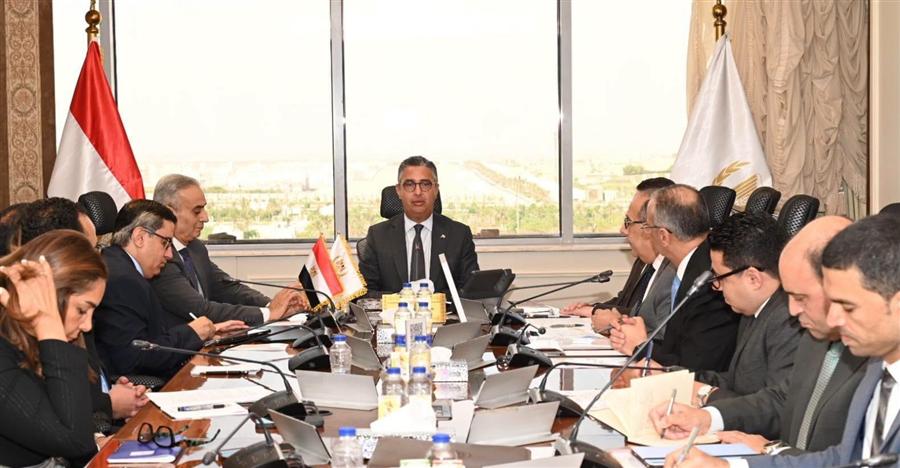
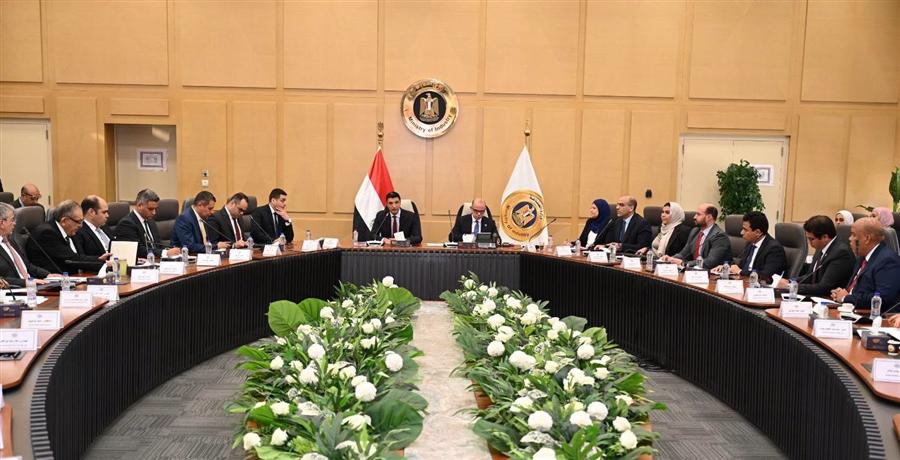
The move was outlined during two meetings held by Khaled Hashem, Minister of Industry, and Mohamed Farid, Minister of Investment and Foreign Trade, with representatives of integrated and semi-integrated steel plants and rolling mills. Discussions covered difficulties arising from global conditions, particularly rolling mills’ access to billets in the quantities, grades, and technical specifications needed for production.
Officials also reviewed output and sales at billet-producing facilities and examined ways to improve coordination between the different stages of steel manufacturing.
The first meeting brought together Egypt-based rolling-mill operators Ashry Steel Group, El Garhy Steel, Al Madina Steel, Metad Helwan, El Ola Steel, and Medi Steel. The second involved Egypt-based steel producers Suez Steel Company, Egyptian Steel, Ezz Steel, Beshay Steel, and El Marakby Steel, representing integrated and semi-integrated operations.
Hashem said companies must provide the committee with the data and documentation it needs to assess the effects of government measures and respond to changes in the market.
Farid explained that his ministry regularly reviews billet supply, pricing, and market balance to help maintain uninterrupted domestic supply chains. It also examines companies’ complaints and feedback against supporting records, actual market data, and findings from on-site verification visits to identify obstacles that could disrupt production.
He stressed that factories must be able to obtain billets in the quantities, grades, and specifications required to operate within the production capacities stipulated in their industrial licenses. Cooperation among producers and rolling mills, he added, is essential to maintaining a stable domestic market and ensuring inputs are available at competitive prices.
Alongside market oversight, the government is seeking to expand local billet production. Hashem said the Ministry of Industry has made new production licenses available on favorable pricing and payment terms to encourage rolling mills to move into smelting and manufacturing.
The initiative aims to increase domestic production capacity, raise local value added, and reduce dependence on imported billets. He urged companies receiving the licenses to move quickly toward production and operations.
Hashem placed these measures within the ministry’s broader objective of supporting the success of all manufacturing facilities operating in Egypt, protecting their interests, and advancing industrial growth. Developing supporting industries and securing production inputs, he said, are central to deepening local manufacturing and meeting national industrial targets.
He added that iron and steel are a priority under the ministry’s 2030 strategy because it provides a foundation for numerous other essential industries.
The meetings also formed part of the follow-up on Decree No. 121 of 2026, which imposes definitive safeguard duties on imports of semi-finished iron or non-alloy steel products, known as billets. The measures followed industry complaints and were introduced under Law No. 161 of 1998 on protecting the national economy from harmful international trade practices, together with its executive regulations and amendments.
Both Ministers emphasized that government support extends equally across all stages of iron and steel production. They called for greater integration and balance among integrated plants, semi-integrated facilities, and rolling mills to safeguard existing investments, strengthen domestic capacity, and sustain production through adequate supplies of suitable billets.
They also highlighted coordinated government efforts to address international pressures on the sector, including the European Union’s consideration of restrictions on scrap metal exports, while strengthening the competitiveness of Egyptian steel and maintaining domestic market stability.