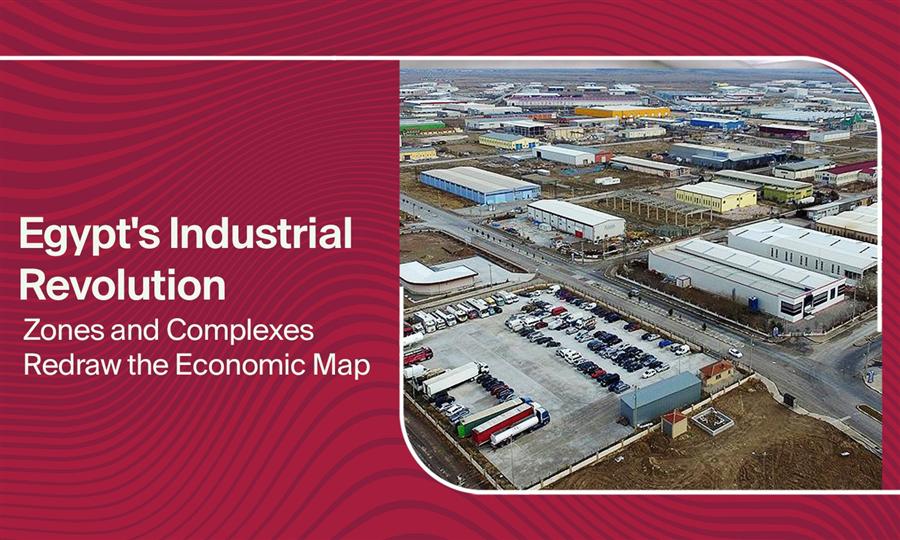
Egypt is entering a decisive phase in its industrial policy, with industrial zones and complexes emerging as the backbone of its economic transformation. Far from being mere clusters of factories, the complexes are designed as integrated ecosystems that align government incentives with private investment, while lowering entry barriers for small and medium-sized enterprises (SMEs).
The strategy reflects Cairo’s ambition to localize production, reduce reliance on imports, and position the country as a competitive exporter within global supply chains. At the heart of this push are recent government initiatives and the Industrial Development Authority’s (IDA) rollout of ready-to-operate units across governorates. Together, these measures signal a deliberate policy shift: industrial zones and complexes are not just infrastructure projects, but instruments of economic resilience and regional balance.
Government-Led Push for Industrial Zones
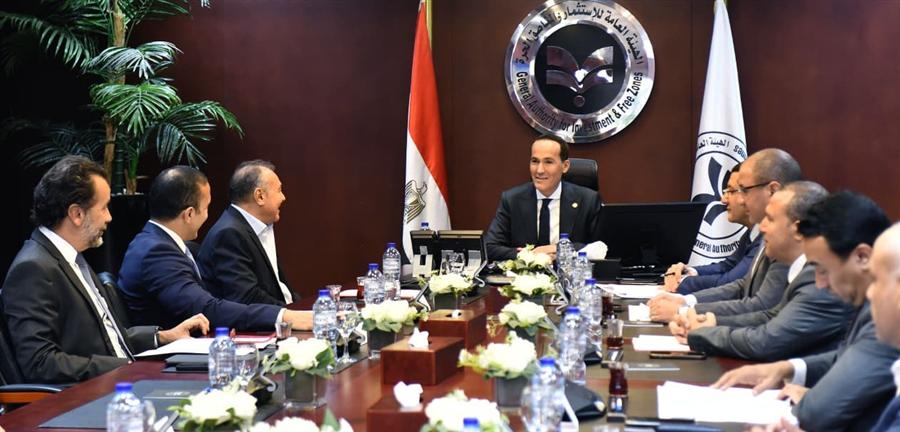
The Egyptian government is actively advancing industrial complexes through major initiatives, including the launch of new projects in the Suez Canal Economic Zone (SCZONE), approvals of integrated zones, and IDA programs offering land and ready-to-operate units. Backed by billions in investment, these efforts aim to localize production, boost exports, and attract foreign capital.
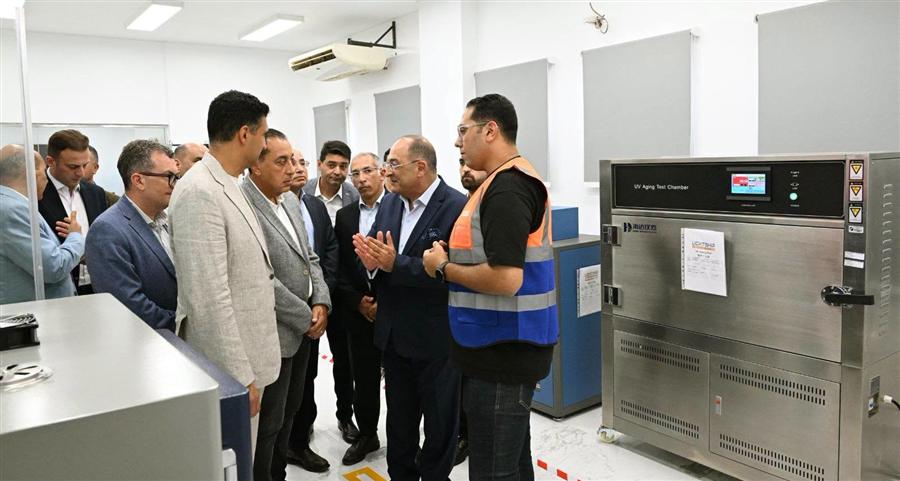
This comes as Prime Minister Mostafa Madbouly recently inaugurated nine projects worth $182.5 million in the SCZONE, spanning engineering, pharmaceuticals, textiles, chemicals, packaging, and recycling. These projects are expected to create over 1,300 jobs and expand Egypt’s industrial base.
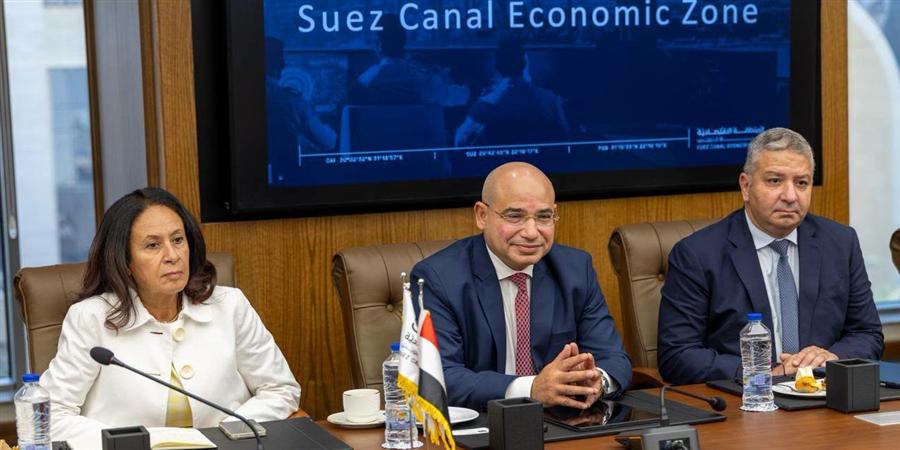
Amr Marzouk, Deputy General Manager for Investments at the SCZONE, tells Arab Finance: “The SCZONE spans approximately 455 kilometers, comprising 4 industrial complexes and 6 ports. Established under Law No. 83 of 2015, the SCZONE was designed to operate independently and transform the Suez Canal corridor into a dynamic development hub, extending beyond its traditional role as a maritime passage.”
Moreover, he highlights Egypt’s heavy investment in infrastructure: “To attract international investment, Egypt introduced legislative reforms and committed significant resources to infrastructure development. More than $3 billion has been invested in building facilities capable of supporting diverse industries and positioning Egypt as a competitive destination for global manufacturing.”
This commitment has already yielded results. The SCZONE has attracted $15 billion in investments, 70% of which are foreign, while 30% are domestic, with investors representing 28 countries. The zone aims to solidify Egypt’s position as a premier regional hub while creating an estimated 300,000 direct employment opportunities, Waleid Gamal El-Dien, Chairman of the SCZONE, said in February 2026.
Marzouk further emphasizes the diversity of the SCZONE’s industrial areas: “Located in the south, the Sokhna Industrial Zone covers 200 square kilometers and is the largest industrial area within the SCZONE, hosting 14 developers. Its varied topography supports a wide range of industries.”
“At the northern entrance of the Suez Canal, the East Port Said Industrial Zone includes the National Egyptian Railway Industries Company (NERIC), which manufactures railway and metro cars. In the central part of the SCZone, the West Qantara Zone (West Ismailia) and the East Ismailia Zone (Tech. Valley) further diversify the SCZONE’s industrial footprint, supporting balanced regional development and cross-sector integration.”
The SCZONE also has six seaports, serving as a logistical backbone for trade and re-export activities. Recent projects within the zone include factories in hygiene products, aluminum cookware, polyurethane compounds, recycling, glassware, and textiles, many of which are export-oriented. The SCZONE is pursuing the localization of end-to-end value chains across 21 strategic sectors.
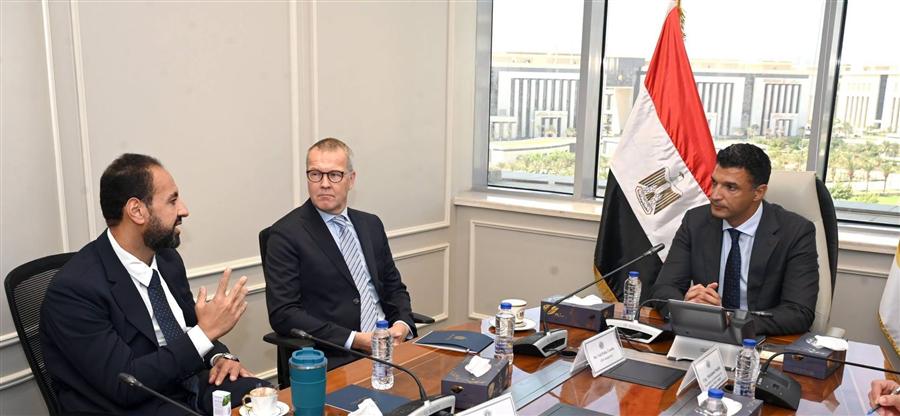
In parallel, the IDA has launched large-scale initiatives to support SMEs and investors. In June 2026, the authority announced the offering of 400 industrial plots across 24 zones in 15 governorates, covering a total area of 900,000 square meters. The IDA continues to expand ready-to-operate units in specialized clusters such as Robbiki Leather City, while providing unprecedented incentives and simplified licensing. The IDA also coordinates with investors’ associations to address operational challenges and enhance the business environment.
Industrial Zones and Complexes as Economic Drivers
As these initiatives unfold, experts highlight their economic impact. Abdelfattah Ali, Founder of Abdelfattah Industrial Consultancy and a former IDA official, notes: “Industrial zones and complexes and SCZONE projects have played a significant role in attracting foreign direct investment (FDI) and creating employment opportunities by providing integrated infrastructure, streamlined licensing procedures, and proximity to strategic logistics corridors. These developments have increased investor confidence and accelerated the establishment of export-oriented industries.”
Ali adds that industrial zones and complexes are expected to strengthen Egypt’s position as a regional manufacturing hub by enhancing supply chain integration, increasing local value addition, and leveraging the country’s trade agreements and strategic geographic location.
Similarly, Ahmed Gad, Assistant Lecturer of Economics at Beni Suef University, emphasizes the transformative role of the complexes, saying: “Industrial complexes are one of the most important tools Egypt has adopted in recent years to promote industrial growth and attract productive investments. The impact of these complexes became increasingly evident in 2026 through job creation and attraction of FDI.”
As an example, he points to the Alpha Smart ready-made factories complex in Sokhna, a $100 million investment expected to offer 5,000 direct and 7,000 indirect jobs, while attracting an additional $150 million in follow-on investments. Gad stressed that beyond job creation, industrial complexes improve the quality of FDI by channeling capital toward high-value-added, export-oriented activities, facilitating technology transfer, and embedding Egyptian firms into global value chains.
Sustaining Growth and Development
Looking ahead, experts agree that sustaining momentum will require long-term reforms. Ali underscores the importance of expanding industrial financing, accelerating digital transformation of government services, and strengthening vocational training.
Meanwhile, Gad notes that sectoral diversification, including chemicals, construction materials, metals, pharmaceuticals, and textiles, demonstrates Egypt’s strategy to build an integrated industrial base capable of competing within global supply chains.
Consequently, industrial complexes, particularly those located in strategic areas such as the SCZONE, are poised to reposition Egypt as a regional production and export hub. By integrating SMEs with large investors, localizing intermediate inputs, and deepening local content, these complexes are set to reduce import dependency while enhancing competitiveness in regional and international markets.
As Gad points out, “Industrial complexes are not only instruments for industrial expansion; they are a fundamental pillar for repositioning Egypt as a regional hub for production and export, based on integrated manufacturing systems and modern value chains.”
Ultimately, Egypt’s industrial complexes are proving to be far more than clusters of factories. They are the cornerstone of a deliberate strategy to reshape the country’s economic trajectory. By integrating government incentives with private-sector investment, streamlining licensing procedures, and lowering barriers to entry for SMEs, these ecosystems are accelerating export-oriented production, attracting billions in foreign capital, and creating thousands of jobs.
If Egypt continues to deepen local content, integrate SMEs with large investors, and leverage its geographic and trade advantages, these complexes could transform the country from an import-dependent economy into a competitively integrated player in global supply chains, turning ambition into sustained economic transformation.
By Sarah Samir