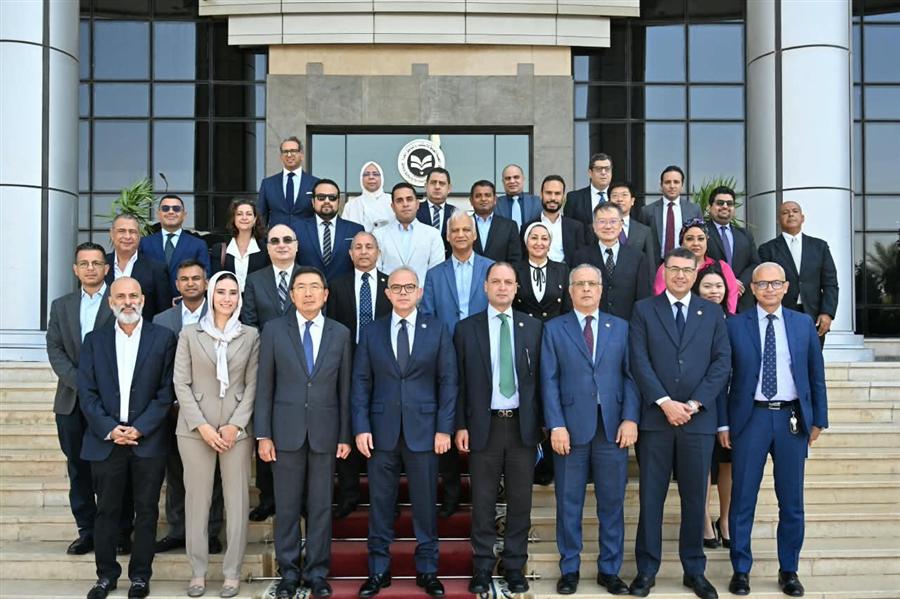
Arab Finance: The European Union (EU) is strengthening its strategic partnership with Egypt in the renewable energy field through an €690 million clean-energy grid investment to upgrade and expand the Egyptian electricity network, according to a press release.
The financing package combines a €600 million loan from the European Investment Bank’s (EIB) development arm, EIB Global, with €90 million in grants from the European Commission.
To be implemented by the Egyptian Electricity Transmission Company (EETC), the project is set to integrate 22 gigawatts (GW) of renewable energy capacity into the national grid by 2030, which is enough to power around 10 million households.
The investment backs Egypt’s ambitions to expand renewable energy, reinforce its electricity infrastructure, and bolster its position as a regional energy hub. It also advances the objectives of the EU-Egypt Strategic and Comprehensive Partnership, including investment mobilization, renewable energy cooperation, and the transition to a more sustainable, secure, and competitive energy system.
This project is one of the first major ones launched under the Trans-Mediterranean Renewable Energy and Clean-Tech Cooperation Initiative (T-MED), a flagship program of the Pact for the Mediterranean aimed at boosting renewable energy development and clean-technology cooperation between the EU and its Southern Mediterranean partners.
Commenting on this, Egyptian Minister of Foreign Affairs Badr Abdelatty said: “This agreement reflects the strength of the partnership between Egypt and the European Union and our shared determination to advance the green transition.”
He added: “Together with the EIB and the EU, we are taking an important step to modernize our electricity network, strengthen energy security, and create new opportunities for sustainable growth. This is the kind of practical cooperation that brings real benefits to our economy and our people.”
For her part, European Commissioner for the Mediterranean Dubravka Šuica noted: “Under its newly launched flagship initiative, T-MED, today we presented a major EU-supported project to strengthen and expand Egypt’s electricity infrastructure.”
“This will reinforce Egypt’s role in the regional energy markets and create major business opportunities for local and European companies. It is another testimony of our shared commitment to sustainable growth, energy security, and long-term prosperity in the Mediterranean,” Šuica affirmed.
Meanwhile, EIB Vice-President Gelsomina Vigliotti stated: “By working together, Egypt, the EU, and the EIB are supporting the expansion and modernization of the electricity network, unlocking more renewable energy, and strengthening the country’s role as a regional energy hub. For the EIB, this is about backing sustainable growth, greater energy resilience, and better opportunities for people and businesses across the country.”
On June 14th, Egypt signed a protocol agreement to finance projects aimed at strengthening and developing the national electricity grid, with EGP 60 billion, to accommodate renewable energy capacity. Signed by Minister of Electricity and Renewable Energy Mahmoud Esmat, Minister of Planning and Economic Development Ahmed Rostom, and Minister of Finance Ahmed Kouchouk, this funding will be utilized to support the EETC and expand its financial and operational capabilities.
It is also noteworthy that President Abdel Fattah El-Sisi recently reviewed the latest developments of the second phase of energy projects to strengthen the national electricity grid during a meeting with Prime Minister Mostafa Madbouly and Electricity Minister, exploring ways to accelerate the implementation of solar energy and energy storage battery projects.
These government efforts fall within the framework of the timeline aimed at boosting the contribution of renewable energy to the energy mix to 45% within the next two years.