In an era of heightened geopolitical tensions and regional economic turbulence, maintaining global investor confidence is no small feat. Egypt, however, recently earned a crucial vote of confidence as Fitch Ratings and S&P Global Ratings reaffirmed the country’s sovereign credit ratings, with a stable outlook. Driven by a commitment to exchange-rate flexibility, rising foreign-exchange reserves, and robust fiscal consolidation, Egypt’s macroeconomic strategy is demonstrating resilience under real market stress.
Yet as the sovereign rating continues to shape corporate borrowing costs and capital flows, a parallel shift is emerging across the continent with the launch of the Africa Credit Rating Agency (AfCRA). This dynamic raises a pivotal question: how will Egypt navigate its ongoing reform trajectory under global scrutiny, and could local, African-led rating frameworks eventually offer a more comprehensive lens for evaluating risks and opportunities?
Double Validation
Egypt received a significant vote of confidence from international credit rating agencies after both Fitch Ratings and S&P Global Ratings reaffirmed the country's sovereign ratings with stable outlooks, underscoring economic resilience despite a challenging regional and global environment.
Fitch affirmed Egypt's long-term foreign-currency issuer default rating at ’B’ with a stable outlook, citing the country's relatively strong growth potential, economic scale, foreign-exchange reserves, and continued support from bilateral and multilateral partners. However, the agency also highlighted persistent challenges, including high public debt, elevated interest costs, large external financing requirements, volatile capital flows, and geopolitical risks.
Similarly, S&P maintained Egypt's long- and short-term foreign- and local-currency ratings at 'B/B' with a stable outlook. The agency weighed progress in the government's reforms, a more flexible exchange-rate regime, and stronger external buffers against inflationary pressures, regional instability, and high financing costs.
The Foundations Behind the Ratings
Several indicators supported the stable outlook, reflecting Egypt's ability to withstand economic pressures while maintaining reform momentum.
According to Wael Abdallah, Associate Professor of Finance at the AUC, “Egypt's most decisive signal was its decision to keep its exchange rate flexible during a real stress test. The regional conflict triggered an outflow of over $6 billion in foreign portfolio investments from government debt securities, and the Egyptian Pound depreciated by more than 14% against the US Dollar. The authorities let the currency adjust rather than defend it with reserves.”
This approach helped restore investor confidence and allowed foreign capital to return after the initial shock. Meanwhile, Egypt continued to advance its fiscal consolidation efforts, achieving a primary budget surplus of 4.9% of gross domestic product (GDP) in fiscal year 2025/2026, exceeding IMF-related targets. Gross international reserves also climbed to $54.4 billion, reflecting stronger external buffers and improved foreign-currency positions, according to Abdallah.
Abdallah argues that the ratings decision reflects confidence in policymaking rather than favorable external conditions. “In simple terms, the ratings reward credible policy more than favorable circumstances,” he notes.
Nevertheless, challenges remain. Debt-servicing costs continue to weigh heavily on public finances, while financing requirements remain elevated. Abdallah explains that the sustainability of recent gains will depend on maintaining exchange-rate flexibility, attracting more foreign direct investment (FDI), and gradually reducing debt burdens.
Sovereign Ratings Impact on Corporate Egypt
While sovereign ratings are often discussed in the context of government borrowing, their implications extend far beyond public finances.
According to the United Nations Development Programme (UNDP), sovereign credit ratings influence economic development through three primary channels: sovereign borrowing costs, credit availability, and international investors’ perceptions of economic stability.
Amir Farouk, Financial Strategy, Investment Banking, and Private Equity Expert, tells Arab Finance, “International investors assess both sovereign risk and individual corporate credit quality in Egypt, but the sovereign ceiling remains a major factor in pricing, particularly for foreign-currency financing.”
He explains that “even financially strong companies may face higher borrowing costs due to country risks, foreign-exchange restrictions, and difficulties transferring funds abroad.”
“Companies with strong cash flows, export revenues, and access to foreign currency may achieve better financing terms. Ultimately, sovereign risk sets the baseline, while corporate financial strength determines the extent to which a borrower can differentiate itself,” Farouk adds.
The link between sovereign and corporate ratings was demonstrated by S&P's upgrade of three major Egyptian banks following improvements in the sovereign rating environment, highlighting how sovereign assessments can ripple through the broader financial system.
Africa's Bid to Reframe Risk
As Egypt benefits from renewed confidence from global rating agencies, a parallel development is unfolding across the continent that could gradually reshape how African economies are evaluated.
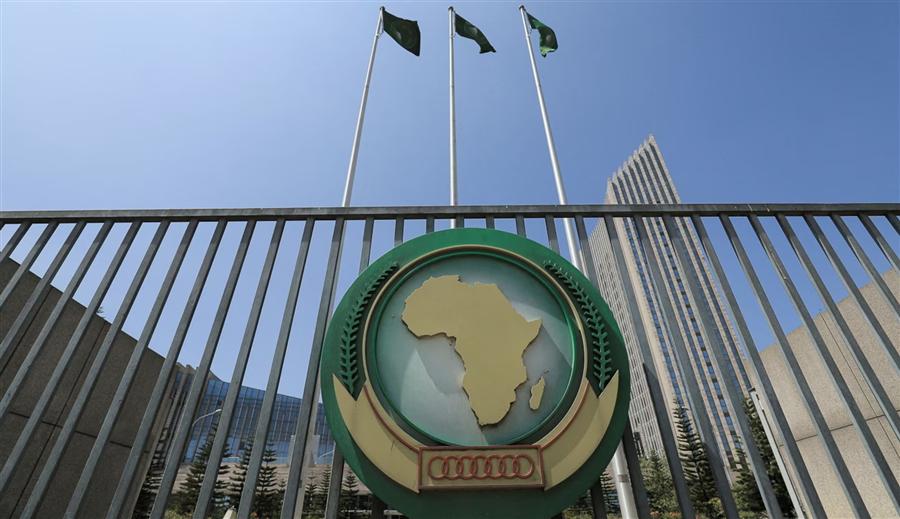
The African Union recently launched the AfCRA, marking the first dedicated credit-rating institution focused on African economies. The initiative seeks to ensure more balanced economic assessments, support investment flows, and potentially contribute to lower borrowing costs across the continent.
The agency is designed as an independent, private sector-led institution that will operate alongside existing global agencies by incorporating deeper local data, regional expertise, and African economic realities into its assessments. Importantly, AfCRA aims to complement rather than replace established international rating providers.
The initiative emerges amid longstanding concerns among African policymakers that conventional rating methodologies may not fully capture factors such as demographic advantages, long-term growth prospects, structural reforms, and the realities of informal economic activity. Only 32 of the African Union's 55 member states currently have ratings from major global agencies, leaving significant portions of the continent outside traditional credit assessment frameworks.
Could AfCRA Change Egypt's Investment Story?
The most immediate impact of AfCRA is likely to be more informational rather than transformational. For countries such as Egypt, the agency could offer investors an additional perspective on sovereign risk while broadening analytical coverage of African economies.
Farouk believes “an AfCRA rating for Egypt could provide a useful second opinion alongside Fitch and S&P, particularly by incorporating African-specific economic conditions, regional risks, and local market data.”
However, he cautions that international investors are likely to view AfCRA's ratings as supplementary in the early stages, given established agencies’ longer track records and greater acceptance in global capital markets.
“Over time, AfCRA could gain greater influence if it demonstrates analytical independence, transparent methodologies, consistent ratings, and reliable assessments of actual credit outcomes,” Farouk adds.
Abdallah also sees potential value in the agency's ability to integrate context that may receive less emphasis under conventional frameworks.
“The Africa Credit Rating Agency was formally inaugurated in Mauritius, almost a decade after the initiative was first proposed. Its added value would come from context and better data, not from easier ratings,” he points out.
According to Abdallah, an African-led ratings framework could place greater emphasis on demographic trends, long-term growth potential, reform implementation, climate adaptation efforts, and informal economic activity, providing a broader perspective on economic fundamentals.
Yet, credibility will determine the agency's ultimate influence. Abdallah says, “AfCRA will need transparent methodologies, independence from governments, and the willingness to issue unpopular ratings when the numbers require it. Even the African Union Commission chair cautioned that the agency would not significantly lower financing costs in the near term. In my view, it should complement the global agencies, not compete with them on generosity.”
The reaffirmation of Egypt's sovereign ratings by Fitch and S&P highlights the growing importance of policy consistency, exchange-rate flexibility, stronger reserves, and fiscal discipline in shaping investor confidence. Meanwhile, the launch of AfCRA introduces a new dimension to the discussion.
For Egypt, the strategic question is no longer whether sovereign ratings matter, but rather whether the emergence of African-led analytical frameworks can eventually help ensure that the country's reforms, growth potential, and economic realities are understood through a wider lens. This approach aims to complement global standards while offering investors a more comprehensive assessment of risk and opportunity.
By Sarah Samir