Egypt is advancing a comprehensive strategy to position higher education as a cornerstone of its economic diversification and regional influence. The country is treating education as an export sector, seeking to attract international students, expand academic partnerships, and establish branches of overseas universities, thereby extending its reach across Africa, the Gulf, and Asia.
This approach combines economic ambition with cultural diplomacy, aiming to generate foreign-currency inflows and create jobs while strengthening Egypt’s position as a regional hub for affordable, quality learning. At its heart, the initiative is part of a broader vision: to leverage Egypt’s existing academic infrastructure, geographic location, and technical expertise to make education a tradable service that promotes growth, encourages cooperation, and enhances long-term competitiveness.
Reframing Education as a Strategic Export Sector
Egypt is working with both the Ministry of Investment and Foreign Trade and the Ministry of Higher Education and Scientific Research to reframe higher education as a strategic export sector. The initiative aims to reduce reliance on hydrocarbons and traditional exports by diversifying into knowledge-based industries. By targeting African markets, starting with Nigeria, Egypt seeks to attract foreign students, generate foreign-currency inflows, and strengthen its soft power across the continent.
Mostafa Abdelsalam, Assistant to the VP for Academic and Student Affairs at Misr University for Science and Technology, tells Arab Finance: “Education can be much more than a social service; it can also be a strategic economic sector. Attracting international students generates foreign-currency revenues while creating value across a much broader ecosystem.”
The Ministry of Investment is positioning education as an export sector, while the Ministry of Higher Education is tasked with ensuring academic quality and international accreditation. Public–private partnerships (PPPs) are central to the model, with universities, investors, and government agencies collaborating to deliver internationally competitive programs.
The Ministry of Higher Education is working to internationalize Egypt's education sector and boost the export of its educational services. This strategy involves expanding outreach to foreign students and institutions, attracting more international enrollment, and strengthening academic partnerships between Egyptian universities and global counterparts, Abdelaziz Konsowa, Minister of Higher Education, stated in August 2026.
Ahmed Farouk, TVET Development Expert and Curriculum and Vocational Training Specialist, highlights the broader ecosystem: “Education can create a wider ecosystem around education and skills development, including training services, professional certifications, international partnerships, digital learning, educational technology, and industry-linked training programs.”
“Egypt has an established education and training infrastructure, a large pool of technical and professional expertise, and a strategic geographic position. If these advantages are combined with internationally recognized quality standards and stronger links to employers, Egypt could develop education and skills training as a service that is not only consumed domestically, but also increasingly sought by learners from other countries,” according to Farouk.
The Nigeria Campaign
Egypt’s higher education export strategy took a concrete step forward with the launch of its first large-scale promotional mission in Nigeria under the “Study in Egypt” campaign. Held from August 24 to 30, 2026, the mission was organized by the Egypt Expo & Convention Authority (EECA) in cooperation with the Supreme Council of Universities, the Central Administration for International Students, and the Egyptian Commercial Service. Backed by the Ministries of Investment and Higher Education, the initiative underscored Egypt’s determination to position education as an exportable service, much like cement or textiles.
The campaign unfolded across Lagos, Abuja, and Kano, where Egyptian universities showcased their programs directly to Nigerian students and institutions. Ten universities participated, including Cairo, Alexandria, Ain Shams, Al Azhar, Luxor, Galala, Al Salam, Banha National University, October University for Modern Sciences and Arts, and Helwan University.
The results exceeded expectations. While the delegation initially targeted 30 enrollments, it secured 175 confirmed admissions, with another 20 pending. Al Azhar University alone accounted for 100 enrollments, while Cairo University captured most of the remainder. Demand was strongest in medicine, dentistry, pharmacy, and engineering, followed by Islamic studies and law. At the postgraduate level, interest centered on law, education, business administration, and economics. These outcomes highlight Nigerian students' strong appetite for Egyptian higher education, particularly in professional and technical fields.
Taking Egyptian Universities Abroad
Egypt is not only attracting international students to its domestic universities but also exporting its higher education model abroad through overseas branch campuses. The Ministry of Higher Education, working with the Supreme Council of Universities, has approved projects across Africa, the Gulf, and Asia, positioning Egyptian universities as instruments of economic cooperation and soft power.
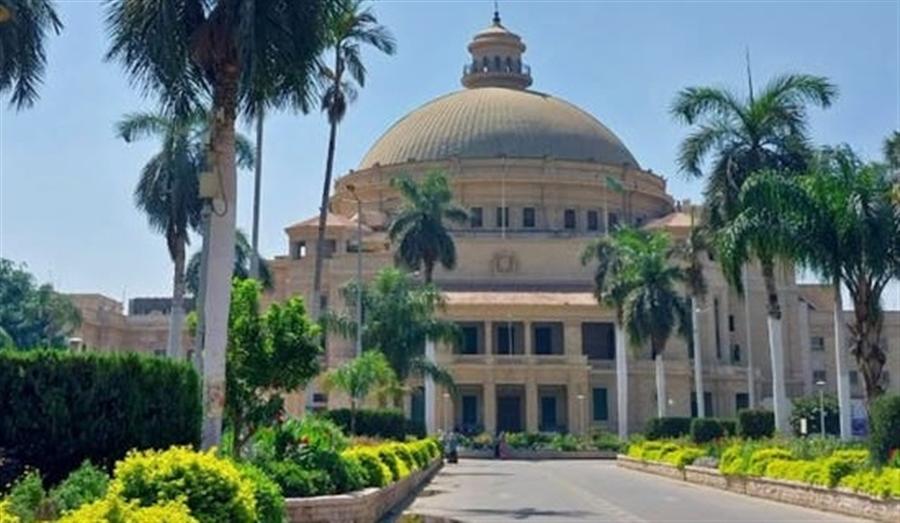
Cairo University has established branches in Khartoum, Doha, and Riyadh, with discussions underway for Ajman in the UAE. Alexandria University has opened a campus in N’Djamena, Chad, and is expanding into South Sudan, Abu Dhabi, and Malaysia. Other institutions are following suit, with Ain Shams in Tanzania, Tanta in Djibouti, Mansoura in Comoros, and Sadat City in Tanzania.
This expansion reflects Egypt’s diplomatic priorities. In Africa, branch campuses respond to surging demand for affordable, recognized qualifications among a growing youth population. In the Gulf, they tap into knowledge-economy investments while offering regionally relevant programs. Together, these initiatives strengthen Egypt’s cultural influence, diversify university income streams, and reinforce its role as a regional education hub.
The Wider Economic Footprint
Education exports are expected to contribute directly to gross domestic product (GDP) and job creation. Beyond tuition fees, international students generate demand for housing, transport, food services, healthcare, and retail.
Abdelsalam notes: “The economic footprint of an international student extends far beyond university tuition. Students need accommodation, transportation, food, telecommunications, healthcare, banking, retail, and entertainment. Their families and visitors can also contribute to tourism and hospitality activity.”
Meanwhile, Farouk underscores the long-term economic dimension: “Education can create relationships that extend well beyond the period of study. International students who study in Egypt can develop professional networks, institutional connections, and long-term familiarity with Egyptian institutions and businesses. This can create a foundation for future cooperation between institutions, companies, and professionals in different countries.”
“From an economic perspective, these relationships can potentially support trade, investment, professional services, and business partnerships over the longer term. For technical and vocational education and training (TVET) specifically, the impact can be even more practical when training is connected to employers, international companies, professional certifications, and skills that are relevant to labor market needs,” Farouk adds.
Egypt already hosts 138,000 international students from 119 nationalities across 28 public universities, 34 private universities, and 22 national universities. Cairo University alone has more than 33,000 foreign students from over 110 countries.
Ensuring Consistency in Egypt’s Educational Export Strategy
International learners increasingly seek industry-oriented programs in renewable energy, automation, logistics, and digital technologies. Farouk emphasizes: “Programs that combine technical skills with practical workplace experience and internationally recognized certifications can be particularly relevant for international learners.”
He adds that AI and education technology (EdTech) can enhance Egypt’s competitiveness: “Blended learning, digital assessment, AI-supported learning pathways, simulation-based training, online practical preparation, and flexible access to learning content could make Egyptian programs more accessible to learners who are not physically based in Egypt.”
Egypt’s competitiveness will depend on the quality and consistency of the student experience. Abdelsalam warns that issues related to accreditation, infrastructure, affordability, or student support could undermine the country’s reputation. He explains that “Egypt’s competitiveness in international education will ultimately depend on the quality and consistency of the student experience. Issues related to academic quality, international accreditation, administrative procedures, infrastructure, affordability, or student support can affect the country’s reputation and influence students’ decisions about where to study.”
“The best way to mitigate these risks is through a sustained focus on quality assurance, internationally recognized qualifications, efficient services for international students, modern infrastructure, and strong student support systems. Equally important is how Egypt communicates its educational offering internationally,” Abdelsalam says. “A successful education-export strategy should not focus simply on attracting more students; it should focus on delivering an internationally competitive educational experience that builds trust and strengthens Egypt’s reputation over the long term.”
Egypt's transformation of higher education into a strategic export sector is a major economic and diplomatic milestone, leveraging quality assurance, PPPs, and the "Study in Egypt" initiative to drive foreign investment and global soft power. To cement its status as an indispensable international hub for academic innovation, Egypt’s future success will ultimately depend on sustained administrative efficiency, digital integration, and high academic standards.
By Sarah Samir