Arab Finance: In an evolving macroeconomic landscape marked by shifting monetary policies, foreign exchange liquidity, and structural growth drivers, alternative investment and M&A advisory firms are uniquely positioned to capture emerging market dislocations.
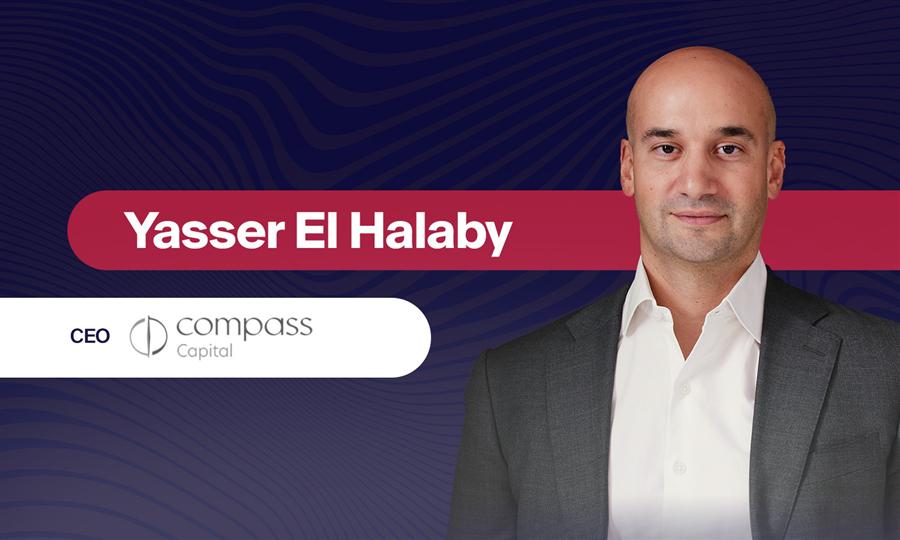
In an exclusive interview with Arab Finance, Yasser El Halaby, CEO of Compass Capital, discusses the firm's strategic evolution—from its flagship private equity investments like Bonyan to its expansion into public equities via a private investment in public equity (PIPE) fund. El Halaby shares deep insights into Egypt’s investment landscape, navigating valuation gaps between public and private markets, high-potential sectors, and key drivers of long-term foreign direct investment and sustainable value creation.
1-Could you introduce Compass Capital, outlining its core business lines, investment philosophy, and evolution over time?
Established in late 2010, Compass is a diversified alternative investment and merger and acquisition (M&A) advisory firm.
The firm originated as a private equity investor, which remains core to our strategy. We focus on identifying compelling investment opportunities and creating long-term value through active ownership and strategic development. One of our notable private equity investments was the acquisition of Bonyan in 2018. Bonyan evolved from a private equity investment into a standalone commercial real estate investment platform with a current portfolio of ten assets, culminating in its successful listing on the Egyptian Exchange (EGX). More recently, we expanded into public equities by introducing a PIPE investment fund.
Alongside our investment activities, we operate an investment banking advisory practice, including buy-side and sell-side M&A, as well as capital raising transactions.
Throughout our evolution, our philosophy has remained consistent: disciplined investing, fundamental value creation, and a long-term investment perspective, supported by deep market knowledge and strong transaction execution capabilities.
2-How does the firm differentiate itself in Egypt’s investment management landscape, and which opportunities are central to its current strategy?
Our differentiation lies in combining the investment discipline and active ownership approach of private equity with the flexibility to deploy capital across multiple asset classes, supported by deep local market knowledge and extensive transaction execution experience.
Our investment and M&A advisory capabilities provide us with a distinct perspective on market opportunities, access to deal flow, and the ability to structure and execute complex transactions.
Strategically, we see compelling opportunities across our investment verticals. Across these strategies, we remain highly selective, prioritizing attractive risk-adjusted returns, disciplined capital deployment, and opportunities in which we can actively contribute to value creation.
3-How do you assess Egypt’s investment landscape today, considering macroeconomic stabilization efforts, interest rates, currency movements, and the availability of investment opportunities?
We see a convergence of structural growth drivers and improving macroeconomic conditions that is creating an increasingly attractive environment for disciplined, long-term investors.
Ongoing macroeconomic stabilization efforts, improving foreign exchange liquidity, and greater currency flexibility are helping restore investor confidence. A sustained easing of interest rates, supported by declining inflation, should further stimulate private-sector investment, reduce financing costs, and support asset valuations. Nevertheless, exchange rate stability and macroeconomic predictability remain important considerations, particularly for international investors.
Beyond the macroeconomic cycle, Egypt's fundamental investment appeal lies in its significant untapped potential. With a large, youthful population offering a compelling demographic dividend, relatively low penetration across numerous sectors, accelerating technology adoption, and a vibrant startup and entrepreneurial ecosystem, the country benefits from powerful structural drivers of long-term growth. These fundamentals, combined with attractive valuations and opportunities arising from market dislocations, create a compelling investment landscape across both private and public markets.
Ultimately, we believe Egypt offers a distinctive combination of demographic scale, structural growth potential, and attractive investment entry points. Capturing these opportunities requires disciplined capital allocation, careful management of macroeconomic risks, and a long-term commitment to sustainable value creation.
4- You have discussed opportunities arising from differences in how listed and privately held companies are valued. Where do you see the most significant valuation gaps in Egypt’s public markets? How can investors distinguish genuinely undervalued companies from businesses facing structural challenges?
Listed companies with attractive growth prospects, established market positions, and strong cash flows can trade at significant discounts to comparable private-market transactions.
These discrepancies often reflect market sentiment, limited liquidity, insufficient institutional participation, low research coverage, and elevated macroeconomic risk premiums. Private-market valuations may also incorporate control premiums and strategic synergies.
Our approach applies private equity-style fundamental analysis to listed businesses, focusing on sustainable earnings, cash flow generation, balance sheet strength, competitive positioning, and management quality. Crucially, we seek to distinguish temporary market inefficiencies from structural business challenges and identify catalysts that can unlock intrinsic value.
Ultimately, a low valuation multiple does not necessarily indicate an attractive investment. The opportunity lies in identifying high-quality businesses whose long-term earnings potential and intrinsic value are not adequately reflected in their share prices, coupled with a strong conviction that identifiable catalysts will drive market recognition and a re-rating of their valuations over the near to medium term.
5- Which sectors of the Egyptian economy currently offer the most compelling risk-adjusted investment opportunities?
Our investment approach is opportunity-driven rather than sector-constrained. We prioritize businesses with sustainable competitive advantages, strong cash flow generation, attractive entry valuations, and clear pathways to value creation. Ultimately, the quality of the underlying business and the price we pay are more important than sector exposure alone.
That said, we see compelling opportunities in sectors benefiting from structural demand growth, low market penetration, favorable demographics, and accelerating technology adoption. These include healthcare, financial services, and consumer-oriented sectors, where significant potential exists for growth, consolidation, and operational improvement.
We also see attractive opportunities in export-oriented industries and businesses generating foreign currency revenues, leveraging Egypt's competitive cost base and access to international markets.
6- What would it take for Egypt to attract more sustainable foreign investment into productive businesses and long-term equity positions, rather than relying heavily on short-term portfolio flows or large one-off transactions?
Attracting sustainable foreign investment requires moving beyond short-term capital inflows toward creating a predictable, competitive, and investor-friendly environment that supports long-term capital commitments.
Macroeconomic stability is fundamental, particularly sustained moderation in inflation, exchange rate flexibility, foreign currency liquidity, and confidence in capital repatriation. Equally important are regulatory consistency, transparent and efficient administrative processes, and enforceable contractual rights.
Beyond these foundations, deepening Egypt's capital markets and expanding credible investment and exit opportunities will be critical. Greater market liquidity, improved corporate governance, an active IPO market, and a broader pipeline of investable businesses would help attract international institutional investors and long-term private capital.
Egypt already possesses compelling structural advantages, including its demographic scale, entrepreneurial talent, strategic geographic location, and significant untapped sectoral potential. The opportunity is to translate these inherent strengths into a sustained pipeline of productive investments, supported by policy predictability, institutional confidence, and an increasingly competitive private sector.
Sustainable foreign investment is driven not simply by attractive returns, but by investor confidence in the ability to deploy capital, grow businesses, realize value, and repatriate proceeds within a transparent and predictable framework.
7-How are elevated borrowing costs and changes in monetary policy affecting corporate valuations, acquisition financing, and investment decisions in Egypt? As financing conditions evolve, which types of businesses are best positioned to benefit, and which may remain under pressure?
Elevated borrowing costs have weighed on corporate profitability, constrained capital investment, and pressured valuations. As monetary conditions ease, lower financing costs should support corporate earnings, stimulate investment and M&A activity, and potentially drive a recovery in asset valuations.
Businesses best positioned to benefit include fundamentally strong companies with manageable leverage, robust cash flows, and attractive growth opportunities, particularly those that have deferred expansion due to high financing costs. Capital-intensive sectors, including real estate and industrial businesses, could also benefit significantly. Conversely, highly leveraged companies with weak cash flows or structural challenges may remain under pressure.
We favor businesses whose investment fundamentals remain compelling irrespective of the interest rate cycle, while viewing monetary easing as a potential catalyst for accelerating growth and unlocking additional shareholder value.
8- Looking ahead over the next three to five years, what developments will most influence investment returns in Egypt?
We believe investment returns in Egypt over the next three to five years will be driven by a combination of corporate earnings growth, valuation re-rating, and opportunities for active value creation, supported by an improving macroeconomic environment.
A sustained decline in inflation and interest rates, alongside greater currency stability, could provide meaningful upside to asset valuations, lower financing costs, and stimulate M&A activity.
In private equity, we expect returns to be driven by operational improvements, market consolidation, and the scaling of high-quality businesses, particularly in sectors benefiting from structural demand growth and low penetration.
In public equities, we see opportunities for valuation convergence as investor confidence improves, market liquidity deepens, and fundamentally undervalued businesses attract greater institutional interest.
We also anticipate that greater cross-border M&A activity, renewed foreign investor participation, and more active IPO and exit markets could provide important catalysts for value realization.
We believe the most attractive returns will come from combining disciplined entry valuations with sustainable earnings growth, active value creation, and clearly identifiable exit opportunities, rather than relying solely on macroeconomic recovery or multiple expansion.