Egypt’s outsourcing industry is entering a new phase of growth, shifting from its telecom roots into a diversified, knowledge-driven sector spanning IT services, financial operations, healthcare support, and creative industries. Powered by a multilingual workforce, competitive costs, and strategic geographic location, Egypt has become a magnet for multinational investment and an emerging hub in global value chains.
Yet the sector’s direction is not decided by figures. Policy support, labor market benefits, and infrastructure upgrades are improving Egypt’s competitiveness, while challenges in data centers, power reliability, and congestion point to the need for more innovation. The future of Egypt is moving beyond low-cost outsourcing toward strategic, technology-led partnerships that change the country from a service provider to a global value creator.
Diversified Outsourcing Service Portfolio
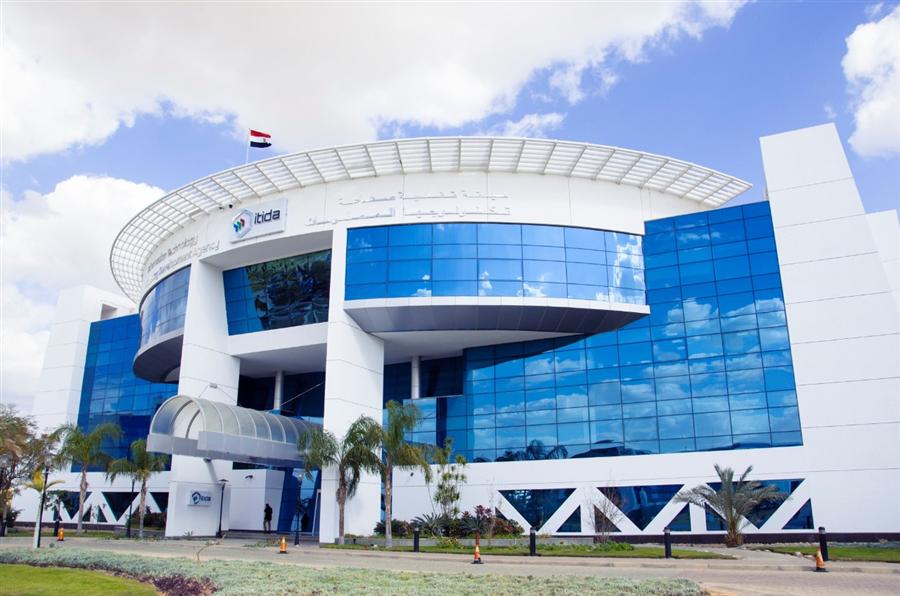
Driven by a network of 177 multinational firms and 252 companies operating across 282 global delivery centers, Egypt's offshoring ecosystem now supports over 195,000 specialists, according to the Information Technology Industry Development Agency (ITIDA) data. This expansion has fueled substantial financial growth, pushing offshoring exports to $4.8 billion in 2025, up 11.6% from $4.3 billion in 2024, and double the $2.4 billion recorded in 2022. Bolstered by this performance, the nation's broader digital exports reached a total of $7.4 billion.
This growth also reflects the diversification of Egypt’s outsourcing industry. According to the ITIDA ICT Sector Outlook 2026, Egypt’s offshoring industry now spans a broad spectrum of high-value services. Beyond customer service, companies operating in Egypt provide software development, IT consulting, infrastructure outsourcing, and project delivery.
Business process services cover corporate finance, travel, transportation, and industry-specific operations, while engineering and research and development (R&D) activities include embedded software, semiconductor design, and advanced innovation services. This diversification is underpinned by Egypt’s multilingual talent base, cost competitiveness, and sustained investment in digital infrastructure.
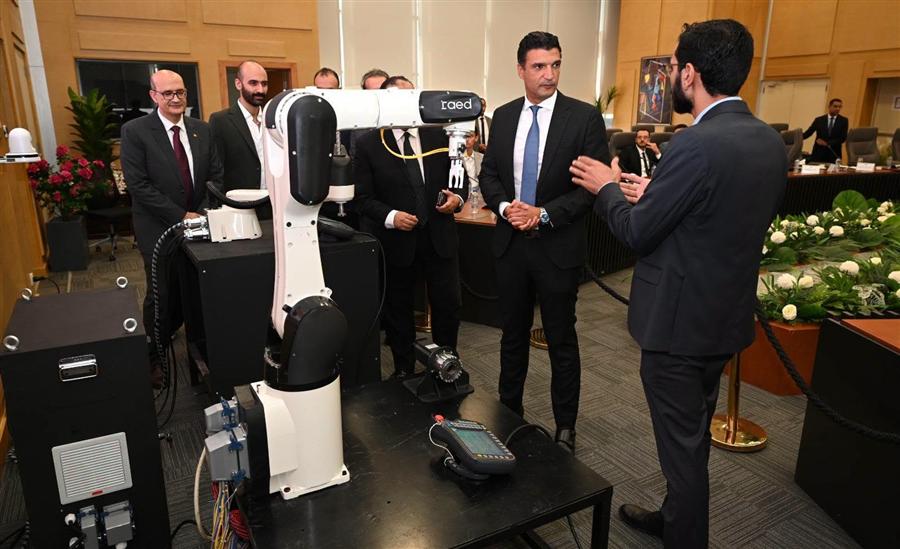
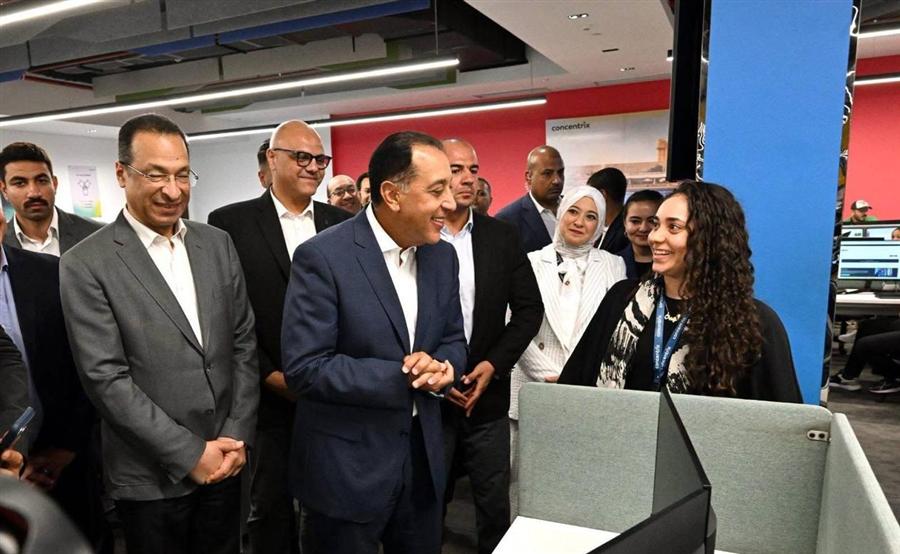
During a visit to several outsourcing companies at the end of August, Prime Minister Mostafa Madbouly described outsourcing as “a promising sector for the national economy.” Madbouly also commended the technical skills of Egyptian youth, highlighting the country’s “distinguished position as an international business process outsourcing (BPO) hub.”
Egypt’s Comparative Advantages
Egypt’s competitiveness in outsourcing rests on a mix of labor market strength, cost advantage, geographic positioning, and policy support.
Hazem Hussein, General Manager Offshore Business at Raya CX, emphasizes the multilingual edge. “Egypt excels in non-English European and regional languages. The country produces massive numbers of fluent speakers in French, German, Italian, and Spanish alongside English,” he says. “A large number of engineering and IT graduates gives Egypt an edge in technical support, software operations, and back-office digital tasks.”
Egypt’s time zone alignment is another advantage. “Egypt's GMT+2 zone provides seamless coverage for European markets during standard business hours and solid overlap with the US East Coast,” Hussein explains. He also points to lower employee churn compared to saturated markets, allowing more flexible scaling for specialized programs.
Cost competitiveness remains a central pillar. Ayman Abdullah, Founder and CEO of 5D Outsourcing, observes: “Our wage levels remain competitive with the Philippines and India, without carrying the same cost pressure those markets are starting to see as they scale.”
However, Abdullah cautions that Egypt should not attempt to out-compete India on raw tech scale or the Philippines on English-speaking customer service. “Egypt's opportunity is different: combine cost with language, location, and flexibility, then build technology capability on top of that. Cost gets you in the door. It should not be the whole pitch,” he says.
Policy support has reinforced these advantages. Minister of Communications and Information Technology (MCIT) Raafat Hindy said the ministry’s strategy targets “geographic expansion beyond Cairo.” Meanwhile, Ahmed Elzaher, ITIDA CEO, stated that extending service centers into various governorates enables companies to access a more diverse talent pool across different regions.
Abdullah also highlights infrastructure progress. “Internet speeds have improved significantly over the past few years, and the 5G rollout has added another layer of capability. Our location and connection to major undersea cables also give us an advantage for businesses doing digital work internationally,” he notes.
From Cost Arbitrage to Capability-Based Value
Despite the sector’s rapid growth, Egypt’s outsourcing industry faces several structural and operational challenges. While connectivity has improved, the next stage requires deeper infrastructure, according to Abdullah. “The next challenge is moving from basic connectivity to the kind of infrastructure advanced outsourcing actually needs: data centers, cloud, reliable power, cybersecurity, and strong data protection.”
Traffic congestion also remains a practical issue, particularly in Cairo. “Traffic is a real, practical issue too, especially in Cairo,” Abdullah points out. “For any business that depends on people showing up to an office every day, long commutes affect both people and operations. So, I would say the focus needs to be on two things at once: keep building digital infrastructure and start developing outsourcing hubs outside the most congested cities.”
Beyond infrastructure, the industry must also shift its value proposition. Abdullah highlights that Egypt cannot rely solely on cost advantages. “This is the most important shift for Egypt, in my opinion. We need to move from selling hours and headcount to selling capability and results,” he says. “Cost might win you the first contract, but it will not keep a long-term relationship with a multinational company.”
Clients today demand more than labor. “Clients today want partners who bring AI, automation, analytics, and real expertise to the table, not just extra hands,” he adds. “Egypt has the talent and the location to be part of that shift, but we still need deeper technical skills, stronger management, and more specialized services to get there.”
The outlook, therefore, hinges on Egypt’s ability to evolve from a cost-based outsourcing model into innovation-driven partnerships. Abdullah notes, “Egyptian outsourcing companies need to become strategic partners, not just service providers.”
“If we can help a client improve their productivity, customer experience, or quality through technology and better processes, the whole conversation changes. At that point, we are not competing on the price of labor anymore. We are competing on the value we create,” he illustrates.
Egypt’s outsourcing industry has developed into a diversified, knowledge-driven industry across IT, finance, healthcare and creative services. Its multilingual population, competitive costs, and strategic location have attracted multinational investment and enhanced the country’s role in global value chains. It is not simply about growing exports.
Policy support, labor market strengths, and infrastructure upgrades are bolstering Egypt’s competitiveness, but challenges remain around data centers, power reliability, and congestion. The future of Egypt is moving away from cost-based outsourcing to innovation-driven partnerships. With technology, analytics and deep expertise, the industry can transform from a service provider to a global value creator.
By Sarah Samir