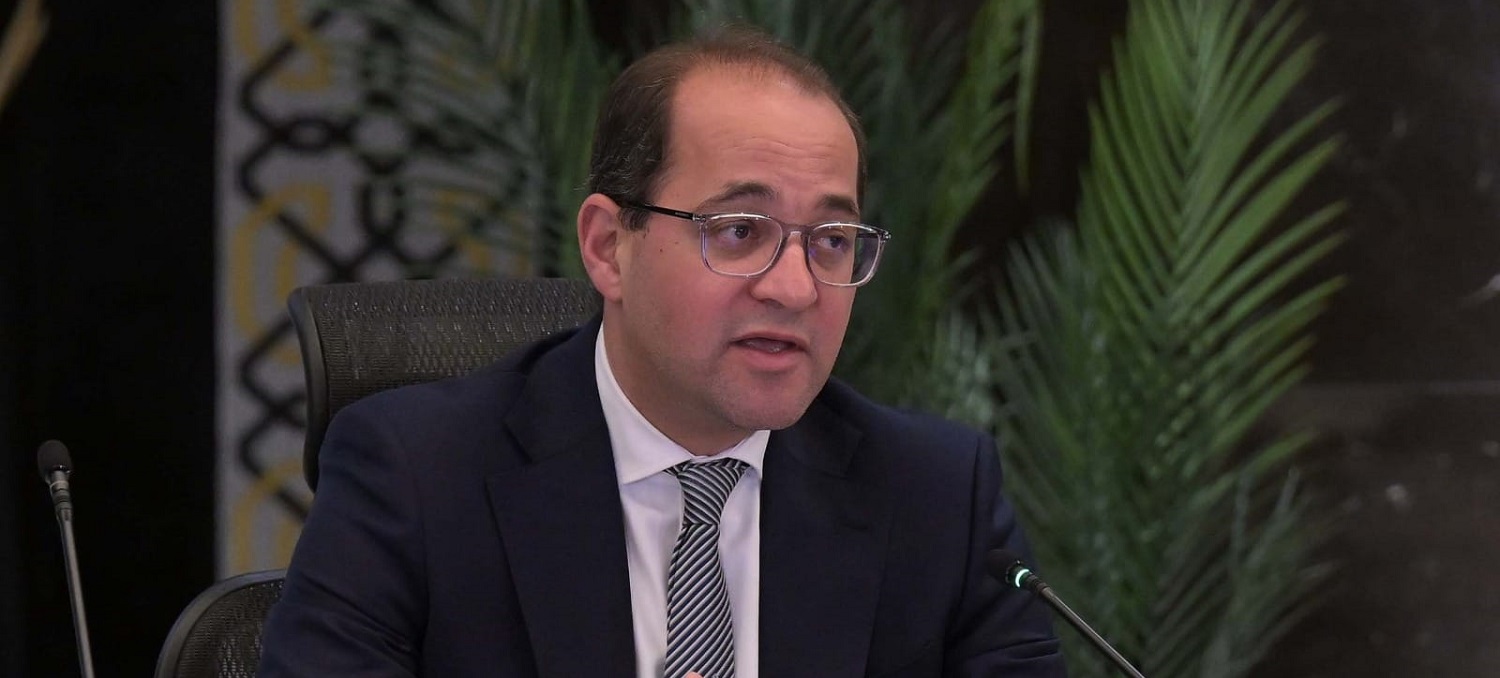
Arab Finance: Egypt will launch an interactive map starting next fiscal year (FY) 2027/2028, allowing citizens to track state budget allocations and actual government spending across governorates, Minister of Finance Ahmed Kouchouk announced during the Cairo ICT 2026 exhibition and conference.
The map will detail funds allocated to each governorate and how they are spent on programs and projects aimed at improving citizens' lives.
Kouchouk emphasized that public participation in monitoring budget allocations and expenditure is a fundamental right, allowing citizens to follow development projects in their governorates and local communities.
The platform will also enable the Ministry of Finance to collect public feedback and recommendations on budget allocations and spending priorities across governorates.
The initiative builds on a participatory budgeting pilot launched over the past year, during which the ministry engaged with local communities, civil society organizations, and businesses to identify needs and incorporate them into budget planning.
Kouchouk noted that the pilot resulted in measures to improve educational services for students with disabilities in Beni Suef Governorate.
The ministry is also working to improve the presentation of the state's final budget accounts to clarify how citizens contribute to public finances, reflecting its approach that the state budget belongs to all citizens.
On the customs front, Kouchouk revealed that a draft law containing 18 legislative amendments to the Customs Law has been submitted to the House of Representatives to simplify procedures, reduce customs clearance times, and ease related burdens.
The proposed amendments include mechanisms for immediate and temporary customs clearance under simplified regulations, alongside a risk-management system that takes into account traders' compliance records with the Egyptian Customs Authority.
These measures form part of the ministry's broader efforts to simplify tax and customs procedures and strengthen cooperation with taxpayers and the business community.
Regarding real estate taxes, Kouchouk highlighted strong public engagement with a newly introduced mobile application designed to simplify tax procedures.
He attributed the high registration rates to growing public confidence in the reforms being implemented, emphasizing the ministry's commitment to developing the real estate and customs tax systems through greater cooperation with citizens.
On public debt, Kouchouk reported that the government had reduced its debt-to-GDP ratio from 96% to 81.9% over the past three years, with achieving a primary surplus of 4.9% of GDP in FY 2025/2026.