Recent regional tensions have disrupted energy flows to Egypt, particularly natural gas supplies, placing additional pressure on the domestic energy system. These developments have contributed to rising fuel costs, prompting the government to adjust electricity tariffs, especially for high-consumption households and commercial users, to contain fiscal burdens and ensure service sustainability. In this factsheet, we review Egypt’s electricity generation and consumption patterns and provide an overview of the latest electricity price adjustments and their underlying drivers.
- The latest tariff adjustments primarily target higher residential consumption brackets, with electricity prices increasing by 16% to 28%, while the first six consumption tiers remain unchanged. This approach ensures that the majority of households, particularly those with lower usage levels, are not affected. Notably, electricity prices for consumption up to 2000 kilowatt-hours per month have been maintained.
- Electricity tariffs for commercial users witnessed more substantial increases, ranging from 20% to as high as 91%, reflecting a shift toward cost recovery from higher-consuming and revenue-generating segments. This decision follows the previous adjustment implemented in August 2024, when residential tariffs increased by 14% to 40%, and commercial tariffs by 23.5% to 46%.
- During fiscal year (FY) 2024/25, the electricity sector allocated EGP 13.1 billion to support the stability of the national grid, rehabilitate electricity companies, and enhance the efficiency of existing generation plants through scheduled maintenance and overhauls without disrupting supply. These efforts coincided with an increase in electricity generation to 64 billion kilowatt-hours and a rise in the number of subscribers to 43.8 million, reflecting a growth rate of 4.1% compared to the previous year.
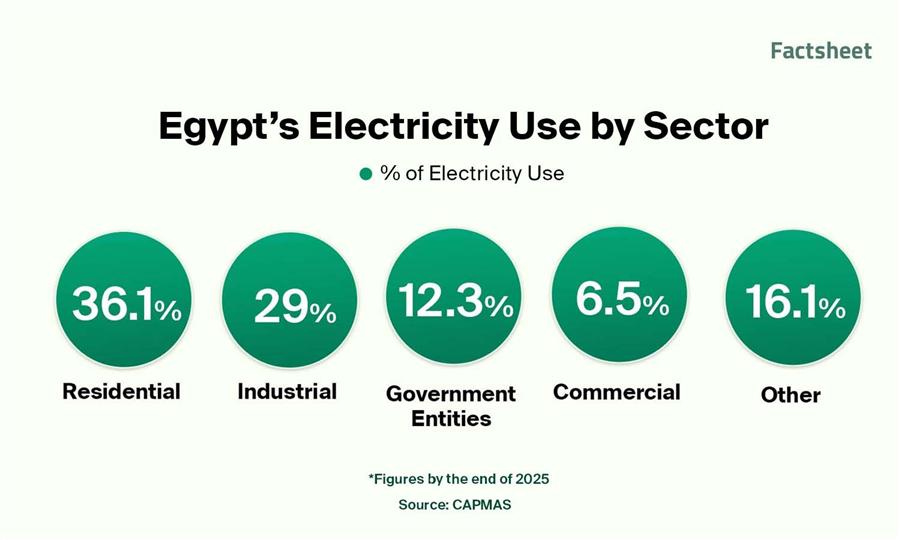
- By the end of 2025, residential consumption accounted for the largest share of electricity use in Egypt at 36.1%, followed by the industrial sector at 29%. Government entities represented 12.3% of total consumption, while commercial activities accounted for 6.5%. The remaining 16.1% was attributed to other uses.
- Egypt’s electricity generation remained heavily reliant on natural gas, which accounted for 81.7% of total output. Oil and coal contributed a smaller share of 6.6%, while renewable energy sources represented 11.7%.
By: Amina Hussein
Related News