In Part II of the 2025 at a Glance factsheet series, we highlight the performance of some of the key economic indicators in Egypt. Over the period of the last 12 months, the inflation rate declined significantly by 12.9 percentage points. Meanwhile, the purchasing managers index (PMI) witnessed a fluctuating yet downward trend. Net international reserves (NIR) increased between January and December, shifting toward gold holdings with an additional 2.5 tons added to the reserves.
- Inflation rates witnessed a remarkable decline throughout the year, reflecting a clear disinflationary trend. Inflation peaked at 23.2% in January, marking the highest level recorded during the year, before steadily easing in the following months. By November, inflation reached its lowest point at 10%, signaling significant price stabilization across the economy. This downward trajectory was slightly reversed in December, with end-of-year inflation standing at 10.3%. On average, inflation settled at around 13% over the year.
- Several sectors were disproportionately affected by inflationary pressures, with health-related expenses recording the highest increase at 32.1%. Transportation followed closely, with prices rising by 27.9%. Tobacco prices also experienced a significant increase of 21.9%, driven by a combination of tax adjustments and cost escalation.
- Food and beverage prices showed uneven but notable increases, placing additional strain on household budgets. Fruit prices surged sharply by 48.1%, representing the most significant increase among food items. Mineral water and soft drink prices rose by 19.6%, while fish and seafood prices increased by 8.1%.
- The PMI exhibited a fluctuating trend over the year, starting at 50.7 points in January, which indicated marginal expansion in business activity, before declining to its lowest level of 48.2 points in April, signaling a period of contraction. Conditions improved gradually in the second half of the year, with the index reaching a peak of 51.1 points in November. By December, the PMI eased slightly to 50.2 points.
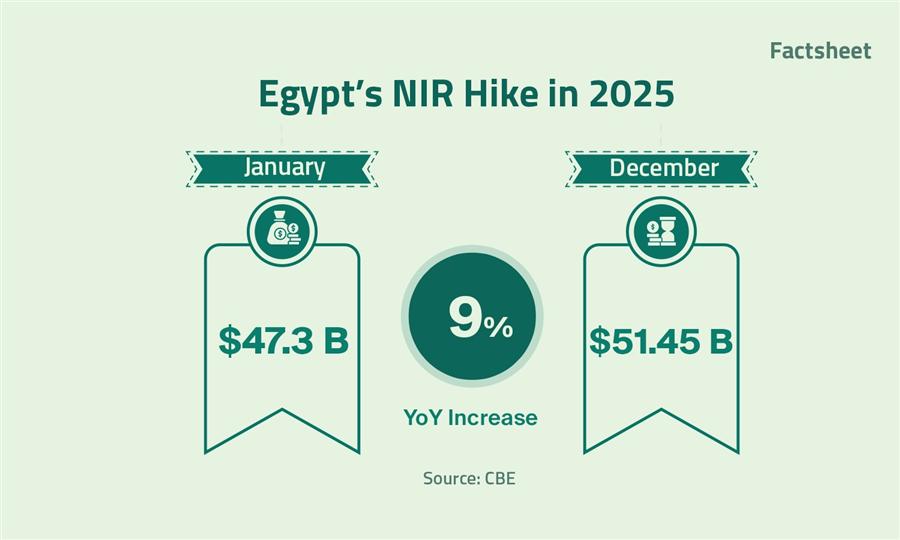
- NIR recorded a notable increase of 9% over the year, reflecting improved external resilience and stronger reserve accumulation. Reserves rose from $47.3 billion in January to $51.45 billion by December.
- A significant shift was observed in the composition of NIR, marked by a higher reliance on gold and a reduced dependence on foreign currencies. The share of gold in total reserves increased from 24% in January to 35% in December, signaling a strategic move toward safer assets. In contrast, foreign currencies declined from 76% to 65%.
By: Amina Hussein
Related News