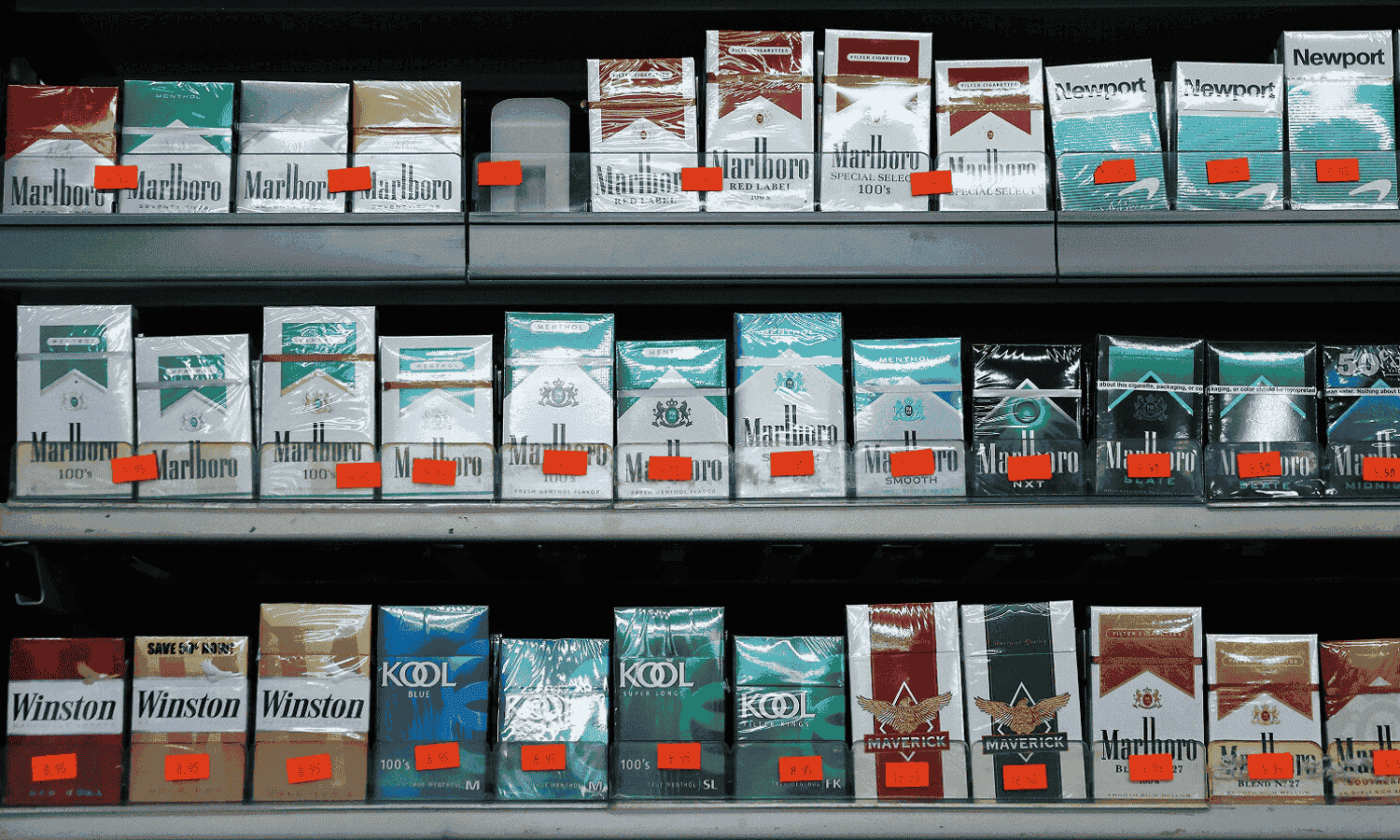
The cigarette and tobacco industry in Egypt has been dominated by Eastern Company for years, until 2022. The company has recently sold some of its shares to an Emirati shareholder, which could change the scene in the tobacco market. Tobacco cultivation is not legal in Egypt, so the manufacturer must rely entirely on imported tobacco, which affects the cost of manufacturing it in different forms, such as cigarettes and hookah. Despite their economic contributions, tobacco products pose a health threat. Therefore, the tobacco industry is facing the challenge of achieving economic returns while mitigating the number of smokers.
Attracting Investments
The tobacco and cigarette industry in Egypt has been ongoing for years. Dr. Ahmed Fawzy Hussein, Assistant Professor of Economics, tells Arab Finance: “The Egyptian tobacco market is dominated by a few major players, such as the state-owned Eastern Company, which has a monopoly on cigarette production in Egypt. International tobacco companies operating in the country are also among the other significant players.”
In September 2022, the United Tobacco Company (UTC), a subsidiary of Philip Morris International, joined the Egyptian cigarette manufacturing market, ending the years-long monopoly of Eastern Company.
Nirmeen El Sayyad, UN Women Project Manager at the American University in Cairo (AUC) and an economic expert, tells Arab Finance: “The new entrant will have to face the traditional market players and will have to be either price or product competitive to win a significant share. This new source of supply will compete through providing more tobacco products to the market.”
Earlier in September, the Egyptian Cabinet announced that an Emirati company had acquired a stake in the Eastern Company, the largest cigarette producer in Egypt. According to the announcement, the UAE’s Global Investment Holding Limited acquired a 30% stake in Eastern Company for $625 million, with the buyer providing $150 million to purchase manufacturing materials.
The day after the transaction was announced, Eastern Company’s stock on the Egyptian Exchange (EGX) rose by 3.58% in the middle of the trading session, reaching EGP 24.8, with a turnover of EGP 47.4 million, after 2 million shares were traded, as reported by Al Borsa Newspaper.
“From an economic perspective, this transaction can bring both advantages and potential difficulties,” Dr. Hussein comments. “On the positive side, selling shares to a new shareholder can provide extra funds for Eastern Company, enabling investment in research and development, infrastructure upgrades, or other growth endeavors. This supports the long-term sustainability and competitiveness of the company,” he adds.
Economics of Tobacco Use in Egypt
The tobacco and cigarette industry is one of the industries providing returns to the Egyptian general budget. This comes as “the public sector tobacco companies represent about 14% of the total assets, 33% of the invested capital, 23% of the sales, and 63.48% of the net profit in the manufacturing sector in 2019/2020,” according to Nashwa El-Tatawy and Eman Salama's Paper on the Economics of Tobacco Manufacturing in Egypt published by Journal of the Advances in Agricultural Researches (JAAR).
The economic importance of the tobacco industry comes from the huge number of its consumers. "The tobacco industry in Egypt is significant, with a large consumer base consisting of both regular and occasional smokers,” Dr. Hussein says, explaining that “despite global efforts to decrease tobacco consumption, Egypt has maintained a relatively high smoking prevalence, which contributes to the substantial market for tobacco products."
Additionally, the tobacco products market’s revenues reached $7.7 billion in 2023. The market is also expected to annually grow by 9.65% (CAGR 2023-2027), according to Statista's Insights on Tobacco Products in Egypt.
In terms of exports, the country exported tobacco worth $35.8 million in the first four months of 2023, including $114,000 in cigar and $32.6 million in hookah tobacco exports, according to data released by the Central Agency of Public Mobilization and Statistics (CAPMAS).
“It is important to acknowledge that the tobacco industry is influenced by various factors, including changing societal attitudes toward smoking and an increased awareness of the health risks associated with tobacco use,” Dr. Hussein stated. “These factors may impact the industry's dynamics and future prospects.”
Tobacco Tax
The tobacco industry raises health and environmental concerns that nations are working together to address. “The tobacco industry in Egypt, like many other countries, faces mounting concerns about public health,” Dr. Hussein explains. “The high smoking prevalence has led to an increase in smoking-related diseases, straining the healthcare system. Addressing these health concerns remains a top priority,” he adds.
Therefore, Egypt has joined a signatory to the World Health Organization (WHO) Framework Convention on Tobacco Control (FCTC) in 2005. Since then, the country has been taking several steps toward tobacco control, such as tobacco taxation increases and the provision of health images on tobacco products.
More than 70,000 smokers are children under the age of 10, and over 0.5 million smokers are under the age of 15, former dean of the National Heart Institute Gamal Shaaban revealed in a call to a talk show in May. Accordingly, the government imposes tobacco taxes, which reduce the number of smokers among children.
“Curbing tobacco addiction and risks, it is necessary to impose further high-rate taxes on tobacco to curb its addiction and lessen the economic and health risk on one hand, while collecting new revenue for the state public budget on the other hand,” according to the research entitled 'Tobacco Economics in Egypt' prepared by Ezzat Molouk Kenawy, Assistant Professor and Head of the Department of Economics and Public Finance at the Faculty of Commerce, Kafr El-Sheikh University, in 2018.
Meanwhile, the number of Egyptian smokers above the age of 15 has been decreasing, with the percentage falling from 17.3% in 2020 to 16.8% in 2022, according to CAPMAS.
El Sayyad comments: “Tobacco taxes are levied to reduce individual consumption of tobacco as a mean of limiting tobacco consumption. This should be reflected on total returns, but continuous market growth triggered by population growth will offset these decreases (if any) and can result in higher tobacco returns.”
The tobacco industry in Egypt looks promising with the market opening up for new investors. With cigarette taxation, the government can ensure good returns while keeping young people out of the scope of smokers.
By Sarah Samir