Arab Finance: Technology is changing the economics of building a business. With AI reducing the time and resources needed to develop products, founders can tackle problems that once required much larger teams and budgets. For venture capital firms, however, faster product development also means reassessing which businesses can maintain a competitive edge and generate sustainable returns.
Algebra Ventures has built its investment strategy around backing technology companies that address significant market needs, combining capital with operational support, talent recruitment, and access to regional networks. With approximately $150 million across two funds and investments in more than 35 companies, the firm is expanding its reach across North and Sub-Saharan Africa while continuing to focus on Egypt.
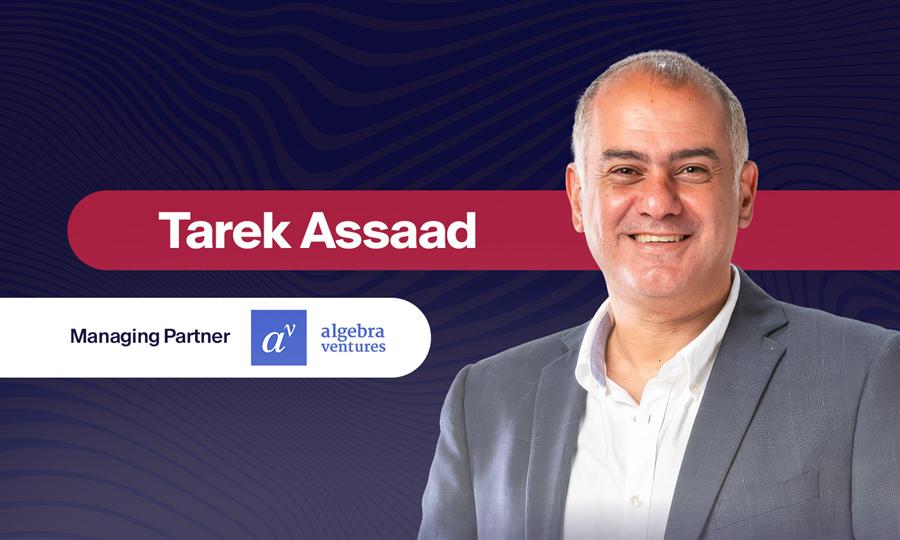
In an interview with Arab Finance, Tarek Assaad, Managing Partner of Algebra Ventures, discusses the firm's investment priorities, the changing role of AI in venture capital, opportunities across African markets, and the conditions needed to help more startups reach successful exits.
We founded Algebra to back entrepreneurs using technology to solve longstanding problems in the Egyptian economy and build valuable businesses around those solutions. That investment thesis continues to guide us. Today’s technology gives founders increasingly powerful tools and the ability to address those problems on a greater scale.
With around $150 million across two funds, we have expanded both the stages and markets in which we invest. We now support companies from the pre-seed stage through subsequent rounds beyond Series A. Egypt remains our core market, alongside investments elsewhere in North and Sub-Saharan Africa.
Our experience spans the full business life cycle, including company formation, growth, and exit. It informs how we support founders at each stage, combining capital with practical guidance as their businesses and priorities evolve.
We also co-invest with investors whose sector expertise or geographic reach complements ours, giving founders access to knowledge, relationships, and support for future fundraising. We also have an in-house talent team that helps portfolio companies identify their hiring needs and recruit the people who can support their next phase of growth.
We back capable teams that can solve a large problem profitably. To do that, we assess four elements when considering an investment: the market, the product, the team, and the economics. We look for a significant problem affecting a large customer base, supported by evidence that customers value the solution and are willing to pay for it.
The founders need the industry knowledge, customer understanding, and motivation to build the business. We then examine its potential to serve customers profitably as it grows, and whether the entry valuation allows that growth to generate attractive returns for our limited partners.
Our two funds total around $150 million and have backed more than 35 technology companies. Initial investments range between $300,000 and $5 million, depending on the company’s stage and funding needs.
We reserve a substantial share of our capital for follow-on investments, allowing us to continue supporting successful companies as they grow. In some cases, we have participated in three or more funding rounds for the same company, providing capital at successive stages of its development.
We prioritize follow-on funding, retaining sufficient capital to support the companies already in our portfolio. Each round is tied to specific objectives, and we assess the funding required to achieve them.
Alongside that, we actively seek new investments across industries and technologies. Our decisions are driven by the strength of the opportunity and the returns the business can generate.
Egypt’s venture capital market remains underfunded across several stages, creating substantial opportunities for investors across the board. Each stage calls for a different appetite for risk and a different level of funding.
Local investors have also stepped in as international capital became harder to access, bringing a close understanding of Egyptian customers, currency dynamics, and valuations.
Companies securing later-stage funding or entering the public markets are helping establish a track record for the ecosystem. Their experience gives founders a clearer view of what it takes to reach those milestones and investors a basis for assessing future opportunities.
Egyptian entrepreneurs have demonstrated considerable resilience, growing businesses despite currency fluctuations, rising costs, and margin compression. Their ability to adapt depends on understanding changing customer demand, setting viable prices, and knowing where continued investment can deliver growth.
Some of Egypt’s category leaders have emerged through these conditions. Their founders recognized shifts in demand early and adapted their businesses accordingly. Their success provides experience and inspiration for the next generation of entrepreneurs.
AI is the biggest technological advance of our lifetime. The most immediate impact is in software development, with other efficiencies across other functions set to materialize in the short-term.
Today, small teams can build and launch sophisticated products faster and with fewer resources. That capability is raising founders’ ambitions in Egypt and globally, and it is evident throughout our portfolio. Synapse Analytics has applied its expertise in credit decisions to serve financial institutions across the Global South. Morocco-founded DeepEcho has secured FDA clearance for its AI-powered prenatal ultrasound technology and expanded into the US.
For investors, the pace of change makes a company’s long-term relevance central to the assessment. Advances in AI can quickly reshape customer needs and the value of a product. We therefore examine what can sustain the company’s competitive position, including proprietary data, licenses, customer relationships, and deep sector expertise.
Africa is central to our strategy. We have applied our experience in Egypt to investments in Morocco and Nigeria, where BFREE, a technology and ethical credit management company, was our first investment, and we see further opportunities across the continent.
For companies, successful expansion begins with choosing markets where the business addresses a clear need. Founders must understand local customers and how to adapt their product, pricing, and sales approach to achieve product-market fit. They also need investors and partners who can help them execute. Our very own portfolio company Enza illustrates the value of bringing that expertise into the founding team, whose experience spans several African markets.
Egypt’s exit market is progressing, as illustrated by the IPO of MNT-Halan’s Egyptian business. Algebra was Halan’s first venture capital investor, and other companies in our portfolio are exploring similar exit routes. However, many businesses still need to achieve the scale and financial performance required to attract public investors or potential acquirers.
We support founders in building their business towards that point, including through consolidation. Businesses operating in different countries can combine technology, distribution, and customer relationships to create a regional company. Access to several markets through a single acquisition can make that business attractive to a wider pool of buyers.
AI makes this a golden age for entrepreneurship. Egyptian and African founders understand many of the economy’s longstanding problems firsthand and now have powerful tools to address them. Small teams can redesign how services are delivered, lower costs, and reach customers who previously had limited access.
By 2030, I would like to see more Egyptian founders turn that expertise into globally competitive businesses. This is a once-in-a-lifetime opportunity, and our role is to provide the capital and support that help them capture it.