Arab Finance: Egypt was the largest natural gas consumer in Africa in 2024, accounting for 33.6% of the continent's total natural gas consumption, followed by Algeria, South Africa, and Morocco, according to a new study released by the Information and Decision Support Center (IDSC).
According to the IDSC's report, Egypt consumed around 59.8 billion cubic meters of natural gas in 2024, as it marked the main power generation source, representing 81.3% of the country's total electricity production. Hence, Egypt ranked 10th globally in the share of electricity generated from natural gas.
The study also showed that Egypt was the continent's largest consumer of petroleum fluids, including crude oil, petroleum products, and liquified natural gas, in 2024, accounting for 17.14% of Africa's total consumption. Consumption reached approximately 782,000 barrels per day during the year, up 5.5% from 2023.
Low-carbon energy sources accounted for 11% of electricity generation, with hydropower representing 6% and wind and solar energy contributing a combined 4.8%.
Globally, Egypt ranked eighth among the largest producers of electricity generated from natural gas in 2024, producing 194 terawatt-hours. The country also recorded the second-largest increase worldwide in gas-fired electricity generation during the year, adding 15.1 terawatt-hours.
On the renewable energy front, the study highlighted that Egypt ranked first in Africa and the Middle East in new onshore wind energy installations in both 2023 and 2024. The country also ranked second in Africa in total renewable energy capacity, accounting for 11.6% of the continent's installed renewable energy capacity in 2024.
In solar energy, Egypt accounted for 16.8% of Africa's installed solar capacity in 2024, reaching 2,590 megawatts. Together with South Africa, the two countries represented 60.2% of the continent's total solar capacity.
Egypt's installed wind energy capacity reached 2,199 megawatts in 2024, representing 23.8% of Africa's total wind power capacity.
The study highlighted several large-scale renewable energy projects underway in Egypt, including the 2-gigawatt South Hurghada wind farm being developed by Saudi Arabia-based energy company ACWA Power, with investment estimated at $2.3 billion. It also cited the 1.1-gigawatt Gulf of Suez wind farm, which has secured financing and is expected to begin commercial operations in the second quarter of 2027.
Among the country's major solar projects is the 500-megawatt Abydos photovoltaic power plant in Aswan Governorate, developed by UAE-based renewable energy company AMEA Power with investments of $500 million. The project began operations in December 2024 and is being expanded with a 300-megawatt-hour battery energy storage system.
The report also referenced the 500-megawatt Ammonite wind farm in Ras Ghareb, as well as a 200-megawatt wind energy project developed by Egypt-based Infinity Power and UAE-based Masdar with investments of $212 million. In addition, the Egyptian government announced plans to establish a 900-megawatt solar power plant in the Dakhla Oasis through a consortium comprising Masdar, Infinity Power, and Hassan Allam.
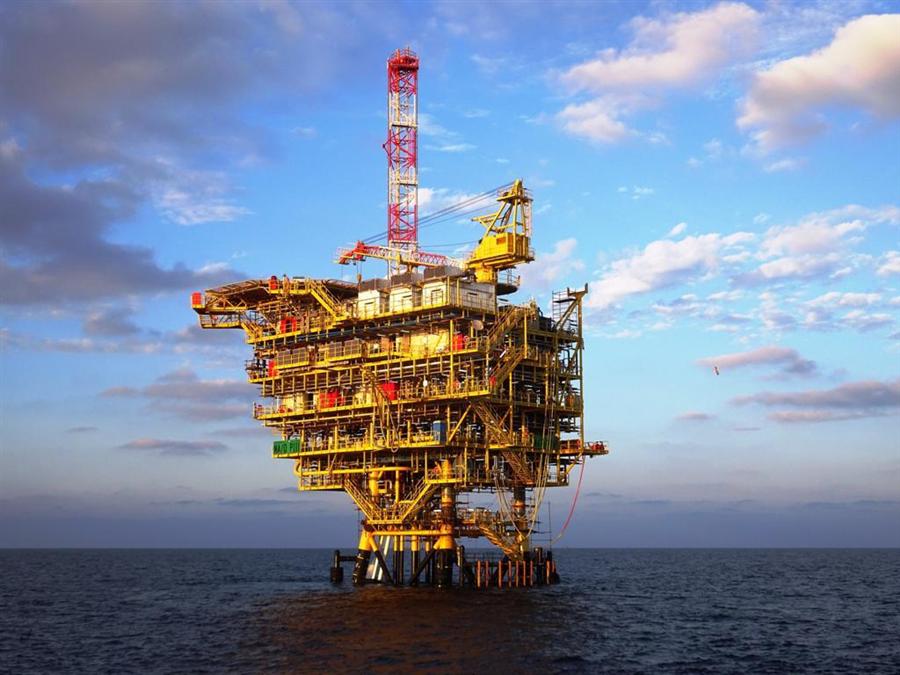
Regarding natural gas production, the study noted that Egypt remains one of Africa's leading gas-producing countries and, together with Algeria, holds 34.11% of the continent's proven natural gas reserves, according to the latest available data.
The report also highlighted Egypt's position as one of Africa's largest electricity producers. Together with South Africa, Egypt accounted for nearly half of the electricity generated across the continent in 2024.
The study cited the International Energy Agency's 2025 World Energy Investment Report, which estimated total energy sector investment across Africa at $116.69 billion in 2024. Among the major international companies investing in the continent's energy sector are Italy-based Eni, UK-based BP, Shell, UAE-based AMEA Power, and Saudi Arabia-based ACWA Power.