Arab Finance: Financing by Egypt's non-bank mortgage companies rose in value in the first half of 2026, even as the total number of contracts fell. Companies licensed by the Financial Regulatory Authority (FRA) extended about EGP 42.7 billion in financing in 2025, up 67.5% from EGP 25.5 billion in 2024, according to an FRA report published in May 2026. In the first half of 2026, they granted EGP 27.6 billion in financing, a 24.9% year-on-year (YoY) rise, while the number of contracts fell 9% to 7,945.
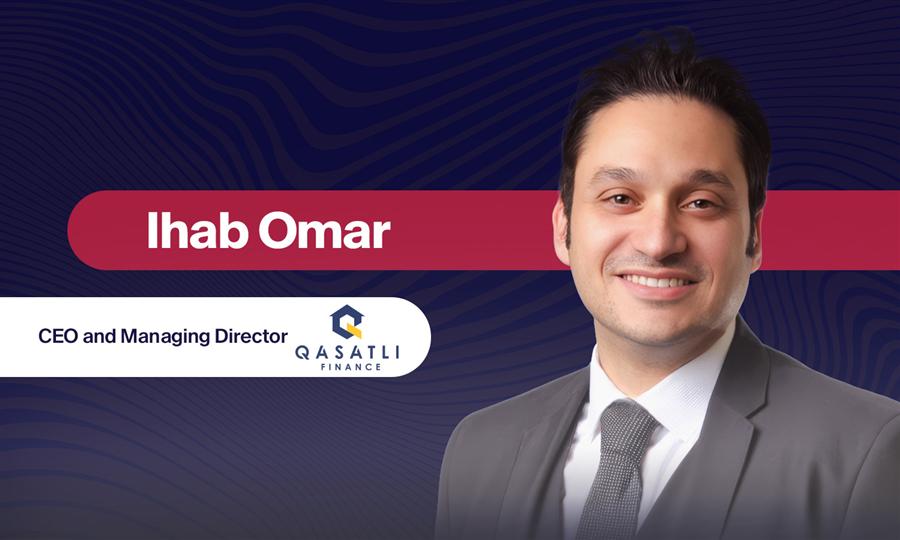
Into this market steps Qasatli Mortgage Finance, which began as a property trading and installment sales business in 2018 and became an FRA-licensed mortgage finance company in 2023. In this exclusive interview, CEO and Managing Director Ihab Omar explains the company’s plans, strategy, and the challenges facing the mortgage finance sector. He also discusses a possible listing, affordability, Sharia-compliant products, the Aqar Exit resale partnership, and the company's digitization plans.
1-Could you introduce Qasatli Mortgage Finance to our readers? How has the company's business model evolved since its establishment, and which customer segments and financing needs are now at the center of its strategy?
Qasatli was established in 2018 and initially operated in property trading and installment sales. Its transition into an FRA-licensed mortgage finance company in 2023 changed the focus of the business: our strategy now centers on assessing buyers’ repayment capacities and arranging financing for eligible properties within a regulated framework.
We serve salaried customers, professionals, business owners, and eligible Egyptians living abroad. Their common need is to bridge the gap between the cash price of a home and what they can pay upfront.
Our approach includes purchasing a qualifying property and reselling it to the customer in installments, subject to the applicable contractual and regulatory requirements. We also see an opportunity to connect buyers with suitable financing through developers, brokers, and resale platforms. The starting point is always an affordable transaction supported by sound documentation.
2-Qasatli signed a credit facility agreement with the National Bank of Egypt (NBE) in August 2026 and is targeting a financing portfolio of at least EGP 2.5 billion over the next three years. How much of this target will be supported by the NBE agreement, and what other funding sources or banking partnerships are you pursuing to finance the company's expansion?
The NBE agreement is for EGP 75 million. It is an initial component of our funding strategy; it cannot, on its own, fund the previously announced EGP 2.5 billion medium-term ambition. A signed facility also needs to be distinguished from cash available for disbursement, because utilization is subject to the contractual conditions being met.
Our expansion therefore depends on several sources of capital. We are pursuing additional banking relationships and exploring mortgage refinancing, alongside strengthening the company's equity base. Portfolio-based capital-market funding may become relevant as eligible receivables reach sufficient scale and seasoning. Each source must be aligned with the maturity and cash flows of the assets it finances. We will communicate specific additional facilities when their terms and availability are established. The pace of growth will follow usable funding and capital, rather than the headline size of a target.
3-Where does Qasatli currently stand against its targets? Could you share the latest figures for annual disbursements, outstanding portfolio value, customer numbers, revenue, and profitability, as well as your expectations for 2027?
The pace of expansion has been constrained by funding availability, which makes it particularly important to distinguish business-plan targets from completed disbursements. Our latest revised planning objective for 2027 is EGP 800 million in new mortgage financing, subject to securing funding, adequate capital, and a pipeline that meets our credit standards. That is an origination target, not a forecast of the closing outstanding portfolio.
For this interview, we are not disclosing a full set of current-period disbursement, portfolio, customer, revenue, and profit figures. Those measures must be based on a clearly defined reporting date and distinguish the licensed mortgage business from legacy property-trading activities. Earlier portfolio snapshots should not be presented as today's position. Our commercial priority is to establish a funded flow of new business and improve operating efficiency. We are not providing a numerical profit forecast for 2027 at this stage.
4-Qasatli has previously discussed a potential listing on the Egyptian Exchange (EGX) in 2027. What role would an initial public offering (IPO) or new equity investment play in the company's capital structure, funding capacity, and long-term growth strategy?
Fresh equity can support growth directly by financing the company's contribution to new transactions and the infrastructure needed to originate and service them. It can also help satisfy the capital conditions attached to borrowing. Equity and debt perform different roles: additional borrowing cannot substitute for the capital needed to support a sustainable financing business.
We have discussed a possible stock-market listing as one future route, but 2027 should not be interpreted as a confirmed IPO date. Any listing would depend on shareholder decisions, regulatory requirements, the company's readiness, and market conditions. A strategic equity investment may also be appropriate.
Our immediate priority is to establish a capital structure that supports execution and preserves financial flexibility. The choice between private investment and a future public offering should serve that objective, with clear governance and transparent reporting.
5-How does Qasatli balance funding costs, lending rates, and borrower affordability amid changing interest rates and inflation?
Affordability starts with the relationship between the property price, the customer's down payment, and reliable disposable income. A longer repayment period may reduce the installment, but it also increases the total amount paid and the lender's exposure. The financing decision must consider both effects. Where a transaction does not fit the customer's financial capacity, the sensible response may be a different property, a larger down payment or a lower financing amount.
Our approach is to assess verified income, existing obligations, credit history and the property's legal and valuation position. Repayment structures should reflect evidenced cash flows; step-up installments should not depend on optimistic assumptions about future earnings.
On the funding side, pricing and maturity need to reflect the cost and duration of our liabilities. Margins must cover servicing, expected credit losses, and capital requirements, as well as funding costs. Close installment monitoring and early contact with customers are essential as the portfolio expands.
6-What are the main structural barriers preventing more Egyptians from using mortgage financing, and which regulatory or policy changes would have the greatest impact on expanding the market, particularly among middle-income households?
The central obstacle is the gap between property prices and household purchasing power. High funding costs make that gap harder to bridge. Other barriers include the documentation needed to establish property ownership and provide acceptable security, inconsistent proof of income, and limited understanding of how mortgage finance works. A customer may have a genuine ability to pay yet struggle to demonstrate it through a conventional salary certificate.
The most useful reforms would improve access to longer-term funding, make property documentation and registration more predictable, and support reliable ways of assessing different income sources. Digital verification can help where it meets regulatory requirements.
For middle-income households, well-targeted support should be assessed against actual affordability and the availability of suitable homes. Extending repayment periods alone will not solve a mismatch between price and income. We should measure success by sustainable access to housing and repayment performance, alongside financing volume.
7-What demand are you seeing for Sharia-compliant financing solutions, how do they differ commercially from conventional mortgage finance, and what contribution do you expect them to make to the company's portfolio?
Sharia-compliant finance is an important part of our product strategy because some buyers want a structure that reflects their religious preferences as well as their financial needs. Our cooperation with Aqar Exit includes this objective. We are not announcing a quantified share of future originations for these products; that will depend on the completion of the relevant structures, funding availability, and customer take-up.
Commercially, an asset-based sale or lease has different ownership, documentation, and payment mechanics from an interest-bearing loan. In a purchase-and-resale structure, for example, the acquisition of the asset and the subsequent sale to the customer need to be genuine and correctly documented. The product still carries funding costs, credit risk and operating expenses.
We therefore see Sharia compliance, customer affordability and sound underwriting as requirements that must work together. Any claim of compliance must rest on the appropriate review and approvals, rather than the name given to a product.
8-What progress has Qasatli made in digitizing the customer journey and using AI in credit assessment? Which financing processes will be digitized, and what impact do you expect on processing time, costs, credit decisions, and customer acquisition?
Our digitization program is a staged development agenda. The processes we want to connect include initial eligibility checks, document collection, identity verification, application tracking, and credit-workflow management, followed by servicing and collections. The objective is to reduce repeated data entry and make it easier for customers and our teams to identify what remains outstanding in each application.
AI can potentially help extract information from documents, flag inconsistencies, and prioritize cases for review. Its value depends on data quality, explainability, and controls over errors and bias. Credit accountability remains with the company and its authorized decision-makers. We are not claiming to have a fully automated AI-powered underwriting system or a verified reduction in processing time today.
We intend to measure turnaround time, rework, cost per completed application, and conversion as the program develops. Implementation must comply with applicable FRA requirements for digital processes, customer data, and record-keeping.
9-Why does Qasatli focus on financing individual homebuyers rather than developers, and how do you view the growth potential of this strategy? Are you considering expanding into other real estate financing segments?
Financing an individual purchaser allows us to assess a defined repayment source against a specific property transaction. Developer finance requires a different assessment of project cash flows, construction execution, and sales risk. Our current strategy concentrates our expertise and capital on the homebuyer, while building relationships with developers and brokers who can bring eligible transactions to the company.
We see scope to serve both primary sales and qualifying resale transactions, including purchases by Egyptians living abroad. Other product ideas, such as rent-to-own arrangements or financing linked to properties under construction, require their own legal, funding, and risk assessments before they can be offered.
We would not describe a product under consideration as an existing financing program. The opportunity is to widen the range of legitimate customer needs we can serve while ensuring that each product has suitable documentation, funding, and servicing capabilities.
10-Your October 2026 partnership with Aqar Exit introduces mortgage finance into the resale market. How significant is this market opportunity, and how will Qasatli assess the creditworthiness of buyers and the risks associated with resale transactions and distressed property contracts?
The resale opportunity is the gap between a seller seeking liquidity and a buyer who needs time to pay. Where a qualifying transaction can be financed, it may help both parties complete a sale that would otherwise depend on finding a cash buyer. Aqar Exit provides a channel for identifying such opportunities; it does not replace the financing company's credit and legal assessment.
We need to examine the new buyer's income, existing obligations, and credit history separately from the seller's reason for exiting. For the property, the assessment should cover title or contractual rights, outstanding amounts, transfer restrictions, developer consent where required, valuation, and completion status. In the case of a distressed contract, settlement and transfer must be structured so that the required rights and security can be obtained.
A discounted price alone is insufficient. Each case must be legally financeable and affordable for the incoming buyer; the transaction should not simply transfer an unsustainable payment burden to another household.
11-What role should specialized mortgage finance companies play in improving cash-flow management, reducing financing risks, and creating a more disciplined relationship between developers and homebuyers?
Specialized mortgage companies can bring independent affordability assessments and disciplined servicing into a property transaction. Where funding is available, and the transaction structure permits it, they can also provide a developer or seller with cash at completion while the purchaser repays over time. That can improve the visibility of project cash flows and reduce reliance on the developer carrying long-term installment receivables.
This works best when responsibilities are clear. The developer remains responsible for construction and delivery, the financier for underwriting and servicing, and the buyer for a repayment obligation they understand and can afford.
Finance does not remove construction or credit risk. Transparent pricing, clear documentation, and controlled disbursement conditions help place those risks where they can be assessed and managed. The broader opportunity is a market in which property development and long-term household finance are supported by institutions with the appropriate expertise and funding.
12-Looking ahead to 2030, what position does Qasatli aim to establish in Egypt's mortgage finance market? What are the company's main expansion priorities in terms of financing volume, geographic reach, and new products?
By 2030, our aim is to establish Qasatli as a recognized specialist in financing home ownership, with a repeatable operating model and diversified sources of funding. We want growth to be reflected in a well-performing portfolio and reliable service throughout the financing relationship.
The immediate priorities are to strengthen capital, convert funding discussions into usable capacity, and develop a consistent flow of eligible transactions. Geographically, Greater Cairo is the starting point; expansion should follow demand and our ability to value, document, and service properties in each location. Product development will focus on qualifying resale transactions, financing for Egyptians abroad, and carefully structured payment options, including Sharia-compliant solutions, subject to the relevant requirements.
We are not announcing a new fixed 2030 volume commitment in this interview. The pace of expansion will be determined by capital, funding, and portfolio performance, with the EGP 800 million origination target for 2027 providing the next planning milestone.